

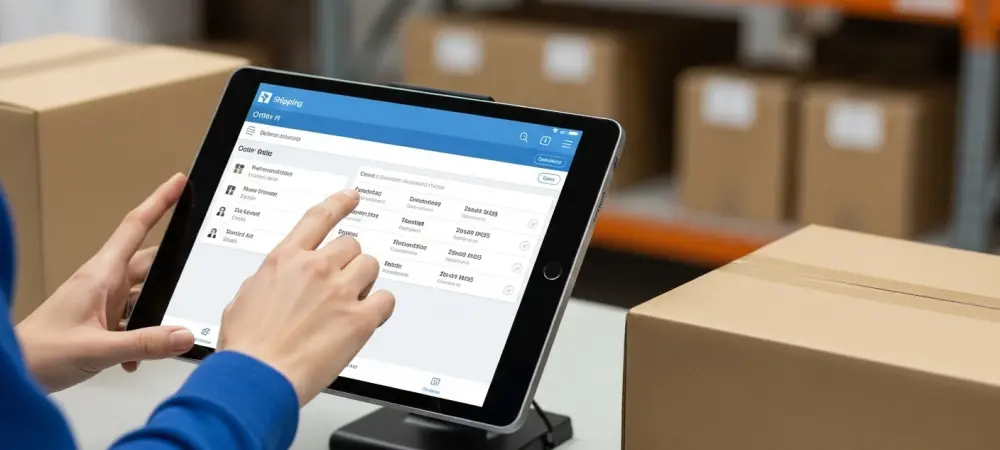
In the intricate choreography of modern commerce, the final act of getting a product into a customer’s hands often unfolds on a stage far removed from the central business system, leading to a cascade of inefficiencies that quietly erode profitability. For countless manufacturers and distributors, the shipping department remains a functional island, disconnected from the core financial and operational data housed within their ERP. This separation forces teams into a reactive cycle of toggling between multiple carrier portals, manually re-entering order information, and wrestling with standalone tools—a process that breeds errors and obscures a clear view of true fulfillment costs. The result is a significant operational friction point where the seamless flow of data halts, creating silos that undermine the very integration an ERP like Microsoft Dynamics 365 Business Central is designed to provide.
Why Your Shipping Department Operates on an Island
For many organizations, the daily reality in the logistics department is a study in organized chaos. Employees often find themselves navigating a labyrinth of external websites and applications—one for each carrier—to get quotes, print labels, and track packages. This fragmented workflow is not just inefficient; it’s a critical vulnerability. Every piece of data entered manually into a carrier portal is an opportunity for a costly mistake, from an incorrect address to a misclassified package weight.
This operational disconnect ensures that vital shipping data, such as tracking numbers and final freight costs, lives outside the company’s central nervous system. Getting this information back into Business Central often requires yet another manual process, delaying invoicing and creating discrepancies between estimated and actual shipping expenses. The cumulative effect is a logistics process that is slow, prone to error, and fundamentally misaligned with the rest of the business, hindering the organization’s ability to operate as a single, cohesive unit.
The Growing Chasm in an Unforgiving Supply Chain
The tolerance for such logistical fragmentation is rapidly diminishing. In an economic landscape defined by tightening profit margins and increasingly complex global supply networks, the old way of managing shipping is no longer sustainable. The gap between strategic planning within the ERP and tactical execution on the shipping dock has widened into a costly chasm. This disconnect directly affects everything from cost control and inventory accuracy to operational stability and customer satisfaction.
This observation is not merely anecdotal; it is a central theme in contemporary supply chain analysis. Research from industry leaders like Deloitte and Boston Consulting Group consistently underscores the critical need for granular control over fulfillment and transportation. As supply chains become more distributed and customer expectations for speed and transparency rise, the ability to make real-time, data-driven decisions at the execution level is paramount. Without a unified system, businesses are essentially flying blind, unable to optimize shipping costs or respond agilely to disruptions.
Bridging the Gap with a Natively Integrated Solution
The most effective way to close this gap is to embed shipping functionality directly within the Business Central environment. An integrated solution, such as Dynamic Ship from Insight Works, fundamentally redefines the fulfillment process by making shipping a native component of the ERP. This approach consolidates parcel, less-than-truckload (LTL), and full-truckload (FTL) shipping activities into a single, unified interface, eliminating the need for staff to ever leave their primary workspace.
Within this integrated model, the “Package Worksheet” becomes the centralized command center for all outbound shipments. Here, users can manage every detail, from package contents to carrier selection, in a structured and intuitive environment. Because the solution operates within Business Central, it has direct access to sales orders, inventory data, and customer information. This native integration ensures that shipping activities are always aligned with core business records, eradicating duplicate data entry and the risks that come with it.
Moving from Fragmented Theory to Data-Driven Reality
The consensus among logistics experts is clear: migrating away from a collection of disparate, disconnected tools toward a single, integrated platform provides a streamlined, controlled, and far more efficient fulfillment process. This transition from theory to reality is not just about convenience; it is a strategic imperative. Industry research validates this approach, emphasizing that integrating execution-level decisions with core business strategy is essential for navigating modern market pressures.
Centralizing shipping within the ERP is a practical and robust method for mitigating the cost variability and workflow inconsistencies that plague so many businesses. By creating a single source of truth for all order and shipment data, companies can maintain a consistent, repeatable process from order entry to final delivery. This data-driven foundation allows for better analysis, more accurate cost forecasting, and a stronger handle on the entire supply chain.
Practical Steps Toward a Unified Workflow
Achieving this unified workflow involves leveraging several key capabilities within an integrated system. The first step is implementing real-time carrier rate shopping directly within Business Central. This feature allows users to compare services and costs from multiple carriers for every single shipment, ensuring the most cost-effective option is chosen without ever leaving the ERP. This alone can yield significant savings and introduces a level of optimization that is impossible with manual processes.
Furthermore, automation becomes a powerful ally in streamlining operations. Generating carrier-compliant shipping labels, customs documentation, and recording tracking information can all be automated, drastically reducing manual labor and the potential for error. Granular control is achieved through detailed package-level data capture, including dimensions, weights, contents, and even specific lot or serial numbers—a critical function for industries with strict traceability requirements or complex Electronic Data Interchange (EDI) mandates. The system’s power can be further enhanced with optional tools like scale integration for precise weight capture, the application of custom freight pricing rules, and automated shipment notification emails to keep customers informed every step of the way.
Ultimately, unifying the shipping process within Business Central is not merely about adopting a new tool; it is about transforming a traditionally isolated function into an integrated, strategic asset. By connecting the last mile of fulfillment directly to the heart of the business, organizations can eliminate the data silos and operational friction that have long hindered their growth. This move enables a level of control and visibility that allows them to navigate market complexities with greater confidence, turning logistics from a cost center into a competitive advantage.