

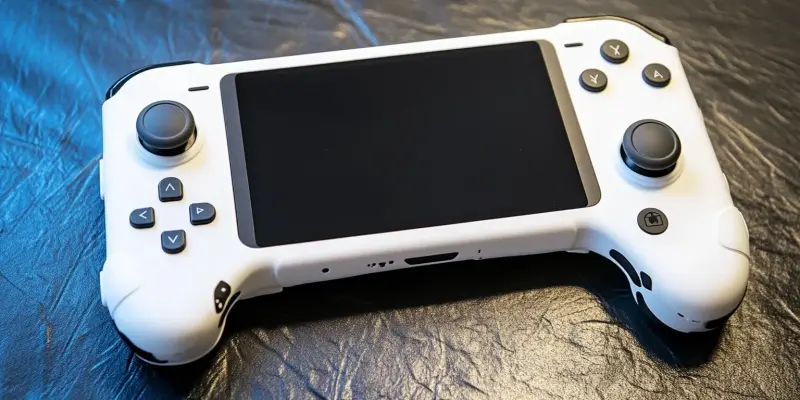
In modern times, handhelds have evolved tremendously from what they were a few years ago, not just in terms of onboard specifications but also in form factors and features. From “2-in-1” configurations to retro-style devices, gaming handhelds have seen a massive layer of innovation, and it seems like X-Plus is on track to do something similar with the newest G-Series1 handheld device. The X-Plus G-Series1 presents a unique blend of features and performance that aims to carve a niche in the competitive market of gaming handhelds, yet its overall success might be held back by some notable shortcomings.
X-Plus G-Series1 Gaming Handheld: Exceptional Build and Features Yet Performance Holds the Device Back
X-Plus was kind enough to send a review sample of their G-Series1 handheld device, which also functions as a gaming tablet capable of running Windows, elaborating on usability for various tasks. As a budget-oriented device, its performance is not expected to be extreme, suitable for moderate usage based on the user’s requirements. The G-Series1 features Intel’s N95 “Alder Lake-N” CPU, a significant upgrade from older Celeron and Pentium SKUs with vastly improved performance.
The onboard CPU might have given you an idea of what to expect with the device in terms of performance. Extensive benchmarks were conducted to analyze the performance, and it’s safe to say that one shouldn’t expect too much out of it. While it limits the device to basic and moderate tasks, let’s look at the initial unboxing experience.
X-Plus G-Series1 Handheld Unboxing Experience
The unit sent had minimal packaging, with the handheld box itself revealing very little about what was inside, unlike other mainstream counterparts. The box featured simple “cardboard” packaging with “WinGame” indicated on the front, hinting at a Windows Gamepad inside.
Upon opening, the handheld comes well-protected, cushioned adequately to prevent damage during shipping. The device is wrapped along with two “Joycon-like” controllers, making a significant portion of the packaging. Also included is a standard manual, which, surprisingly, provides little information about the handheld itself, offering more generic instructions seemingly meant for a notebook device—a point of interest.
Accompanying the handheld is a standard AC adapter for charging, without including much else in terms of accessories. The overall packaging felt rather ordinary and unexciting, an area needing improvement, even though it was understood that this particular package was for review purposes and might differ from what actual consumers would receive.
X-Plus G-Series1 Closer Look; Gigantic Screen and Innovative Joycons for Real-Time Gaming Experience
When the handheld was taken out of the box, it was debatable whether it should be called a handheld or a gaming tablet, as it appears to blend aspects of both. The most striking feature is the device’s 10.5-inch IPS 1080p display, one of the largest screens in any handheld segment. With thin, unobtrusive borders, exceptionality is apparent during gaming or content consumption sessions, housing a 30 FPS HD camera at the top, virtually unnoticeable unless you look closely.
The top of the device maintains standard ports including a 3.5mm microphone jack, MicroSD card reader, power and volume buttons, USB 3.0 x 2, charging port, HDMI-mini interface, and USB 3.0 Type-C interface. This array of connectivity options provides a decent interface for budget-tier devices and satisfies basic usage needs.
On the back side, branding is minimal, with “Piccolo G-Series1” and the “X-Plus” logo visible. Cooling mechanisms are apparent with cutouts for dual fans dissipating heat and vents facilitating ample cooling. A dedicated stand at the back allows flexible viewing angles, adding to ergonomic use. Bottom-mounted 1W speakers, though not high-end, are functional enough for average content consumption, appropriate for handheld use where the device is usually close.
G-Series1 JoyCons and Unique Mounting Mechanism
Handhelds with JoyCon-like configurations aren’t common, but they significantly enhance the G-Series1 gaming experience by offering greater control. The JoyCons, constructed from sturdy plastic, feature various buttons, with the left one having directional buttons, a left stick, volume control, and a “reload” button. The right JoyCon includes the typical X/Y/A/B buttons and a right stick.
The mounting mechanism involves magnetic mounts on the main device ends where individual JoyCons are slid into place effortlessly. To connect the JoyCons to the main device, the following steps are followed:
- Select the Left JoyCon: First, pick up the left JoyCon and press the “Reload” button until a “green light” appears next to the left stick.
- Hold the Button: Continue holding the button until the built-in motor “vibrates” and a red light appears next to the stick, indicating that the JoyCon is connected.
- Repeat for Right JoyCon: Do the same for the right JoyCon, but this time, hold the “Windows” button until the JoyCon vibrates. This completes the connection process.
While the JoyCons enhance gameplay, their addition makes the device heavier, which slightly compromises portability, especially given the large screen. Playing with JoyCons is enjoyable without much movement but goes against the portable handheld concept for the most part. Overall, it’s a solid feature, particularly considering the device’s price, which will be discussed in subsequent sections.
X-Plus G-Series1 Performance; Is It Really Worth the Money?
Looking at the onboard specifications, our review unit features Intel’s N95 processor with 4C/4T configuration, TDP of 15W, max clock speeds of 3.4 GHz, and a 6 MB cache count, equipped with a 1.2 GHz frequency iGPU with 16 EUs. This setup isn’t designed for high-performance gaming. Memory and storage include 16GB DDR4-2400 SODIMM modules and a 512 GB “Kingsand P600” SSD, good for substantial storage needs.
From the specifications, the Intel N95 is recognized as a low-end SoC, resulting in below-average performance. Benchmarks focused on gaming and synthetic tests showed modern AAA titles were not feasible. Older games like Skyrim and Half-Life ran smoothly, though the large 1080p display was under-utilized as all tests were conducted at 720p low settings for optimal user experience.
Conclusion
In recent years, handheld devices have undergone a significant transformation, both in terms of internal specifications and design features. Today’s gaming handhelds come in a variety of configurations, such as “2-in-1” models and retro-style options, showcasing leaps in innovation that push the boundaries of what’s possible. The X-Plus G-Series1 is set to follow this trend, offering a unique combination of features and performance that aims to stand out in the crowded gaming handheld market.
The G-Series1 highlights X-Plus’s commitment to delivering cutting-edge technology while also appealing to those who value style and functionality. By incorporating the latest advancements in graphics and processing power, this device promises to deliver an exceptional gaming experience. However, the ultimate success of the X-Plus G-Series1 may be hindered by some significant drawbacks.
Potential obstacles could include factors such as battery life, user interface issues, or even competition from other well-established brands in the gaming industry. Despite these challenges, the G-Series1 has the potential to make a significant impact on the market, provided that X-Plus can address these concerns effectively.
Overall, the X-Plus G-Series1 embodies the rapid evolution of gaming handhelds, offering a tantalizing glimpse into what the future holds for gamers on the go. Whether it will overcome its limitations to become a top contender remains to be seen, but its innovative approach certainly sets it apart from the rest.