

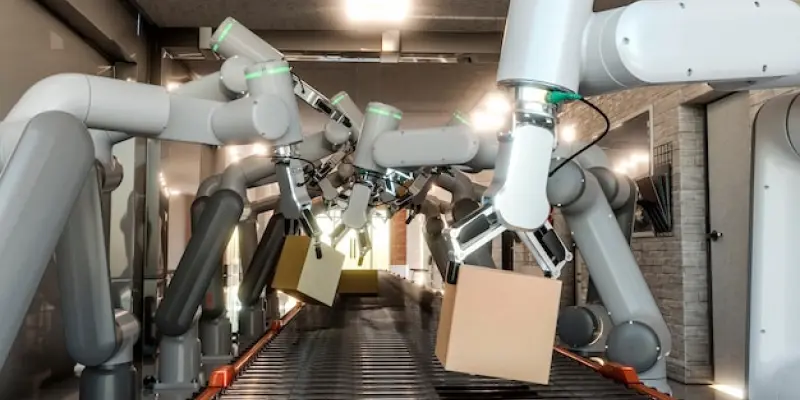
In the fast-paced landscape of factory automation, the quest for efficiency and precision is relentless. Manufacturers are constantly seeking ways to enhance productivity without compromising on quality or safety. Universal Robots, a pioneer in collaborative robots, has introduced its latest innovation, the UR15, at Automate 2025. This cutting-edge cobot promises to break through the limitations typically associated with conventional collaborative robots. The UR15 is set to address the pressing demands of modern manufacturing by delivering remarkable improvements in speed, precision, and integration of artificial intelligence. The UR15’s debut marks a significant milestone in the evolution of factory automation, promising to reshape industries with its unique capabilities.
Technological Breakthroughs of the UR15
At the heart of the UR15 lies a powerful combination of speed and precision that redefines what is possible with collaborative robots. This remarkable cobot operates at a top speed of five meters per second, offering a reduction of up to 30% in cycle times for tasks such as pick-and-place operations. Despite these speed enhancements, the UR15 maintains a compact footprint, a hallmark of Universal Robots’ designs. This compactness is crucial for integration into various production environments where space is at a premium. The UR15’s capability to handle high-volume production without succumbing to space and precision constraints sets it apart from other cobots in the market. This innovation caters to efficient production needs, providing manufacturers with a high-performance solution that does not require cumbersome equipment or complex integration processes. Another standout feature of the UR15 is its robust payload capability. With the ability to manage payloads of up to 17.5 kilograms in wrist-down positions, this cobot is ideally suited for efficient palletizing processes. The implementation of the OptiMove motion control system within the UR15 ensures smooth, consistent trajectories, maintaining high accuracy even at rapid speeds. This advanced motion technology is critical for manufacturers seeking to enhance productivity without the sacrifice of precision. The innovative design of the UR15, melding a small form factor with potent motion capabilities, underscores Universal Robots’ commitment to offering a versatile tool that adapts seamlessly to diverse manufacturing tasks.
Software Advancements and Industry Applications
Central to the UR15’s advancements is its integration with Universal Robots’ PolyScope platform, which enhances the user experience with a modern interface that is both intuitive and powerful. Additionally, collaboration with NVIDIA has resulted in the development of the AI Accelerator toolkit, further elevating the UR15’s capabilities. This toolkit significantly boosts the cobot’s real-time decision-making abilities, enabling applications such as visual inspection and anomaly detection to be performed with greater efficiency. This combination of software enhancements and AI readiness places the UR15 at the forefront of technological innovation, allowing it to adapt swiftly to the ever-evolving demands of various industries.
The UR15 is meticulously designed to cater to a range of demanding industries, including automotive, metal and machining, and electronics. In the automotive sector, where tight workspaces and complex tasks are common, the UR15’s design provides a solution that enhances operational efficiency. Its IP65 rating ensures durability, making it suitable for the harsh environments encountered in metal and machining industries. Additionally, the cobot’s cleanroom compatibility and seamless motion control make it an ideal choice for the electronics industry, which demands high levels of precision. By addressing these multifaceted industry needs, the UR15 exemplifies the versatility and adaptability required in today’s fast-paced manufacturing landscape.
The Future of Automation with the UR15
In the fast-moving world of factory automation, the ongoing pursuit for efficiency and precision remains relentless. Manufacturers continually explore new methods to boost productivity while maintaining quality and safety standards. Universal Robots, recognized for leading in collaborative robots, has unveiled its latest creation, the UR15, at Automate 2025. This state-of-the-art cobot is set to surpass the usual boundaries associated with standard collaborative robots. The UR15 aims to meet the urgent needs of contemporary manufacturing by offering significant advances in speed, precision, and artificial intelligence integration. Its introduction marks a pivotal chapter in the advancement of factory automation, with the potential to transform various industries due to its exceptional features. As manufacturers strive for enhanced operations without compromising quality or safety, the UR15 presents a groundbreaking solution to modern challenges, ensuring factories remain competitive in today’s demanding environment.