

The hum of high-performance servers has become the background noise of the British economy as the United Kingdom races to establish itself as a global leader in artificial intelligence and high-density computing. However, this digital gold rush carries a significant environmental price tag that often goes unnoticed by the end-users of cloud services and large language models. While much of the public debate has centered on the staggering electricity consumption of these high-density facilities, a new and perhaps more urgent crisis is brewing around the massive volume of water required to keep this hardware from overheating. The intersection of a rapidly expanding digital infrastructure and a finite national water supply has created a complex regulatory and environmental puzzle that remains largely unsolved by current policy frameworks. This tension is further exacerbated by a profound lack of transparency regarding how much water these facilities actually consume versus what they claim to save through modern technology. As the nation grapples with more frequent droughts and shifting climate patterns, the question of whether the UK can sustainably support the projected growth of its datacenter sector without compromising the basic water needs of its population has moved to the forefront of the national agenda.
Analyzing the Scope: Emerging Water Scarcity
The primary catalyst for concern is a recent report from the Government Digital Sustainability Alliance regarding water use in AI and datacenters, which suggests the industry is on a collision course with the UK’s finite water supplies. The core of the issue lies in the fact that datacenters are not just passive consumers of space; they are active thermal engines that require constant cooling to function reliably. This cooling demand is driven by three distinct but interconnected processes: the direct thermal management of server racks, the water used in the generation of the massive amounts of electricity these sites require, and the high-purity water needed for the upstream manufacturing of the silicon chips themselves. When these factors are aggregated, the total water footprint of a single large-scale facility can rival that of a small city, placing an immense burden on local utilities that were never designed to accommodate such concentrated industrial demand. This is particularly problematic in areas where the local infrastructure is already aging and prone to leakage or supply interruptions. A major point of contention in recent government findings is the projection that England could face a daily water supply deficit of nearly five billion liters by 2050. This figure represents more than one-third of the nation’s current total public water supply, highlighting a systemic vulnerability that could be triggered by the unchecked expansion of high-density computing. The report links this potential shortage to a historical reliance on evaporative cooling systems, which require a constant stream of fresh, potable water to dissipate heat. While many newer facilities claim to have moved away from this model, the sheer volume of legacy infrastructure still in operation means that the industry’s aggregate demand remains high. Furthermore, the rapid growth of the sector means that even if individual efficiency improves, the total volume of water required by the network continues to climb at an alarming rate, outstripping the pace of utility improvements in many regions. The Government Digital Sustainability Alliance also highlights a troubling geographic overlap between water-stressed regions and the areas where datacenters are most frequently built. Many of these projects are clustered in the South and East of England, where water resources are already under significant pressure due to high population density and lower average rainfall. The report concludes that national infrastructure plans currently fail to account for the exponential growth of these facilities, creating a dangerous transparency deficit that leaves local planners in the dark. Without a significant shift in how these facilities are cooled and where they are located, the clash between the digital economy and hydrological reality appears inevitable. This clustering effect creates a “perfect storm” for resource management, as multiple massive projects compete for the same limited water extraction rights, potentially leaving residential areas at risk during periods of extreme heat or prolonged drought.
Reconciling Worst-Case Projections: Infrastructure Reality
While the warnings about potential deficits are grounded in legitimate concerns, a closer look at the data suggests that the five billion liter figure represents a specific “do-nothing” scenario. This baseline projection assumes that no new infrastructure or conservation measures will be implemented over the next several decades. However, water companies are legally required to develop and execute long-term management plans that address these exact shortages through strategic upgrades. When examining the datasets provided in the final planning documents of these utilities, the outlook is notably different, reflecting a proactive stance toward infrastructure resilience. These projections reflect the intended supply-demand balance after planned improvements, such as new reservoirs and desalination plants, are completed. This creates a fundamental tension in the planning process: should the government prepare for the worst-case failure of infrastructure, or should they trust the long-term strategic forecasts of utility providers who are tasked with securing the nation’s future supply? When analyzing the final planning datasets, the outlook shifts from a deficit to a potential surplus of 895 million liters per day by mid-century. This discrepancy highlights the difference between a static view of the current network and a dynamic view of future investments. Water utility companies argue that they are already factoring in the growth of industrial users, including datacenters, into their 25-year investment cycles. They suggest that the alarmist figures often cited by environmental groups fail to account for the billions of pounds being poured into new pipe networks and water recycling facilities. Nevertheless, the reliance on these long-term projects is a gamble, as delays in infrastructure development are common and could leave the country vulnerable if the datacenter sector continues to grow at its current 14% annual rate. The challenge lies in ensuring that the pace of utility construction matches the breakneck speed of technological expansion, a synchronization that has historically been difficult to achieve in the highly regulated UK utility market.
The definition of “water stress” in the UK also adds a layer of complexity to the debate, as it often refers to regulatory limits rather than physical lack of rain. Regions like Yorkshire and Lancashire are often categorized as stressed, not because of a lack of rainfall, but because of environmental protection laws that limit extraction. These regulations are designed to protect local ecosystems, meaning that even in wet regions, the administrative capacity to serve new industrial customers is restricted to prevent environmental degradation. Consequently, a developer might see a rainy landscape but be legally barred from drawing water to cool a new facility. This administrative scarcity is just as real for the industry as physical drought, and it forces companies to look for alternative cooling methods or more expensive water sources. Understanding this distinction is vital for a realistic assessment of the UK’s capacity to host more datacenters, as the bottleneck is often the legal framework designed to protect the environment rather than a literal absence of water.
Technological Evolution: Modern Cooling Standards
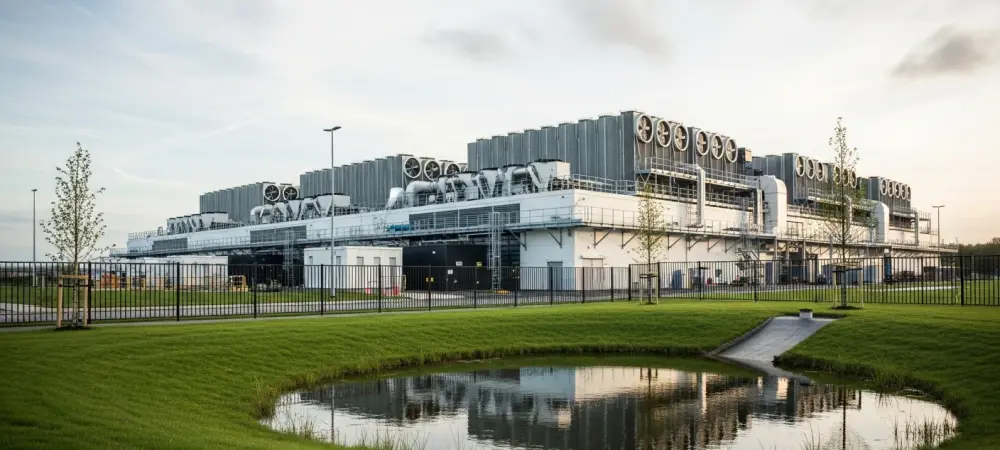
The industry’s strongest defense against claims of high water usage is the rapid evolution of cooling technology that prioritizes resource efficiency. Modern datacenter design makes a clear distinction between internal cooling, which moves heat away from the chips, and external heat rejection, which releases that heat into the environment. Most contemporary facilities utilize closed-loop systems where water or specialized dielectric fluids are recirculated indefinitely rather than being lost to evaporation. Once these systems are initially charged with their fluid volume, they require very little additional water for ongoing operations. This shift represents a fundamental departure from the legacy “swamp cooler” models that were common a decade ago, allowing newer facilities to operate with a much higher degree of resource efficiency. By keeping the cooling medium contained within a sealed loop, operators can drastically reduce their daily intake from municipal supplies, provided they maintain the integrity of the system and prevent leaks. The shift toward Direct Liquid Cooling (DLC) is particularly significant for the new generation of AI processors that generate extreme heat. Because high-density graphics processing units produce thermal loads that traditional air cooling cannot handle, DLC has become a technical necessity for modern computing. In these systems, a specific volume of fluid is used to fill the loop once, requiring relatively small amounts of water compared to the millions of liters consumed by older evaporative towers. DLC allows for much higher server density and better energy efficiency, as liquid is a far more effective medium for heat transfer than air. This technological leap is essential for the “AI factories” currently being planned across the UK, as it allows them to pack more processing power into a smaller footprint without requiring a corresponding increase in water intake. As these systems become the industry standard, the total water footprint per megawatt of computing power is expected to continue its downward trend, though the overall number of megawatts is rising. In the UK’s temperate climate, “dry cooling” has also become a standard practice for heat rejection, leveraging the natural environment to save water. This method uses large radiators and fans to release heat into the atmosphere without the need for water evaporation, functioning much like a giant car radiator. Some facilities also employ “adiabatic” systems, which only use a fine mist of water during the hottest hours of the year—typically representing only a tiny fraction of the total annual operating time. For the majority of the year, these sites run entirely dry, consuming zero water for their external cooling needs. This approach is perfectly suited to the British weather, where extreme heat is relatively rare, allowing operators to achieve high efficiency while maintaining a minimal impact on local water supplies. When these technologies are combined, the resulting facility is far more sustainable than public perception often suggests, yet the challenge remains in proving these efficiencies to a skeptical public through verified and transparent reporting.
Addressing Transparency: Issues in the Planning Process
Despite these technological advancements, the UK’s planning system remains remarkably opaque regarding the actual water usage of these facilities. Unlike energy consumption, which is usually detailed in planning applications, water requirements are often omitted or obscured behind vague technical summaries. An investigation into the nation’s largest upcoming datacenter projects found a startling lack of public information regarding their specific water strategies or expected consumption rates. Local authorities often lack the technical expertise to challenge the claims made by developers or to demand more granular data on how a project will affect the local water table. This lack of structured, mandatory reporting makes it nearly impossible for the public or environmental regulators to understand the cumulative impact of the ongoing datacenter boom. Without a standardized way to report water intensity, the industry remains vulnerable to accusations of resource hoarding, even when individual facilities are operating at peak efficiency.
Most local authorities do not currently require detailed water usage metrics during the public consultation phase of a project, which is a major oversight. Instead, these critical details are often settled in private negotiations between developers and utility providers long after a project has gained significant momentum and political support. This “back-door” approach means that the true cost of a development in terms of local water security is often hidden until it is too late to make meaningful changes. The lack of a uniform reporting standard across different regions further complicates the issue, as a project in one county might be held to high disclosure standards while a similar project nearby provides almost no data. There is a growing movement to make water impact assessments a mandatory part of any large-scale planning application, ensuring that the public can see exactly how much water a site will draw. This inconsistency undermines public trust and makes it difficult for national agencies to build an accurate picture of industrial water demand.
Case studies of major projects illustrate this inconsistency, with some developers providing detailed water reports while others offer very little transparency. For instance, while some tech parks provided estimates showing their water use would be comparable to only a small number of households, other large-scale developments have faced significant local opposition due to their perceived impact. In some cases, companies like Amazon have had to turn to private water treatment firms to secure recycled industrial water when local utilities could not meet their needs. These private workarounds highlight the strain that hyperscale developments place on the public system and the need for more coordinated planning. When a global tech giant has to bypass the public water grid to find supply, it serves as a clear indicator that the current infrastructure is not keeping pace with the demands of the digital economy. These examples underscore the urgent need for a more transparent and collaborative approach to resource management that includes both public and private stakeholders.
Strategic Solutions: Long-Term Resource Management
To ensure that datacenter growth did not threaten water security, the UK moved toward a more integrated planning framework that treated digital infrastructure as a national priority. Analysts suggested that the rapid growth rate of the industry required a national strategy rather than the traditional case-by-case approach that had dominated the sector for years. Formally integrating datacenter water demand into national water resource planning allowed utility companies to better prepare for the massive scale of future developments. This shift in policy ensured that infrastructure upgrades were planned alongside datacenter clusters, preventing the sudden supply shocks that had previously characterized the industry’s expansion. By aligning digital ambitions with hydrological realities, the government was able to create a more stable environment for investment while simultaneously protecting the environment. This proactive stance helped the UK avoid the resource-driven conflicts that have slowed tech expansion in other parts of the world.
A key recommendation for a sustainable path forward was the implementation of mandatory reporting for all facilities exceeding a certain power threshold. Datacenters were required to provide location-specific data on water, energy, and carbon usage, making this information available to the public and regulatory bodies. Standardizing the planning process to include a “Water Impact Assessment” provided absolute volume figures, replacing the vague placeholders that were common in older applications. This transparency allowed local communities to see the true impact of the facilities in their neighborhoods and forced developers to adopt the most efficient technologies to gain approval. Furthermore, the mandatory reporting served as a valuable data source for utility companies, allowing them to refine their long-term supply models with actual usage figures rather than speculative estimates. This data-driven approach transformed the relationship between the tech sector and the public, replacing suspicion with verifiable metrics of efficiency and sustainability.
Finally, there was a significant push to incentivize the use of non-potable or recycled water sources for industrial cooling throughout the country. Following successful models used in water-scarce regions, new developments were encouraged to use recycled water, especially in areas identified as severely stressed. By shifting from speculation to rigorous, data-driven planning, the UK managed to protect its most vital natural resource while remaining a leader in the global digital economy. The transition to non-potable water not only reduced the strain on the drinking water supply but also created a new market for treated industrial wastewater, fostering a circular economy approach within the tech sector. These efforts culminated in a more resilient infrastructure that could support the immense cooling needs of AI without compromising the needs of the population. By taking these steps, the UK demonstrated that it was possible to balance industrial growth with environmental stewardship, providing a blueprint for other nations facing similar challenges.