

The rapid evolution of generative artificial intelligence has fundamentally altered the landscape of global telecommunications by demanding a level of throughput that challenges even the most advanced fiber-optic networks currently in operation today. As enterprises shift from experimental pilot programs to full-scale industrial deployments, the physical infrastructure that underpins the digital world—the cabling, power supplies, and cooling systems—has become the ultimate bottleneck for progress. This transition marks the end of an era where software was considered the primary driver of innovation; instead, the industry has entered a phase where the “plumbing” of the internet defines the ceiling of what AI can achieve. Consequently, massive capital investments are now flowing into the physical hardware layer to ensure that the promise of intelligent automation does not falter due to inadequate connectivity. The current race is no longer just about building smarter models, but about constructing the resilient, high-capacity networks required to sustain them.
Scaling the Physical Backbone and Global Connectivity
The skyrocketing demand for processing power has sparked an unprecedented expansion in the physical components that comprise modern digital infrastructure, shifting the economic focus toward heavy industrial hardware. Market projections indicate a massive surge in the sales of data center components, with the busway market alone expected to exceed a valuation of $8 billion by 2032 as hyperscalers rush to build more robust power distribution systems. This growth proves that the artificial intelligence revolution is being built on a foundation of tangible machinery rather than purely abstract code. To accommodate the immense heat and energy requirements of new high-density clusters, engineers are redesigning the very architecture of the data center to prioritize thermal management and modular scalability. This shift ensures that as the next generation of chips arrives, the facility itself will not become an obsolete relic but will instead act as a flexible platform for ongoing technological evolution.
Beyond the walls of the data center, long-haul fiber-optic networks are undergoing extensive technological upgrades to facilitate the movement of massive datasets across continents with minimal delay or degradation. Network operators are increasingly adopting 400G coherent pluggable infrastructure to manage the deluge of traffic traveling along critical corridors, such as the high-traffic routes connecting Europe and Asia. Furthermore, there is a renewed strategic emphasis on route diversity and physical security, leading to the development of unique paths like direct fiber links through the Alps that bypass traditional, congested transit hubs. These new geographical routes provide the shorter latencies and heightened resilience necessary for the most demanding artificial intelligence applications, which require constant, high-speed access to remote compute clusters. By diversifying the physical path of data, the industry is creating a more stable global backbone that can withstand both technical failures and regional disruptions while maintaining peak performance.
Hyperscale Integration and the Latency Challenge
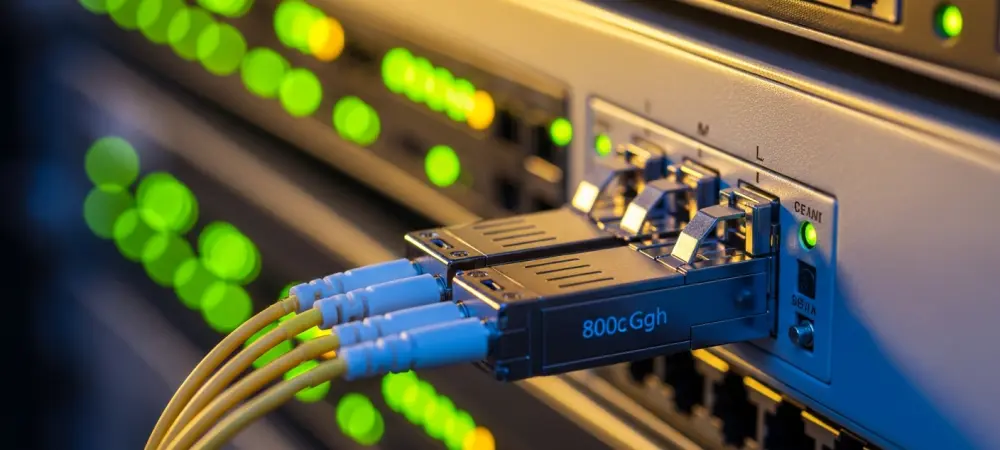
Hyperscale providers are currently facing the complex task of synchronizing massive computational power with electrical grids and specialized network fabrics to prevent data bottlenecks from stifling performance. These organizations are deploying 800G optics across their subsea and terrestrial long-haul networks to maximize the volume of information that can be processed and moved simultaneously. The synchronization of compute, power, and connectivity has become the new standard for operational excellence, as even a minor misalignment in these areas can lead to significant drops in efficiency for expensive AI hardware. To mitigate these risks, providers are building dedicated network fabrics designed specifically to handle the synchronized bursts of traffic typical of large-scale model training. This integrated approach ensures that the networking layer is no longer a separate utility but is instead a deeply embedded component of the overall compute strategy, allowing for more seamless scaling as workloads continue to grow in complexity and size.
While the core backbone of the internet is seeing rapid improvements, the “last mile” of connectivity continues to represent a significant gap between current capabilities and the future needs of advanced AI. Cable operators are attempting to bridge this divide by deploying low-latency platforms that offer fiber-like performance over existing infrastructure, yet these solutions often struggle to meet the highest demands. While existing networks are more than capable of handling text-based prompts or voice interactions, they frequently fail to provide the sub-10ms latency required for sophisticated applications like real-time multimodal vision or augmented reality. This discrepancy suggests that while progress is being made, the edge of the network is not yet fully equipped to support the most interactive and visually intensive AI use cases. Bridging this performance gap will require a concerted effort to push high-speed fiber closer to the end-user while simultaneously optimizing the software stacks that manage data transmission at the network’s periphery.
Monetization Through IoT and Edge Resilience
Telecommunications companies are actively seeking to monetize their infrastructure investments by integrating artificial intelligence with the Internet of Things to create new revenue streams in industrial sectors. The convergence of these technologies is being accelerated by new eSIM standards that allow for the flexible, large-scale deployment of connected devices across multiple global operators without the need for physical hardware changes. A prominent example of this trend is found in the automotive industry, where software-defined vehicles now require persistent, high-bandwidth connectivity to support advanced navigation, autonomous features, and real-time data streaming. This evolution transforms machine-to-machine communication from a series of simple sensor pings into a complex web of sophisticated, high-speed data services that can be managed and scaled centrally. By providing the reliable connectivity required for these systems, telecom operators are positioning themselves as essential partners in the digital transformation of heavy industry and consumer transportation alike.
The final pillar of modern infrastructure development involved ensuring that high-performance connectivity remained available even in the most challenging or hostile environments through advanced edge solutions. Specialized portable 5G networks were developed to provide battlefield-grade resilience for defense applications, while similar high-performance setups were utilized to manage the massive data demands of major global sporting events. These deployments highlighted the necessity of building networks that could survive external threats and environmental stressors while continuing to support intensive AI workloads and high-definition broadcasting requirements. Organizations that prioritized decentralized resilience early on found themselves better prepared for the volatility of the modern digital landscape. By shifting focus toward modular, field-deployable units, the industry addressed the critical need for uptime in high-stakes scenarios. These strategic advancements ensured that the network served as a fundamental, unbreakable utility for a data-driven society.