

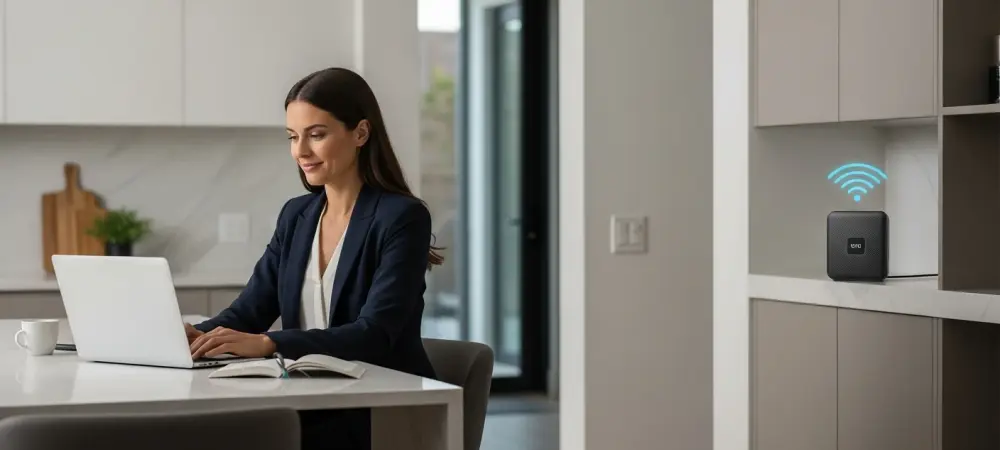
Navigating the digital landscape of a modern household often feels like an exercise in frustration when critical video calls drop or high-definition streaming stutters the moment a user steps into a bedroom or a home office located just a few meters away from the primary router. These persistent connectivity gaps, commonly referred to as dead zones, are frequently the result of physical obstructions like concrete walls, insulation, or electronic interference from household appliances that degrade signal strength significantly. As the Australian End of Financial Year approaches, internet service providers like Superloop have launched targeted promotions specifically designed to address these infrastructure shortcomings through sophisticated hardware bundles. The current market environment in 2026 suggests that bandwidth alone is no longer the sole metric for a quality home internet experience; rather, the distribution of that speed throughout the premises has become the primary concern for remote professionals and entertainment enthusiasts alike.
Overcoming Signal Attenuation: The Role of Mesh Technology
Central to the effectiveness of these promotional offers is the transition from a single-point broadcast system to a distributed mesh network architecture, which utilizes multiple nodes to create a blanket of coverage. Unlike traditional range extenders that often create secondary network names and suffer from significant latency issues, the eero mesh hardware typically bundled with Superloop plans operates as a cohesive system that manages device handoffs without interruption. These nodes communicate with each other dynamically to find the most efficient path for data packets, ensuring that a smartphone or laptop remains connected to the strongest signal source while moving through different rooms. By placing these compact devices strategically around the home, users can effectively bypass the physical limitations of a standard router, essentially routing the signal around thick walls or between different floors. This technological shift represents a fundamental change in how residential wireless fidelity is deployed.
Beyond the physical hardware, the value proposition of the Superloop EOFY sale includes sophisticated software management tools that allow for real-time network optimization and security monitoring. Modern mesh systems are equipped with intelligent algorithms that automatically scan for the least congested wireless channels, which is particularly beneficial in high-density urban environments where overlapping signals from neighboring homes can cause significant interference. The integration of these features ensures that even when multiple devices are active simultaneously—ranging from 4K security cameras to high-end gaming consoles—the network remains stable and responsive. Furthermore, the ability to manage the entire ecosystem through a simplified mobile interface removes the technical barriers that previously prevented average users from fine-tuning their home connectivity. This synergy between high-performance hardware and automated software management is what defines the modern approach to solving dead zones.
Strategic Implementation: Evaluating Value and Future Readiness
Evaluating the fiscal impact of these seasonal offers requires a detailed look at the total cost of ownership over the duration of an NBN contract, especially when high-tier hardware is included. The End of Financial Year prompts intense competition among Australian internet service providers, leading to discounts on monthly plan fees for the first six months, coupled with the inclusion of premium mesh routers that would otherwise cost several hundred dollars upfront. For many households, the initial investment in a high-speed NBN 1000 or NBN 500 plan becomes more palatable when the necessary hardware to utilize those speeds is provided as part of the signing incentive. This strategy allows Superloop to differentiate itself from budget-oriented providers that might offer lower monthly rates but provide substandard equipment that cannot penetrate basic architectural barriers. Consequently, the EOFY period serves as a critical window for consumers to upgrade infrastructure while locking in favorable service rates.
Identifying specific dead zones through a comprehensive signal audit was the first step for any household that sought to improve its connectivity during the recent promotional period. The decision to switch to a mesh-based NBN plan was a logical progression for those who recognized that a single router could no longer meet the demands of a modern, multi-device environment. Moving forward, homeowners prioritized hardware modularity, ensuring that any new system could be expanded with additional nodes if home layouts or connectivity needs changed. The effectiveness of the Superloop EOFY sale was ultimately measured by its ability to provide a seamless transition to higher performance tiers without the friction of technical complications or high upfront costs. Strategic network planning involved a careful assessment of upcoming Wi-Fi standards to ensure that today’s investments remained relevant. Households that adopted these solutions successfully mitigated the limitations of their physical spaces and secured a more resilient foundation.