

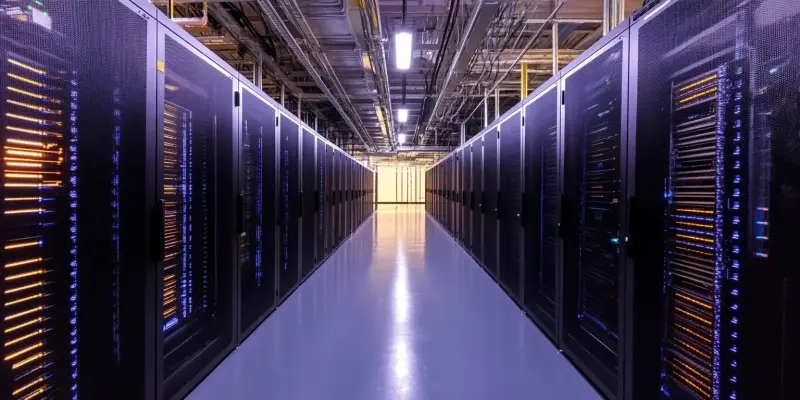
South Korea is embarking on an ambitious journey to strengthen its position in global technological innovation with the construction of an immense AI data center spearheaded by Fir Hills, part of the Stock Farm Road (SFR). In collaboration with the Jeollanam-do provincial government, this groundbreaking project is set to commence in Winter 2025, aiming to be operational by 2028. Upon its completion, the data center is anticipated to significantly contribute to South Korea’s technological leadership and economic development, creating thousands of job opportunities in diverse sectors such as energy supply, renewable energy production, equipment supply, and research and development (R&D).
Unprecedented Investment and Cutting-edge Features
Massive Financial Commitment
The scale of this project is underscored by its projected cost, anticipated to reach up to $35 billion (50 trillion KRW). This vast financial commitment reflects the significance of the data center, which will incorporate state-of-the-art technologies, advanced cooling systems, and extensive regional and international fiber connectivity. Such infrastructure is paramount in accommodating high-intensity AI workloads, aiming to serve millions of users and numerous large corporations, including hyperscalers and AI developers. Dr. Amin Badr-El-Din, a co-founder of SFR, has emphasized that this project represents a strategic leap for Korea, enhancing its stance in global technological leadership.
The innovative aspects of this project aren’t limited to financial and physical infrastructure alone. SFR’s Energy-to-Intelligence (e2i²) engine is a groundbreaking technology that will transform energy infrastructure into AI-powered intelligence. This engine is expected to play a critical role in the data center’s operational efficiency and environmental sustainability. By leveraging AI to optimize energy usage and reduce waste, the project exemplifies how technology can be harnessed to achieve both economic and environmental goals. With a robust financial network ensuring the acquisition of necessary capital and resources, the project is standing on solid ground to meet its ambitious objectives.
Impact on Global AI and Data-Driven Markets
The alignment of this initiative with South Korea’s aspirations to lead in AI, energy, and data-driven technologies marks a significant milestone. Data centers are critical in the modern technological landscape, serving as the backbone for a multitude of digital services. This project positions South Korea to make a substantial contribution to the global data center services market, projected to reach a staggering $438.3 billion by 2030.
For AI developers and hyperscalers, the new data center promises unparalleled resources to support their extensive computational needs. The high-intensity workloads and sophisticated AI applications that will be housed within this facility will undoubtedly accelerate innovation across industries. Moreover, the project’s focus on integrating advanced cooling systems and resilient fiber connectivity ensures that it will be at the forefront of data center technology. As AI continues to drive significant transformations in various sectors, this data center could become a critical hub for global innovation.
Collaborative Efforts and Broader Implications
Strategic Partnerships and Economic Impact
Brian Koo, another co-founder of SFR, has highlighted the enormous potential for the data center to spark technological advancement and economic prosperity in Korea and the broader region. The project exemplifies a successful public-private partnership, with the Jeollanam-do provincial government playing a pivotal role in facilitating the establishment of the data center. Through efficient processing of permits, approvals, and resource allocation, the government ensures the project’s smooth progression. Additionally, this collaboration symbolizes a strategic part of SFR’s broader vision to establish similar AI data centers in Asia, Europe, and the United States within the next 18 months, reflecting the project’s expansive reach and ambition.
The ramifications of this collaboration extend well beyond immediate economic benefits. By fostering a robust ecosystem of technological innovation, the data center initiative is likely to attract further investments in related fields, catalyzing a ripple effect that could transform the regional economy. The creation of over 10,000 jobs also underscores the substantial social impact, offering new opportunities in high-tech sectors to the local population. As Korea strengthens its position as a global leader in AI and data-driven technologies, other countries and companies may be inspired to pursue similar initiatives, further accelerating global technological progress.
Paving the Way for Future AI Innovations
South Korea is making strides in bolstering its global position in technological innovation with the development of a massive AI data center. This project, led by Fir Hills from the Stock Farm Road (SFR), is being undertaken in collaboration with the Jeollanam-do provincial government. The groundbreaking initiative will kick off in Winter 2025 and aims to be fully operational by 2028. Once completed, the AI data center is expected to play a pivotal role in enhancing South Korea’s tech leadership and driving economic growth. It will generate thousands of jobs across various sectors, including energy supply, renewable energy production, equipment manufacturing, and research and development (R&D). By harnessing cutting-edge technology, the center will facilitate advancements in AI and related fields, positioning South Korea as a key player in the global tech arena. The project underscores the nation’s commitment to fostering innovation, economic development, and technological leadership on the world stage.