

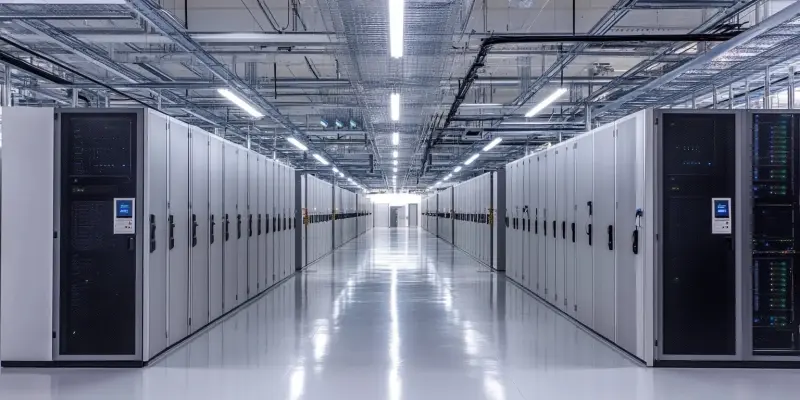
In the quest to maintain efficient operations within data centers, liquid cooling technologies like immersion and direct-to-chip cooling have emerged as promising solutions. Immersion cooling involves submerging computer components in a thermally conductive but electrically insulating liquid, providing effective heat dissipation. Direct-to-chip cooling, on the other hand, delivers coolant directly to the processor and other critical components, ensuring maximum cooling efficiency and performance.
One notable advantage of liquid cooling is its potential to support high-performance computing (HPC) clusters and large-scale data centers. These installations generate massive amounts of heat, necessitating advanced cooling systems to prevent overheating and maintain operational efficiency. Furthermore, as AI systems continue to evolve, the need for robust cooling solutions becomes even more critical. Liquid cooling technologies not only address these challenges but also contribute significantly to energy savings, making them a sustainable choice for future-proofing data centers.
Sustainability and Operational Reliability
Data centers are under increasing pressure to minimize their carbon footprints and achieve net-zero goals, making sustainable cooling solutions a priority. Liquid cooling systems have demonstrated substantial improvements in operational reliability and capacity, making them an attractive option for businesses aiming to enhance their sustainability efforts.
Moreover, liquid cooling technologies contribute significantly to reducing energy consumption in data centers. Traditional air-based cooling systems often struggle to maintain consistent temperatures, leading to higher energy usage and increased operational costs. Liquid cooling, however, offers an efficient alternative by eliminating hot spots and ensuring even temperature distribution.
Market Growth and Key Drivers
The data center liquid cooling market is poised for exponential growth over the next decade, driven by the escalating demands of AI and high-performance computing. According to recent reports, the market is projected to expand at a compound annual growth rate (CAGR) of 23.96% from 2024 to 2034. This substantial growth is expected to propel the market’s value from $5.65 billion in 2024 to an impressive $48.42 billion by 2034. Such rapid expansion underscores the increasing recognition of liquid cooling technologies as essential components for modern data centers.
Key regions, including the United States, South Korea, and Germany, are anticipated to witness significant growth in the adoption of liquid cooling systems. The competitive landscape is also evolving, with leading global enterprises like Google, Microsoft, and Alibaba at the forefront of adopting liquid cooling technologies in their hyperscale data centers.
Integration and Sector Influence
The integration of liquid cooling technologies extends beyond traditional data centers, with various sectors recognizing the benefits of efficient cooling systems. The telecom industry, for instance, is significantly impacted by the rise of AI, virtual reality, 5G, and 6G advancements. Similarly, the banking, financial services, and insurance (BFSI) sector is increasingly adopting liquid cooling to support its transition towards paperless operations and digital transformation initiatives.
Recent advancements in liquid cooling technology have introduced innovative solutions like Rear Door Heat Exchangers (RDHX). These initiatives aim to reduce cooling energy use to below 5% of a data center’s total energy consumption, setting new benchmarks for energy efficiency and sustainability.
Future Prospects and Challenges
While the future prospects of liquid cooling technology in data centers are promising, several challenges need to be addressed to facilitate widespread adoption. One of the primary barriers is the high upfront cost associated with implementing liquid cooling systems. Additionally, the lack of standardization in liquid cooling solutions poses a significant hurdle. Establishing industry-wide standards will ensure compatibility and streamline the integration process, making liquid cooling more accessible to businesses of all sizes.
To overcome these challenges, ongoing research and development efforts are crucial. Innovations focused on reducing the cost of liquid cooling systems and enhancing their compatibility with existing data center infrastructure will drive adoption rates higher.
The Path Forward
The surging demand for advanced artificial intelligence (AI) systems and high-performance computing has caused a substantial rise in heat generation in data centers worldwide. As a result, maintaining efficient and cost-effective cooling solutions has become a critical concern for companies aiming to ensure optimal performance. Traditional air-based cooling methods are no longer adequate to manage the intense heat loads produced by modern data centers. Consequently, a groundbreaking method of data center cooling is gaining popularity – liquid cooling technology. By directly targeting heat sources, liquid cooling reduces the thermal resistance encountered with air cooling systems. It also allows for a higher density of computing power within the same physical space, maximizing the data center’s capabilities.