

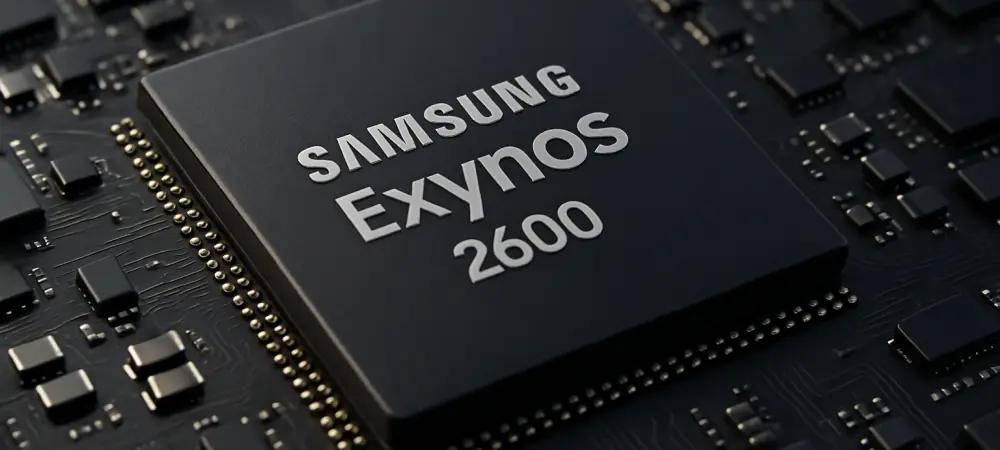
What happens when a tech giant bets its future on a single chip? Samsung is gearing up to challenge Qualcomm’s iron grip on premium smartphone performance with its Exynos 2600 processor, set to power the Galaxy S26 series in 2026. This isn’t just about faster phones—it’s a high-stakes gamble to reshape consumer trust and reclaim a competitive edge in the market. Picture millions of users worldwide waiting to see if Samsung can finally deliver a chipset that stands toe-to-toe with Snapdragon, or if history will repeat with another underwhelming release.
The significance of this showdown cannot be overstated. Samsung’s Exynos lineup has long been overshadowed by Qualcomm’s Snapdragon chips, often criticized for weaker performance and efficiency in past Galaxy models. With the Exynos 2600, the company isn’t just aiming to match its rival; it’s striving to prove that its in-house technology can define the future of flagship devices. This battle will influence everything from market share to Samsung’s struggling foundry business, making the Galaxy S26 launch a pivotal moment for the brand’s reputation in the global smartphone arena.
A Chipset Clash Brewing for 2026
Samsung’s upcoming Galaxy S26 series is poised to ignite one of the fiercest tech rivalries in years. Slated for release in 2026, the lineup—including the S26, S26 Edge, and S26 Ultra—will split its heart between two powerhouses: the Exynos 2600 and Qualcomm’s Snapdragon 8 Elite 2 (Gen 5). This dual-chipset strategy isn’t new, but the stakes feel higher as Samsung pushes to elevate its own silicon in a market long dominated by Qualcomm.
Industry insiders are already buzzing about what this means for users. A tech analyst remarked, “Samsung has a narrow window to prove Exynos can deliver flagship-grade performance. If they succeed, it could shift perceptions overnight.” The question looms: will the Exynos 2600 finally silence critics who’ve pointed to past gaps in speed and battery life compared to Snapdragon?
Why This Chipset Duel Demands Attention
Beyond the technical specs, this clash carries weight for Samsung’s broader ambitions. The company’s foundry division, responsible for chip manufacturing, has faced setbacks in recent years, losing ground to competitors like TSMC. A successful Exynos 2600 could signal a turnaround, reinforcing Samsung’s ability to innovate from silicon to screen in key markets like Europe and Korea.
Moreover, consumer sentiment is at play. In regions where Exynos chips have historically powered Galaxy devices, users have often felt shortchanged compared to Snapdragon-equipped models in the US. Closing this performance gap isn’t just about numbers on a benchmark sheet—it’s about ensuring every Galaxy S26 owner, regardless of location, feels they’ve got the best Samsung can offer.
Inside Samsung’s Galaxy S26 Chipset Blueprint
Diving into the strategy, Samsung plans a clear regional divide for the S26 series. The Galaxy S26 and S26 Edge will run on the Exynos 2600 in most global markets, including Korea and Europe, while the US and China will receive Snapdragon 8 Elite 2 variants. Meanwhile, the premium S26 Ultra will stick exclusively to Snapdragon worldwide, mirroring the approach taken with earlier Ultra models.
Technically, the Exynos 2600 brings intriguing innovations to the table. Its deca-core CPU design features a 1+7+2 configuration with a high-powered Cortex-X9930 core paired with nine Cortex-A730 cores, notably skipping efficiency cores—a trend also seen in rivals like MediaTek. Additionally, whispers suggest a major GPU overhaul, with Samsung reportedly moving away from AMD’s RDNA IP to a custom Xclipse 960 GPU crafted by a former Huawei engineer, hinting at untapped potential for graphics prowess.
Early data fuels cautious excitement. Geekbench listings indicate the Exynos 2600 surpasses its predecessors, leveraging Samsung’s advanced SF2 manufacturing node against Snapdragon’s TSMC N3P process. Yet, whether this translates to real-world wins in gaming or multitasking against Qualcomm’s offering remains an open question.
Voices from the Tech World Weigh In
Feedback from experts paints a mixed picture as anticipation builds. Benchmark scores show the Exynos 2600 narrowing the gap with Snapdragon, though it hasn’t quite hit the same peak in controlled tests. One chipset observer noted, “Samsung’s progress is undeniable, but the true test is how the S26 handles heat and power draw under stress. That’s where Snapdragon often pulls ahead.”
Online communities reflect similar uncertainty. Forums are rife with debates, as some users express hope based on Samsung’s relentless push for improvement, while others remain skeptical, citing memories of laggy Exynos-powered devices from just a few years back. These varied perspectives underscore that raw data alone won’t settle this—user experience will be the ultimate judge.
Gauging the Exynos 2600’s True Potential Post-Launch
When the Galaxy S26 hits shelves in 2026, evaluating the Exynos 2600’s worth against Snapdragon will require a sharp eye. Start by diving into real-world reviews focusing on battery endurance, gaming fluidity, and thermal management—areas where Exynos has stumbled historically. Comparing experiences from Exynos regions like Europe with Snapdragon markets like the US will reveal any lingering disparities.
Beyond reviews, benchmark nuances matter. While early Geekbench results look promising, deeper analysis of multi-core performance and GPU-intensive tasks will show if the custom Xclipse 960 can match Snapdragon’s Adreno capabilities. Additionally, individual needs should guide judgments—casual users might not notice slight differences, but gamers or power users could feel every hiccup. Finally, Samsung’s post-launch support, including software updates to iron out kinks, will be critical in determining if Exynos can truly stand as an equal.
Looking back, the journey to this chipset showdown has been marked by Samsung’s unwavering determination to reclaim its standing. The Exynos 2600 has emerged as a symbol of that ambition, blending cutting-edge design with a bold regional strategy. As the tech world watches, the stage is set for 2026 to reveal the outcome. Moving forward, attention must shift to how Samsung adapts based on early user feedback—will swift optimizations close any gaps? For consumers and enthusiasts alike, staying tuned to hands-on insights and tracking Samsung’s response offers the clearest path to understanding if this chip can redefine the Galaxy legacy.