

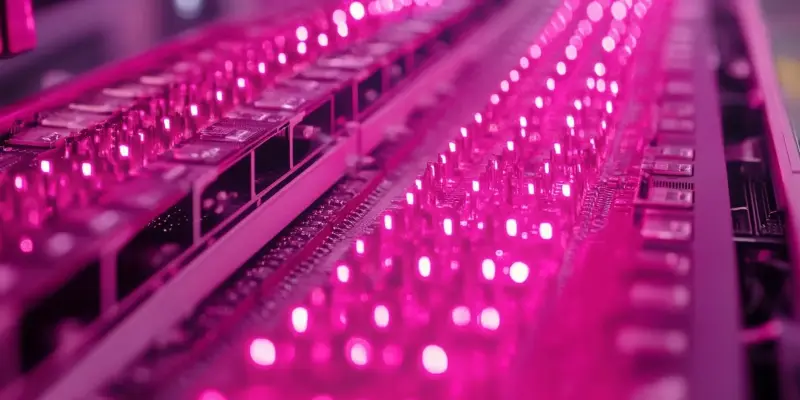
In the world of custom-built PCs, RGB lighting has become mainstream, transforming computers from mere functional devices into personalized, vibrant machines. The evolution from cathode tubes in the ’90s and early 2000s to modern addressable LEDs marks significant progress in this area. However, despite various innovations and enhancements, this advancement comes with its own set of challenges, notably when dealing with RGB components from different brands. Virtually every PC builder, whether a newbie or an experienced enthusiast, faces significant hurdles when trying to standardize and simplify their RGB lighting setups amidst a fragmented and proprietary-centric market.
The Evolution of RGB Lighting in PCs
RGB lighting has come a long way from its early days when PC enthusiasts relied on cathode tubes to add a splash of color to their builds. These tubes, though an initial step towards PC customization, were bulky, limited in color options, and offered minimal customization. With the advent of LED technology, the scene experienced a profound shift. LEDs brought more vibrant colors and dynamic effects, transforming PCs into visually appealing pieces of tech art. LEDs could be controlled with much finer granularity, making them ideal for creating elaborate lighting schemes. In particular, addressable LEDs, which allow individual control of each light, took customization to the next level, enabling endless possibilities for dynamic lighting effects.
Despite these advancements, the journey hasn’t been entirely smooth. The shift from cathode tubes to LEDs has undeniably enhanced the aesthetics and customization options for PC builders, but it has also introduced significant challenges. Specifically, the lack of standardization in RGB connectors and controllers has resulted in a fragmented ecosystem. This fragmentation makes it difficult for users to integrate components from different brands, leading to compatibility issues and complicating the overall building process. The more advanced the technology becomes, the more pronounced these compatibility issues seem to be, making the need for standardization more urgent.
The Challenge of Non-Standardized Connectors
One of the primary challenges in the RGB lighting landscape is the lack of standardized connectors. RGB components typically connect to the motherboard via 3-pin or 4-pin headers. The 3-pin 5V header is more advanced, supporting individually addressable RGB LEDs and allowing for more dynamic lighting effects. In contrast, the 4-pin 12V header controls all LEDs as a single group, offering less flexibility but still enhancing the aesthetic appeal of a PC build. However, mixing and matching hardware from different brands can lead to significant compatibility issues due to non-standardized connections.
Each brand often has proprietary connections and controllers, leading to a fragmented ecosystem that makes it challenging for users to achieve a cohesive lighting setup. The physical difficulty of connecting RGB cables to motherboards further complicates the process. Headers, especially the 5V and 12V types, are often placed in positions that make it challenging to attach cables securely. This issue is exacerbated in builds with cramped interiors, where maneuvering cables and ensuring firm connections becomes a tedious and frustrating task. Moreover, these challenges are not limited to connectors; they extend to the compatibility of controllers, adding another layer of complexity to the user experience.
Proprietary Controllers and Brand Loyalty
Another significant issue is the limitations imposed by proprietary controllers. Many brands provide their controllers with their RGB hardware, fostering brand loyalty by creating a seamless ecosystem for users who stick to a single brand. However, this approach restricts users who prefer the freedom to mix and match components from different brands. For example, during a PC build using the Be Quiet! Light Base 600 case, the included controller supported both 3-pin and other standard headers—a relatively rare but beneficial feature. Such exceptions are uncommon, and most RGB controllers are closely tied to their specific ecosystems, making it difficult for users to integrate different brands without encountering compatibility issues.
These proprietary systems not only limit the user’s ability to customize their setups but also add to the overall cost. Users often need to purchase additional controllers or adapters to ensure compatibility, increasing both expenses and complexity. This situation is particularly problematic for first-time builders who may not be aware of the compatibility issues until they encounter them during the assembly process. The result is a frustrating experience that detracts from the enjoyment and creativity that RGB lighting aims to bring, emphasizing the urgent need for more open and interoperable solutions in the industry.
The Need for Standardization
The consistent viewpoint among PC enthusiasts is the need for better integration and standardization within the industry. A universal standard that all manufacturers adhere to would significantly benefit users, eliminating many of the compatibility and connection issues currently plaguing the market. In theory, creating such a standard implies that every company must agree to share technology and resources, fostering collaboration rather than competition. However, in practice, this runs counter to the current market structure, where companies strive to outdo each other with proprietary technologies and exclusive features.
Despite this competitive landscape, there have been suggestions that some companies could take the lead by employing more user-friendly and standardized connectors. For instance, companies like Corsair could initiate the shift by using connectors like the Molex SL, which are known for being secure and easy to handle. Such an approach could pave the way for a more standardized and user-friendly RGB lighting ecosystem. While the transition may be challenging, the long-term benefits of a standardized approach—such as reduced frustration for users and greater compatibility across brands—could outweigh the initial hurdles, making the building process more enjoyable and accessible to all.
The Fragmented Software Landscape
In the realm of custom-built PCs, RGB lighting has surged to the forefront, transforming computers from mere tools into personalized, vibrant works of art. Over the years, we’ve seen a significant evolution from the primitive cathode tubes of the ’90s and early 2000s to today’s sophisticated addressable LEDs. This shift highlights remarkable advancements in the customization of PC aesthetics. However, despite these innovations, challenges remain, particularly when dealing with RGB components from different brands. Regardless of whether you’re a newbie just starting out or a seasoned enthusiast, nearly every PC builder encounters significant hurdles trying to standardize and streamline RGB lighting setups. The market remains highly fragmented, with many brands favoring proprietary solutions that complicate interoperability. Simplifying these setups is a common struggle in the community, as builders strive to create visually appealing and cohesive lighting displays without compatibility issues. The journey of making RGB lighting more user-friendly continues to be an ongoing endeavor.