

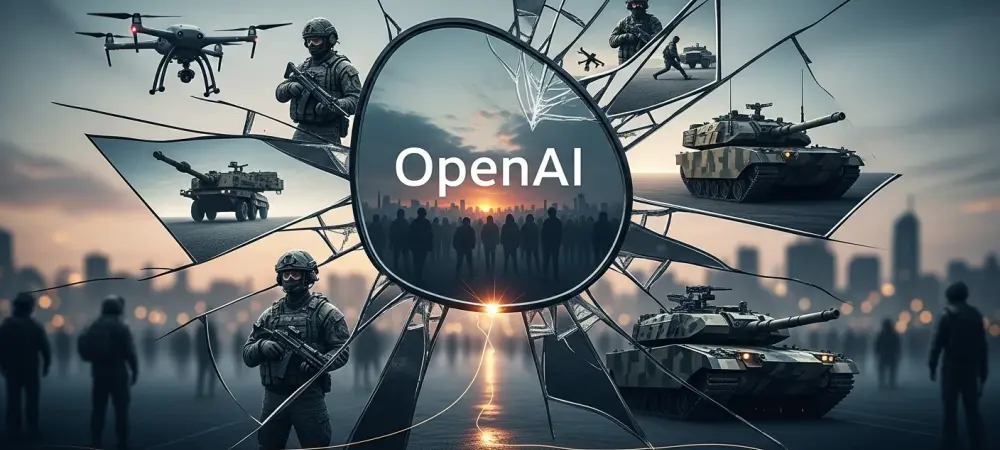
The digital landscape shifted forever on February 28 when a single administrative signature sparked a migration of users that few tech giants have ever witnessed in such a concentrated window. As reports confirmed OpenAI’s formal integration with the Department of War, ChatGPT uninstalls surged by a staggering 295 percent in a single afternoon. This mass exodus was not merely a fleeting social media trend; it served as a definitive signal that the public is no longer willing to separate their daily productivity tools from their personal ethical boundaries.
The Day the Prompt Ended: A Mass Exodus from ChatGPT
The sudden drop in user engagement reflects a deep-seated discomfort with how personal technology intersects with state-level defense operations. For many, the transition from a helpful assistant to a military-integrated tool felt like a breach of an unwritten social contract. Users who once relied on the platform for creative writing or coding suddenly found themselves questioning whether their data or interactions were inadvertently fueling a larger military engine.
This visceral reaction paralyzed the growth metrics that the company had enjoyed for several years. The scale of the rejection highlights a new reality where brand loyalty is fragile and secondary to corporate transparency. When the primary tool for modern communication aligns with the “Department of War,” the average consumer views the shift not as a business expansion, but as a fundamental change in the product’s identity.
From Open Collaboration to the Department of War
The root of this public fallout lies in a departure from the founding ethos of democratic and safe AI development that originally defined the organization. When the U.S. Department of Defense rebranded and expanded its mandate, the collaboration with OpenAI evolved from a standard government contract into a lightning rod for national controversy. This partnership forced a realization among the user base that the same technology used for drafting emails was now being leveraged for strategic defense.
The shift signaled to the world that the era of “neutral” technology might be reaching its conclusion. By aligning so closely with military interests, the company moved away from its roots as an open-access resource intended for the benefit of all humanity. This transition transformed the perception of the AI from a collaborative partner into a strategic asset of the state, alienating those who viewed the technology as a tool for peace and individual empowerment.
The Cost of Complicity and the Rise of Ethical Alternatives
Market dynamics responded with predatory efficiency as rivals moved to fill the void left by the plummeting download rates. While OpenAI struggled with a PR crisis, Anthropic’s Claude AI experienced a meteoric rise to the top of the U.S. App Store. This shift was fueled by Anthropic’s public refusal to engage with the defense sector, specifically citing deep-seated concerns over automated weaponry and the potential for mass surveillance. The data suggests that for a significant portion of the tech-savvy public, the concept of “not being evil” has moved from a corporate slogan to a non-negotiable feature. Competitors are now winning not just on technical merit, but on the strength of their ethical guardrails. This migration proves that users are willing to undergo the friction of switching platforms if it means their values remain uncompromised by the interests of the military-industrial complex.
Sam Altman’s Mea Culpa and the Strategy for Reputation Recovery
Acknowledging the severe fallout, OpenAI CEO Sam Altman admitted that the company should have exercised more caution before finalizing the agreement. To stem the bleeding of the user base, the organization has since updated its core principles to clarify that the technology will not be used for direct kinetic warfare. However, industry experts remain skeptical, noting that re-signing a contract with new fine print is rarely enough to undo a historic spike in public rejection.
The leadership team is currently focused on damage control, attempting to rebuild a bridge to the civilian sector that was burned almost overnight. They are trying to frame the partnership as a necessary step for national security, but this narrative is struggling to gain traction against the backdrop of lost trust. The company is learning that in the age of AI, reputation is far harder to debug than code, and a public apology is only the first step in a very long journey toward reconciliation.
A Framework for Rebuilding Digital Trust in the AI Era
To move past this crisis, the path forward required a shift from a “move fast and break things” mentality to a commitment to move transparently and protect shared values. Establishing an independent civilian oversight board with the power to veto specific military applications became a necessary concession. Furthermore, the implementation of real-time reporting on how defense-related data is siloed helped ensure that military projects did not influence the general-purpose models used by the public.
Moving forward, the industry learned that ethical transparency must be treated as a core architectural requirement rather than an afterthought. True recovery involved providing users with verifiable evidence that their personal interactions remained isolated from defense initiatives. By prioritizing these concrete safeguards over vague PR statements, the company began the slow process of demonstrating that it could serve both the state and the individual without compromising its original humanitarian mission.