

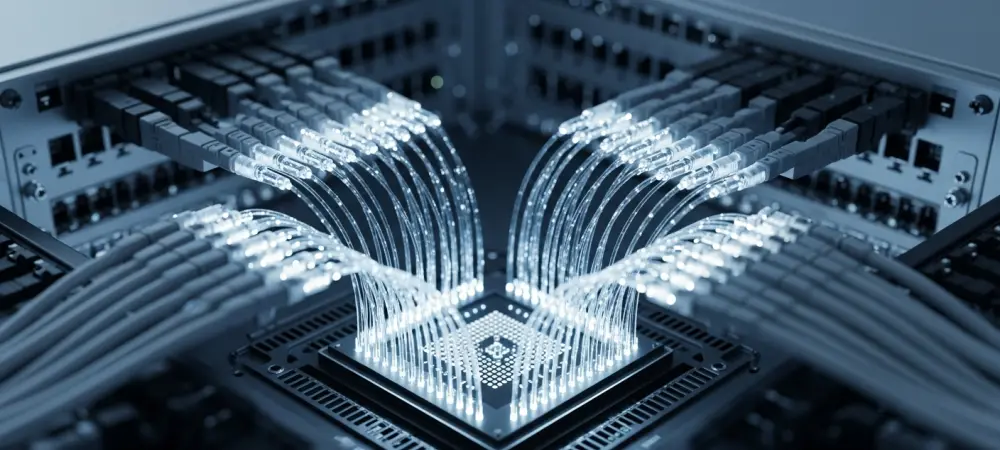
The global data center landscape is currently witnessing a massive transformation as the $200 billion CPU market transitions from general-purpose compute toward highly specialized AI infrastructure. This evolution marks a departure from the traditional reliance on x86 architectures that have dominated the sector for decades. As the industry moves away from mere data processing toward the generation of autonomous intelligence, the requirements for central processing units have fundamentally changed. Nvidia’s strategic pivot to becoming a full-stack hardware provider aims to capture this shift by integrating the CPU more tightly into the AI compute fabric than ever before.
Incumbent players like Intel and AMD are currently facing a significant challenge as data center priorities move from general-purpose versatility to specialized efficiency. While these companies have historically provided the backbone for enterprise servers, the emergence of agentic AI has shifted the focus toward processors that can handle complex reasoning loops without becoming a bottleneck for GPU clusters. Nvidia is positioning its Vera architecture not just as a support component, but as the primary engine for the logical planning phases of AI agents. This transition reflects a broader trend where hardware is no longer designed in isolation but as part of a cohesive, goal-oriented system. The impact of agentic AI—defined by autonomous, goal-oriented systems—is forcing a total rethink of traditional hardware design across the technology ecosystem. Unlike simple inference tasks, agentic workloads require a constant cycle of observation, reasoning, and action, which places unique stress on the serial processing capabilities of a CPU. If the processor cannot keep pace with the GPU during these reasoning phases, the entire system efficiency collapses. Consequently, the industry is seeing a move toward vertically integrated stacks where every component is optimized for the low-latency requirements of autonomous decision-making.
Market Dynamics and the Architectural Pivot Toward Agentic Workloads
Current market forces are accelerating the adoption of specialized architectures as enterprise automation becomes the primary driver of data center investment. The transition is fueled by the realization that parallel processing alone is insufficient for the sophisticated logic required by modern AI agents. This shift is particularly evident in how hyperscalers are allocating capital, moving away from high-core-count general processors toward chips that offer superior single-threaded performance.
Technological Drivers Behind Monolithic Design and Low-Latency Memory
Agentic AI requires superior single-threaded performance because the sequential nature of reasoning loops cannot be easily parallelized across hundreds of weak cores. Nvidia’s Vera CPU addresses this by utilizing a monolithic die design, which eliminates the internal communication latencies often found in chiplet-based processors. By keeping all compute elements on a single piece of silicon, the architecture removes the “hop” between chips that can add precious milliseconds to a reasoning cycle. This design choice is critical for maintaining the high-speed feedback loops necessary for agents to interact with environments in real time.
The integration of LPDDR5 memory fabrics plays an equally vital role in reducing data jitter and improving overall throughput. Traditional server memory often prioritizes capacity over latency, but agentic workloads demand immediate access to small packets of data during reasoning steps. By adopting mobile-derived memory technologies for the data center, the Vera architecture achieves a significant reduction in the time the CPU spends waiting for data. This focus on sequential efficiency ensures that the processor can sustain the high-frequency reasoning required by autonomous systems without stalling the associated GPU power.
Economic Projections and Comparative Benchmarking Performance
Recent SPEC CPU benchmark data indicates that the Vera architecture is setting new industry standards for single-core speed, outperforming AMD’s Turin architecture in key reasoning metrics. These benchmarks are crucial for cloud providers who need to justify the high cost of migrating away from established x86 platforms. By delivering a significant performance-per-watt advantage, Nvidia is providing a clear economic incentive for a hardware refresh. The data suggests that for tasks involving complex logic, Vera provides a level of efficiency that traditional architectures struggle to match. Market forecasts suggest a robust financial outlook for this new hardware category, with projected revenue potential reaching $20 billion in the current fiscal cycle. Estimates indicate that nearly 5 million units will be shipped by the end of this year, representing a massive expansion in Nvidia’s CPU market share. For cloud providers, the total cost of ownership is the ultimate deciding factor, and the performance-per-watt metrics of the Vera CPU are proving to be a decisive advantage in long-term infrastructure planning. Lower power consumption per task directly translates to higher margins for AI service providers.
Addressing the Technical and Economic Barriers to GPU-CPU Integration
Transitioning from legacy x86 environments to Arm-based ecosystems like Vera presents a significant technical challenge for many enterprises. Software stacks that have been tuned for decades to run on Intel or AMD hardware must be re-optimized or entirely rewritten to take advantage of the new memory fabrics and instruction sets. This migration requires substantial engineering resources and a willingness to move away from the safety of the status quo. However, the performance gains offered by the new architecture are increasingly making this transition a necessity rather than an option.
The high capital expenditure required for rack-scale deployments remains a barrier for smaller players in the industry. Building a data center around integrated CPU-GPU architectures involves more than just buying chips; it requires specialized cooling, power delivery, and networking infrastructure. To minimize deployment friction, many organizations are adopting hybrid configurations and leveraging specialized developer toolkits provided by Nvidia. these tools help bridge the gap between legacy code and the specialized hardware, allowing for a more gradual and cost-effective integration process.
Compliance Standards and the Role of Energy Efficiency in Global Regulations
Global energy consumption standards and green data center mandates are becoming increasingly influential in hardware selection processes. Governments are now setting strict limits on the power density of new facilities, forcing operators to prioritize efficiency over raw core counts. The Vera CPU’s ability to deliver high performance within a strict power envelope helps operators meet these regulatory requirements while still satisfying the demand for AI compute. As energy costs continue to rise, the regulatory importance of efficiency has moved from a secondary consideration to a primary business driver.
Predictable performance, particularly P99 latency, has become a critical regulatory requirement in sensitive sectors such as financial services and high-frequency trading. In these industries, a single delayed packet can result in massive financial losses or regulatory non-compliance. The monolithic design of the Vera CPU minimizes the variability in processing times, providing the consistent performance that auditors and regulators demand. Furthermore, hardware-level security features are being integrated to support the deployment of autonomous agents in industries that handle sensitive personal or financial data.
Future Horizons: Specialized Compute as a Catalyst for Scientific and Financial Breakthroughs
The role of the Vera CPU in the next generation of supercomputing is already being demonstrated through systems like the Veritas project at Los Alamos. This system serves as a blueprint for scientific simulation, where the combination of high-speed serial logic and massive parallel power allows for more accurate climate modeling and drug discovery. By providing a processor that can manage the complex logic of a simulation while the GPU handles the math, Nvidia is enabling a new level of scientific precision. This integrated approach is expected to become the standard for research institutions worldwide. Sovereign AI initiatives are also driving nations to invest in proprietary, high-efficiency data center stacks to ensure technological independence. Governments are increasingly wary of relying on general-purpose hardware that may be subject to supply chain disruptions or external influence. The future demand for integrated architectures will likely be bolstered by the pairing of the Vera CPU with the upcoming Rubin GPU series, creating an even more powerful platform for national AI projects. This move toward specialized compute is set to redefine how countries manage their digital infrastructure and economic competitiveness.
Concluding Assessment of Nvidia’s Strategic Positioning and Market Potential
The transition to specialized compute signaled a definitive end to the era of general-purpose dominance in the data center. It was determined that the Vera CPU effectively bridged the gap between GPU acceleration and the sequential reasoning required for autonomous agents. This integration allowed organizations to bypass the traditional bottlenecks that had previously slowed the deployment of complex AI systems. The report found that the shift toward a full-stack architecture provided a competitive edge that legacy x86 systems could no longer match in high-performance environments. Stakeholders were advised to prioritize the adoption of integrated CPU-GPU architectures to remain relevant in the evolving AI landscape. The industry recognized that the timing of these investments was critical, as those who moved early to adopt specialized hardware saw significant improvements in operational efficiency and task completion speeds. Ultimately, Nvidia successfully positioned itself as the primary architect of the agentic AI era by solving the specific technical challenges of serial processing. The move toward specialized compute proved to be the most viable path for sustaining the growth of autonomous technology.