

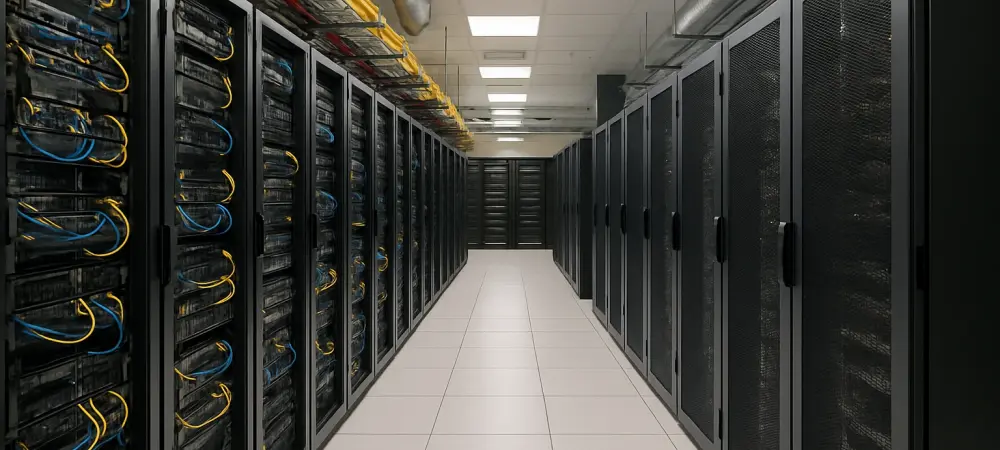
In an era where digital infrastructure underpins nearly every facet of modern life, the demand for data centers has surged to unprecedented levels, driven by cloud computing, artificial intelligence, and the relentless growth of connected devices. Amid this backdrop, an Australian company is positioning itself as a key player in meeting this global need through a transformative project in Sydney. With a multi-billion-dollar joint venture on the horizon, this initiative promises to not only expand capacity on a massive scale but also potentially reshape how such expansions are funded and executed in the industry. The focus on innovative partnerships and strategic growth reflects a broader shift toward balancing capital-intensive projects with sustainable financial models. This ambitious plan, coupled with international aspirations, offers a glimpse into the future of digital infrastructure development, raising questions about scalability and market impact.
Domestic Powerhouse: Scaling Up in Australia
Western Sydney’s Mega Project
The cornerstone of this expansion strategy lies in Western Sydney, where plans are underway for a staggering 850MW of new data center capacity through a joint venture partnership. This initiative, valued at AU$15 billion (US$9.8 billion) over the next decade or more, targets the development of two significant facilities, known as S4 and S7. By seeking third-party private capital, the company aims to retain operational control while holding a minority stake, a model designed to tap into deep pools of private equity. Advised by leading financial experts under a project codenamed “Berlin,” the joint venture is expected to be finalized within the next 12-18 months. This approach not only mitigates the enormous financial burden of infrastructure development but also sets a precedent for future projects, potentially beyond Australian borders. The sheer scale of this endeavor underscores the urgent need for capacity in a region poised to become a digital hub.
Operational Dominance in the Local Market
Beyond the headline-grabbing joint venture, the operational footprint in Australia is already impressive, with six data centers either in operation or under development in Sydney alone, totaling nearly 500MW of capacity. Nationally, the portfolio spans 20 facilities across major cities, supported by a development pipeline exceeding 3GW. A standout project is the S7 site in Eastern Creek, which could support up to 550MW at full build-out, highlighting the focus on future-proofing infrastructure. This extensive network positions the company as a dominant force in meeting the escalating demand for digital services, a trend often described as part of the fourth industrial revolution. The emphasis on expanding capacity in strategic locations ensures readiness for the next wave of technological advancements, from AI to IoT, while reinforcing market leadership in a competitive landscape. Such aggressive scaling reflects a deep understanding of regional needs and global trends.
Global Ambitions: Expanding Beyond Borders
Strategic Moves in the Asia-Pacific Region
Turning to international horizons, the push into the Asia-Pacific market marks a significant chapter in this growth narrative, with projects underway in key cities like Tokyo, Bangkok, Johor, Kuala Lumpur, and Singapore. A flagship initiative in Tokyo involves a partnership with a global real estate investment manager to develop a 30MW, liquid-cooled, Tier IV-quality data center, with groundbreaking set for December this year and completion targeted for 2030. Additional sites in Tokyo and other regional markets are under evaluation, signaling a measured yet determined expansion strategy. This move into high-demand markets demonstrates an intent to capture growth opportunities driven by digital transformation across Asia. By prioritizing quality and innovation in infrastructure, such as advanced cooling technologies, the approach aligns with global standards for efficiency and sustainability in data center operations.
Financial Foundations for Global Growth
Supporting these international ventures is a robust financial framework, despite the challenges of heavy capital expenditure. For the current financial year, revenue increased by six percent to AU$427.2 million, with an EBITDA of AU$200 million, though a pre-tax loss of AU$60 million was recorded. Capital expenditure reached AU$1.699 billion (US$1.11 billion), with projections for the next year ranging between AU$1.8-2 billion (US$1.18-1.31 billion), reflecting a commitment to growth. Operationally, 43MW of new capacity was delivered this year, bringing the total to 208MW, with over 120MW under development and 100MW in planning. These figures illustrate a balancing act between sustaining domestic dominance and funding international outreach. The reliance on strategic partnerships and private capital, as seen in both Sydney and abroad, emerges as a critical mechanism to manage costs while scaling operations, ensuring long-term viability in a capital-intensive sector.
Charting the Path Forward
Reflecting on a Bold Strategy
Looking back, the dual focus on domestic expansion through a transformative joint venture in Sydney and cautious international growth in the Asia-Pacific region paints a picture of strategic ambition. The commitment to scaling up capacity, evidenced by the operational achievements and financial investments, highlights a proactive response to the global data surge. Partnerships with private capital proved instrumental in navigating the high costs of infrastructure development, setting a model that balances growth with fiscal responsibility. The groundwork laid in markets like Tokyo marks the beginning of a broader global presence, showcasing adaptability to diverse regional demands.
Future Horizons and Industry Impact
As the industry evolves, the next steps involve closely monitoring the finalization of the Sydney joint venture and its potential to serve as a blueprint for future expansions. Exploring additional partnerships and innovative funding models will be crucial to sustain momentum. Moreover, tracking the progress of international projects offers insights into how global standards for data centers might shift, particularly in sustainability and technology adoption. The trajectory established suggests a significant role in shaping the digital infrastructure landscape, with implications for scalability and market dynamics worldwide.