

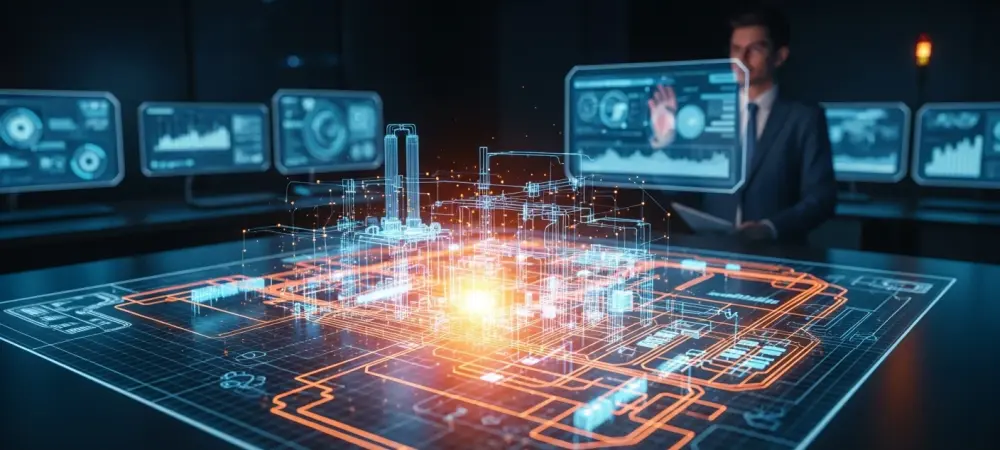
The global manufacturing sector has reached a definitive tipping point where traditional assembly lines are rapidly being replaced by autonomous systems that think, adapt, and execute tasks with unprecedented precision. Midea Group, once known for household appliances, has signaled a strategic pivot that could redefine industrial production. By pledging $8.7 billion over the next three years, the company is betting its future on artificial intelligence and advanced robotics.
Transforming from an Appliance Giant to a Global Technology Powerhouse
This investment matches the company’s total research and development spending from the previous five years combined. Midea aims to lead the global automation race by integrating humanoid robots onto factory floors. This move serves as a litmus test for the viability of large-scale automation in legacy industries as production becomes increasingly intelligent.
The Evolution of Industrial Strategy: From Manual Assembly to Smart Manufacturing
Historically, manufacturing relied on manual labor, but rising costs and complex supply chains highlighted the limitations of old models. The shift toward Industry 4.0 set the stage for autonomous systems. Today, competitiveness is driven by technological sophistication rather than volume alone, forcing firms to reinvent their core operations.
Scaling Innovation: The Strategic Pillars of Midea’s Massive Investment
Harnessing Embodied Intelligence through Humanoid Robotics
A cornerstone of the strategy is “embodied intelligence,” where AI interacts with the physical world. The “Miro U” humanoid robot has already increased production efficiency by 30 percent in Wuxi. By owning Kuka and a state key laboratory, the firm has secured the knowledge to refine these technologies at scale.
A Sector-Wide Movement: Competitive Parallels in the Chinese Market
This stance is part of a broader trend among industrial firms. For instance, Gree Electric Appliances has digitalized its main factory, while TCL Technology Group uses digital-twin systems to manage hundreds of furnaces simultaneously. These parallels suggest that human-machine collaboration is becoming the new baseline for industrial competitiveness.
Navigating the Complexities of Global Integration and Geopolitical Challenges
Integrating engineering expertise with manufacturing speed requires a balance of corporate cultures. Regional differences in AI regulations and data security also present hurdles for global expansion. Furthermore, the shift necessitates managing the workforce transition carefully to maintain institutional knowledge during the move to automated production.
Anticipating the Next Wave: AI Frontiers and the Global Robotics Race
Technological catalysts like breakthroughs in AI processing power are giving robots better reflexes. The industry is also watching programs like Tesla’s Optimus to set new benchmarks for cost-efficiency. Future shifts will likely move toward autonomous problem-solving on the factory floor using decentralized robotic swarms.
Strategic Takeaways for Navigating the New Era of Automated Production
To mirror this success, organizations should prioritize “digital twins” to test automation before physical deployment. Key recommendations include investing in system interoperability and upskilling the workforce for oversight roles. Scaling incrementally in controlled environments helps mitigate financial risks while positioning firms for growth.
Conclusion: Defining the Next Chapter of Industrial Progress
Midea’s $8.7 billion gamble represented a visionary attempt to lead the industrial revolution. By combining robotics with cutting-edge AI, the firm bridged the gap between traditional manufacturing and the digital future. This bold investment set a new pace for the industry, proving that proactive technological adoption secured a dominant position in the automated global economy.