

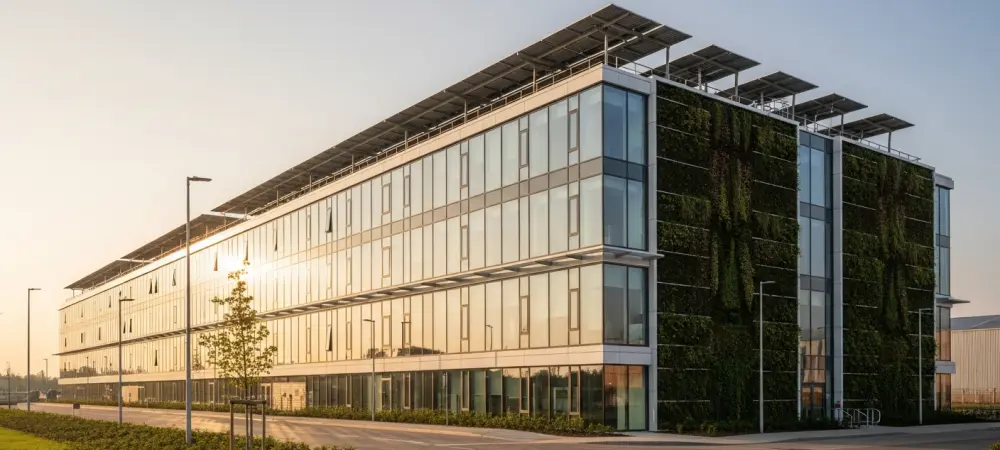
The sprawling industrial clusters surrounding the M25 motorway are no longer just depots for physical goods; they have become the pulsating neural networks of a digital empire. The Greater London Authority (GLA) is no longer viewing data centers as mere utility sheds, instead reclassifying them as a vital “industry of the future” in the latest draft of the London Plan. This shift signals a bold attempt to marry the city’s skyrocketing demand for artificial intelligence and data processing with a radical environmental overhaul. By the time this plan reaches full adoption in 2028, the digital backbone of the city will be expected to operate under the most stringent green mandates in the world.
As London cements its position as a premier digital hub, it faces a looming conflict between technological growth and aggressive climate targets. The update to the London Plan serves as a necessary intervention to ensure that the infrastructure supporting massive AI sectors does not derail the city’s net-zero ambitions. Understanding this policy shift is essential for stakeholders who must navigate the increasingly complex requirements of urban planning in a power-constrained environment. This framework does not just facilitate growth; it defines the conditions under which that growth is allowed to exist in a modern, sustainable metropolis.
Redefining the Industrial Frontier: Data Centers as London’s New Vital Infrastructure
The reclassification of data centers as essential infrastructure serves as the cornerstone for a new era of urban development. Instead of being relegated to the periphery of planning discussions, these facilities are now treated as the vital organs of the metropolitan economy. The GLA recognizes that the massive growth of artificial intelligence requires a robust physical foundation that can no longer be ignored by policy makers. This change ensures that digital expansion is woven into the very fabric of the city’s long-term land-use strategies.
Furthermore, the latest policy drafts emphasize that being a “vital industry” comes with substantial civic responsibilities. While the status provides a clearer path for development, it also subjects projects to scrutiny regarding their contribution to the local economy and labor market. This approach transforms the perception of data centers from isolated, energy-hungry boxes into active participants in London’s industrial evolution.
The High-Stakes Intersection of AI Expansion and Urban Sustainability
The rapid rise of AI applications has created an unprecedented demand for localized processing power, yet this expansion threatens the city’s green commitments. The London Plan seeks to bridge this gap by mandating that all new digital infrastructure aligns with strict carbon-reduction pathways. It is no longer enough for a facility to be technologically advanced; it must now prove that its existence supports a low-carbon future. This tension necessitates a balance where innovation serves environmental goals rather than compromising them.
Moreover, the rising energy demands of high-performance computing threaten to strain the existing electrical grid beyond its current capacity. Without a structured framework, the rapid expansion of server farms could outpace the city’s ability to provide sustainable power to its residents. The current strategy addresses this by prioritizing projects that can demonstrate a neutral or positive impact on the local energy ecosystem, ensuring that digital progress does not come at the cost of urban stability.
Grey Belt Pragmatism and the Pursuit of Peak Energy Efficiency
The core of the new strategy rests on a pragmatic approach to land use and performance benchmarks. A significant development is the introduction of “grey belt” land—previously developed areas within the Green Belt—as a viable pathway for data center construction when existing industrial sites are exhausted. This policy is already in motion, evidenced by the 147MW Slough data center approval, which utilized this new classification to unlock critical development potential. This pragmatic shift allows the city to grow without encroaching on pristine natural landscapes. To operate on these sites, developers must aim for a Power Usage Effectiveness (PUE) rating of 1.1, a target that represents the absolute cutting edge of energy efficiency. This benchmark is not merely a suggestion but a requirement for those seeking to build in these newly designated areas. By pushing for such high efficiency, the city ensures that every kilowatt of power used contributes directly to processing rather than being lost to heat. This focus on performance forces the industry to innovate in cooling and power management technologies.
The Mayor’s Green Mandate: Innovation Contingent on Environmental Responsibility
Mayor Sadiq Khan has made it clear that his support for the digital sector is not a blank check. The GLA’s vision for a low-emission ecosystem for AI and data infrastructure is built on the condition that these facilities contribute to the city’s welfare rather than just consuming its resources. By prioritizing projects that offer heat recovery for local energy grids, the administration is forcing a shift from isolated “data silos” to integrated urban assets. This ensures that the waste heat generated by servers is repurposed to warm local homes and businesses.
In addition to heat recovery, the mandate focuses on minimizing the footprint of backup generators and secondary power systems. Traditionally, these systems relied on heavy pollutants, but the new plan encourages a transition toward cleaner energy storage and hydrogen-based solutions. This comprehensive approach ensures that even during power outages, the city’s digital pulse does not contribute to air quality degradation. The goal is to create a circular energy economy where data processing and urban living exist in a symbiotic relationship.
Navigating the Approval Process: A Practical Framework for Sustainable Development
Securing a spot in London’s future digital landscape requires developers to move beyond traditional building plans and embrace a holistic resource strategy. To meet the GLA’s rigorous criteria, proposals must demonstrate a sophisticated understanding of local impacts, including precise calculations for water consumption and electricity availability. Developers are now required to provide extensive justification for site selection, proving that their projects will not impede housing or public infrastructure. This level of transparency is designed to mitigate negative impacts on local traffic and the aging power grid.
The strategy focused on long-term resilience and forced a transformation in how energy was distributed across the capital. London successfully integrated its digital ambition with social responsibility, ensuring that data centers functioned as community radiators and power hubs. This framework provided the necessary clarity for investors while protecting the environmental legacy of the region. The city established a blueprint where technical growth necessitated environmental stewardship, proving that the path toward a carbon-neutral future required the seamless integration of digital infrastructure and green energy.