

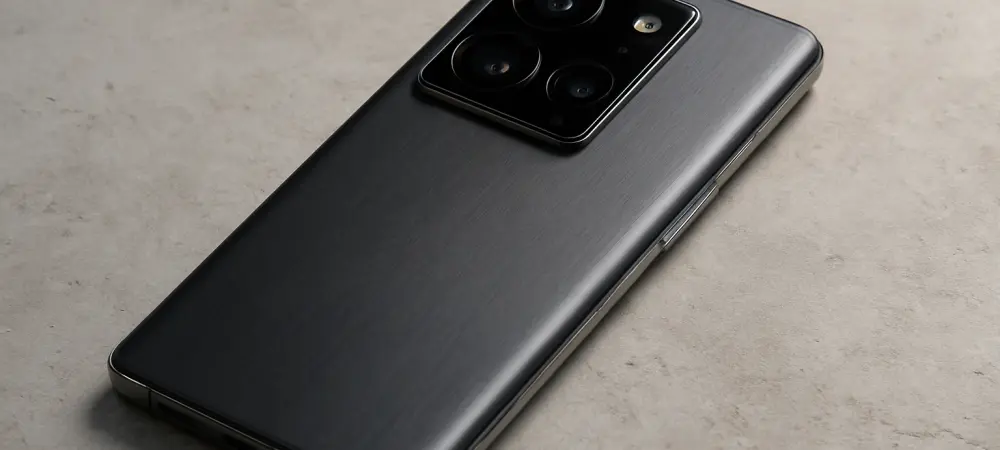
The persistent challenge for mobile gaming has always been translating the precision and tactile feedback of console controllers onto a flat glass screen, a hurdle that has often left competitive players at a disadvantage. While external gamepads and clip-on triggers have offered partial solutions, they compromise the portability that makes mobile gaming so appealing. Now, with its upcoming iQOO 15 Ultra, the company is poised to address this core issue head-on by integrating a sophisticated control system directly into the phone’s hardware. Ahead of its launch in China next month, the product manager has confirmed the device will feature advanced touch-sensitive shoulder triggers designed to provide a seamless and highly responsive gaming experience. This move signals a deliberate effort to elevate mobile gaming from a casual pastime to a serious competitive platform, where the hardware itself is an integral part of a player’s toolkit. The technology aims to eliminate the inherent latency and mechanical failures of previous solutions, potentially setting a new benchmark for what gamers can expect from a flagship device.
A Leap Beyond Mechanical Buttons
The newly revealed shoulder triggers on the iQOO 15 Ultra represent a significant technological evolution from traditional mechanical buttons. At the heart of this innovation is an impressive 600Hz sampling rate, managed by two independent control chips, a combination engineered to ensure near-instantaneous registration of every tap and hold. This focus on minimizing latency is crucial in control-heavy genres like first-person shooters, where a millisecond can determine the outcome of a match. To replicate the satisfying click of a physical button, iQOO has incorporated a high-quality linear motor for precise haptic feedback, giving players the tactile confirmation they need without any moving parts. Furthermore, the design addresses a common frustration for serious gamers: performance degradation due to moisture. The triggers are built to be sweat-resistant and are supported by a specialized “anti-sweat” algorithm, ensuring consistent performance even during the most intense and prolonged gaming sessions. This solid-state approach offers a virtually unlimited lifespan, free from the wear and tear that plagues mechanical components, and its seamless integration into the phone’s frame prevents the accumulation of dust and debris that can lead to input lag.
A Glimpse into the Future of Mobile Performance
The introduction of these advanced haptic controls was part of a broader vision for the iQOO 15 Ultra, which was positioned as a comprehensive gaming powerhouse. The shoulder triggers were not an isolated feature but a key component of an ecosystem designed for peak performance. Rumors that circulated prior to the announcement, which hinted at the inclusion of a powerful Snapdragon 8 Elite Gen 5 SoC and a dedicated active cooling fan, were substantiated by the overall design philosophy that emphasized sustained, high-fidelity gameplay. This combination of cutting-edge processing power, innovative cooling, and revolutionary controls created a device that aimed to blur the lines between a smartphone and a dedicated gaming console. The final reveal demonstrated a clear understanding of the demands of the modern mobile gamer, who requires not just raw speed but also precision, reliability, and comfort. Ultimately, the iQOO 15 Ultra stood as a testament to the idea that a smartphone’s built-in features could indeed rival, and perhaps even surpass, the utility of external gaming peripherals, challenging competitors to rethink their own approach to designing for the rapidly growing mobile esports market.