

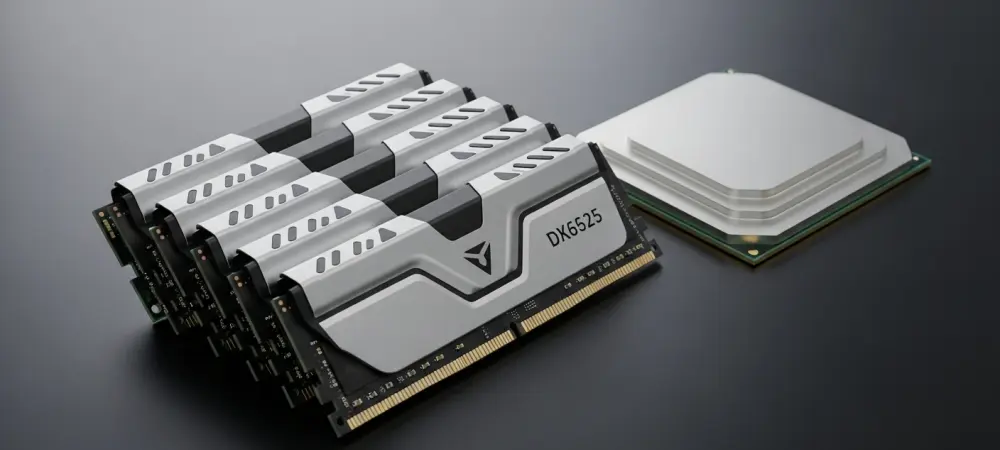
The desktop processor market has reached a critical inflection point where the sheer number of computing cores no longer dictates market dominance as much as the underlying value and architectural efficiency of the silicon itself. Intel has recently responded to this shift by unveiling the Core Ultra 200S Plus family, a “soft refresh” of the Arrow Lake architecture that signals a massive change in the company’s long-term market strategy. Featuring the Core Ultra 7 270K Plus and the Core Ultra 5 250K Plus, this lineup arrives at a time when the desktop segment is more competitive than ever before. Rather than just offering incremental speed bumps, Intel is attempting to redefine the value-to-performance ratio for enthusiast builders and professional users alike.
This analysis explores whether these new processors can truly reclaim the crown from rival manufacturers like AMD. It examines the technical refinements, the aggressive pricing structure, and the performance claims that Intel hopes will win over a skeptical consumer base. By looking closely at the hardware, one can better understand the trade-offs between immediate raw power and long-term platform stability. The move suggests that the industry is moving toward a model where architectural optimization is just as important as the physical manufacturing process.
A Strategic Pivot in the Desktop Processor Market
To understand the significance of the 200S Plus series, one must look at the recent trajectory of Intel’s “K” series processors. Traditionally, a refresh meant a minor increase in clock speeds with little change to the underlying hardware or the price. However, the initial reception of the Arrow Lake platform was mixed, as users sought more substantial gains in efficiency and price-to-performance metrics compared to the aging LGA 1700 platform. This led to a situation where the premium segment felt stagnant while the mid-range was looking for a reason to upgrade.
The current landscape is dominated by the rivalry between Intel’s LGA 1851 and AMD’s AM5 platforms. While competitors have gained ground with advanced architectures and long-term socket support, Intel’s response with the “Plus” refresh focuses on physical hardware additions—specifically increasing the efficiency core count. This historical pivot suggests that Intel is no longer content with being the premium-priced option; it is now fighting an aggressive price war to maintain its market share. This shift from high margins to high volume marks a significant change in how the company approaches the enthusiast community.
Architectural Innovations and Performance Paradigms
Solving the Latency Puzzle: Die-to-Die Frequency Boosts
One of the most critical updates in the 200S Plus family is the Die-to-Die (D2D) frequency boost. Intel has increased the communication link between the CPU and the memory controller from 2.1 GHz to 3.0 GHz. This nearly 1 GHz jump is designed to tackle system latency, which has historically been a bottleneck for modular, tile-based chip designs. By accelerating this internal fabric, Intel provides smoother frame rates in gaming and better responsiveness in professional applications, addressing a major criticism of previous Arrow Lake iterations. This bandwidth increase ensures that data moves between different parts of the chip with minimal delay, which is essential for modern high-speed computing.
The Rise of Software-Level Silicon Optimization
Intel is introducing a first-of-its-kind Binary Optimization Tool to bridge the gap between hardware and software. This tool acts as a translation layer that streamlines executable performance on the fly, effectively increasing instructions per cycle (IPC). This is particularly relevant for legacy software or applications originally optimized for older architectures. By leveraging its deep roots in compiler technology, Intel is attempting to extract more “real-world” performance out of the silicon without needing to redesign the entire core architecture from scratch. This approach acknowledges that software often lags behind hardware capabilities and provides a way to close that performance gap instantly.
Redefining Memory Capacity: High-Speed Standards
The refresh also pushes the boundaries of the mainstream memory controller. With native support for DDR5 7200 MT/s and early compatibility with 4-Rank CUDIMM technology, these chips bring workstation-level capabilities to the average consumer. The ability to support up to 128GB per module means that video editors and virtual machine enthusiasts can achieve massive memory densities on a standard desktop motherboard. This advancement positions the 200S Plus series as a bridge between enthusiast gaming and high-end desktop (HEDT) productivity. It reflects a growing trend where mainstream users require professional-grade memory management for complex multitasking and data-heavy projects.
Anticipating the Shifts in Desktop Computing
Looking ahead, the success of the Core Ultra 200S Plus will likely be shaped by the convergence of AI-driven workloads and modular chip design. As software becomes more reliant on NPU (Neural Processing Unit) integration and multi-core efficiency, Intel’s decision to pack 24 cores into a $299 price point sets a new baseline for the industry. This pricing strategy forces a conversation about the democratization of high-core-count computing. We expect future innovations to focus less on raw clock speeds and more on interconnect bandwidth and energy efficiency per watt as the cost of electricity and thermal management becomes a greater concern for the global market.
Economic factors will also play a role in how these chips are perceived. If Intel continues this disruptive value strategy, it may force competitors to lower their prices, benefiting the consumer in the short term. However, the rapid pace of socket changes remains a volatile variable that buyers must consider. Regulatory and environmental pressures are also pushing manufacturers toward designs that require fewer motherboard replacements, which could influence how Intel designs its next-generation sockets beyond the current LGA 1851. The balance between offering cutting-edge tech and maintaining a sustainable upgrade path will be the primary challenge for the next few years.
Strategic Takeaways for Builders and Professionals
For those looking to maximize their current investment, the Core Ultra 200S Plus offers a compelling path. If a user is already on the LGA 1851 platform, upgrading to a 270K Plus provides a massive jump in multi-threaded performance for a relatively low cost. For new builders, the $199 Core Ultra 5 250K Plus represents a highly efficient entry point that outperforms many higher-priced competitors in rendering and multi-tasking. These chips make high-end performance accessible to a wider audience, which could lead to a surge in creative content production and software development.
However, users must be mindful of platform longevity when making a purchase. While these chips provide incredible performance per dollar today, the looming transition to a new socket means this is likely the end of the road for the current motherboard generation. Actionable advice would be to choose these processors if one plans on keeping a system for three to four years without needing a CPU upgrade, as the immediate value is hard to beat. If a builder prioritizes the ability to swap CPUs every year, they might find the limited upgrade path of the current socket to be a significant drawback despite the attractive pricing.
The Final Verdict on Intel’s Aggressive Refresh
The Core Ultra 200S Plus family stood as a bold attempt by Intel to reclaim its dominance through sheer value and architectural refinement. By slashing prices while simultaneously increasing core counts and fabric speeds, the company created a product line that was technically impressive and economically disruptive. The Core Ultra 7 270K Plus, in particular, served as a testament to how competitive the CPU market became during this period. The introduction of the Binary Optimization Tool helped bridge the gap between legacy software and modern hardware, ensuring that users felt the performance gains across a wide variety of tasks.
Ultimately, Intel successfully pivoted its strategy to address the demands of a changing market. For those who valued immediate, raw multi-threaded power and high-speed memory support, the 200S Plus became a formidable and preferred choice. While the shadow of a future socket change remained a point of contention, the sheer performance on offer for under $300 made this refresh one of the most interesting moves the industry saw in years. This competition led to better technology at more accessible prices, proving that market pressure was the ultimate driver of innovation for the consumer. Moving forward, the industry took these lessons to heart, focusing on interconnectivity and price-to-performance metrics as the primary measures of success.