

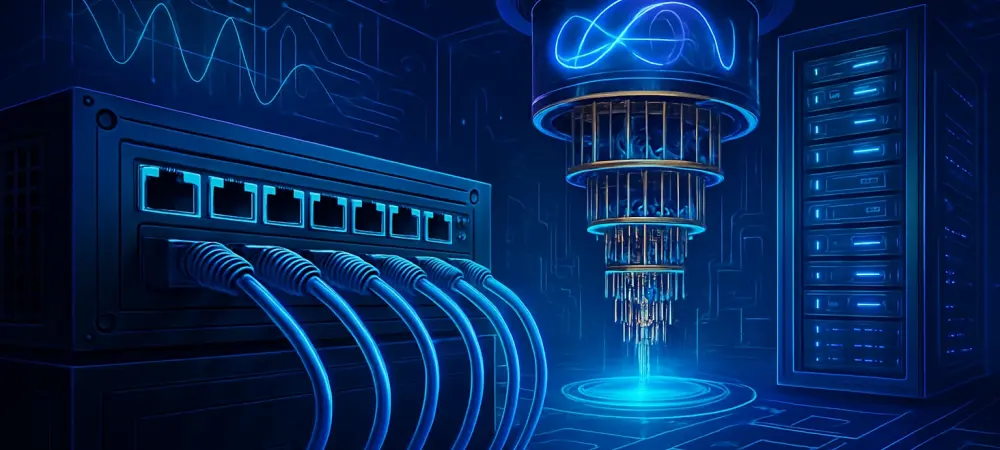
In the rapidly evolving landscape of high-performance computing, a technology born over two decades ago is finding renewed purpose at the intersection of quantum computing and artificial intelligence, where innovation meets unprecedented demands. InfiniBand, long celebrated for its high bandwidth and low latency in traditional supercomputing environments, is emerging as a potential linchpin in addressing the unique challenges of these cutting-edge fields. As research institutions and tech giants push the boundaries of what’s possible, the challenge lies in integrating quantum systems with classical architectures while simultaneously managing the explosive data needs of AI workloads. InfiniBand’s unique capabilities, such as ultra-low latency and efficient data transfer, position it as a compelling solution to these complex problems. This exploration delves into how a veteran technology is adapting to modern challenges, offering a bridge to the future of computation where innovation and reliability must coexist seamlessly.
Adapting to New Frontiers in Computing
Quantum Connectivity Challenges
At the forefront of scientific advancement, quantum computing presents unique hurdles that test the limits of existing infrastructure. High-performance computing centers, tasked with integrating quantum systems into classical frameworks, often encounter unexpected needs for robust connectivity and storage solutions. InfiniBand, with its proven track record in handling intensive data transfers through Remote Direct Memory Access, offers a practical approach to these issues. Its ability to maintain low latency ensures that even the smallest delays in data exchange—a critical factor in quantum operations—are minimized. Research facilities experimenting with on-premises quantum deployments have turned to this technology as a reliable foundation, especially when transitioning from cloud-based access to localized systems. This shift highlights a broader trend where established interconnect solutions are being repurposed to meet the demands of uncharted technological territories, providing stability amid rapid innovation.
Beyond the immediate technical benefits, the adoption of InfiniBand in quantum environments reveals a deeper reliance on familiar tools during periods of uncertainty. As quantum computers generate data that, while currently modest in volume, may scale dramatically in the coming years, the infrastructure must be prepared to adapt. Facilities like those at the Department of Energy have noted that while InfiniBand’s full bandwidth might exceed present requirements, its integration into existing storage systems offers a forward-thinking strategy. This approach not only addresses current integration challenges but also anticipates future growth in data complexity. The pioneering nature of quantum deployment often uncovers hidden needs, such as real-time data handling, which further underscores the value of a technology capable of bridging the gap between experimental setups and operational scalability. InfiniBand’s role here is less about reinvention and more about leveraging its inherent strengths to support a nascent field.
AI-Driven Market Revival
The resurgence of InfiniBand in the AI sector marks a significant chapter in its ongoing relevance, driven by the insatiable data demands of modern machine learning models. AI workloads, particularly those powering large-scale data centers, require interconnects that can deliver speed, efficiency, and losslessness—attributes at which InfiniBand excels. Recent industry reports have highlighted a notable uptick in switch sales, fueled by the adoption of advanced platforms designed for AI processing. This revival is a testament to the technology’s design, originally crafted for classic supercomputing tasks, which aligns seamlessly with the rigorous needs of training and inference in artificial intelligence. As companies scale their AI operations, the demand for reliable, high-throughput solutions continues to grow, positioning InfiniBand as a key player in this dynamic market.
However, the landscape is not without its challenges, as emerging alternatives like advanced Ethernet technologies and custom interconnects vie for dominance. While InfiniBand’s current advantages in latency and bandwidth make it a preferred choice for tightly coupled AI workloads, the long-term outlook remains uncertain. Industry analysts have pointed out that the same characteristics making it suitable for AI also apply to quantum computing, suggesting a dual-purpose potential. Yet, the competitive pressure from newer solutions could reshape market dynamics over the next few years. This evolving scenario indicates that while InfiniBand is experiencing a revival, its future will depend on how well it adapts to innovations and maintains its edge against rivals. The interplay between established performance and emerging competition offers a nuanced perspective on how technologies must evolve to stay relevant in fast-paced sectors like AI.
Future Prospects and Competitive Horizons
Balancing Innovation with Reliability
As computing paradigms shift toward hybrid models combining quantum and classical systems, the role of interconnect technologies like InfiniBand becomes increasingly critical in ensuring seamless integration. Its established presence in high-performance environments provides a stable platform for tackling the connectivity demands of quantum deployments, where precision and speed are non-negotiable. The ability to handle vast data transfers with minimal latency positions it as a bridge between experimental quantum setups and practical, operational frameworks. Moreover, the technology’s adaptability to diverse workloads, from scientific simulations to AI training, underscores its versatility. This dual applicability suggests that InfiniBand could serve as a unifying force in computing ecosystems striving to balance the cutting-edge with the dependable, fostering collaboration across disparate technological domains.
Looking ahead, the challenge lies in maintaining this balance amid a landscape of rapid technological advancement and competitive pressures. While InfiniBand’s robust performance characteristics align well with current needs, the rise of alternative interconnects signals a need for continuous innovation. Industry observers note that over the next few years, from now until 2027, the technology must evolve to address potential scalability concerns and integration complexities. Its success will hinge on the ability to meet the escalating demands of both quantum and AI applications without sacrificing reliability. This period of transition offers an opportunity to refine existing capabilities, ensuring that the technology remains a cornerstone in high-performance computing. The focus must shift toward anticipating future bottlenecks and developing solutions that keep pace with the relentless march of progress in these transformative fields.
Reflecting on a Technological Legacy
Reflecting on the journey, InfiniBand has stood as a pillar of high-performance computing for decades, adapting to the unforeseen demands of quantum and AI technologies with remarkable resilience. Its low-latency framework supported early quantum integrations at leading research facilities, while a market resurgence fueled by AI workloads reaffirmed its relevance in data-intensive environments. Despite looming competition from emerging interconnects, the technology carved a niche by addressing critical connectivity challenges with proven reliability. The nuanced balance it struck between innovation and stability provided valuable lessons for navigating uncharted computational landscapes, demonstrating how legacy systems could evolve to meet modern needs without losing their foundational strengths.
As attention turns to actionable next steps, the emphasis shifts toward strategic enhancements that could solidify InfiniBand’s position in the evolving tech ecosystem. Exploring hybrid interconnect models to complement its capabilities emerges as a promising direction, alongside investments in scalability to handle future data surges. Collaborations between industry leaders and research institutions are seen as vital to preempting integration hurdles in quantum-AI convergence. By focusing on adaptability and foresight, stakeholders can ensure that this veteran technology continues to play a pivotal role in shaping the computational frameworks of tomorrow, offering a blueprint for blending tradition with transformation.