

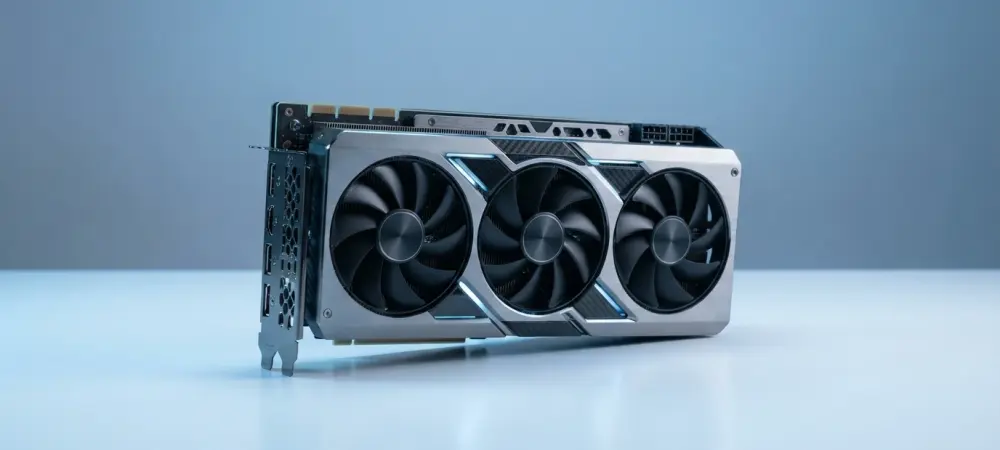
The long-standing struggle to balance cinematic visual fidelity with fluid performance has finally reached a pivotal turning point with the release of the Radeon RX 9000 series. While ray tracing has been available to consumers for several years, the “ray tracing tax” often meant that even high-end hardware struggled to maintain high frame rates in complex scenes. The AMD RDNA 4 architecture arrives as a specialized response to these hurdles, shifting the paradigm from raw brute-force computation toward intelligent, hardware-accelerated scene management. By focusing on the underlying structures that allow a GPU to “see” a 3D environment, this architecture aims to normalize high-end lighting effects for a broader range of gamers.
Evolution of AMD Ray Tracing and the RDNA 4 Architecture
The transition from RDNA 3 to RDNA 4 marks a significant departure from previous design philosophies that treated ray tracing as a secondary feature. In earlier generations, the hardware was heavily reliant on general-purpose compute units to handle the intersection tests and tree-walking required for light simulation. This often led to significant performance drops when multiple light sources or reflective surfaces were present. The current architecture addresses this by introducing dedicated ray tracing blocks that operate independently of the main shader arrays, allowing the GPU to multitask more effectively during the rendering process.
Moreover, the shift toward the RX 9000 series reflects a deeper integration with the DirectX 12 Agility SDK, moving away from proprietary solutions in favor of industry-standard optimizations. This evolution is particularly relevant in 2026, as the demand for hyper-realistic environments in both gaming and cinematic rendering has outpaced the capabilities of older hybrid designs. By refining how the hardware interacts with software APIs, AMD has created a more specialized environment where ray tracing is no longer a luxury toggle but a core component of the graphics pipeline.
Technical Innovations in Geometry Management
Clustered Geometry and Acceleration Structure Builds
One of the most impactful features of RDNA 4 is the move toward GPU-driven acceleration structure builds. Traditionally, the CPU was responsible for organizing the geometry of a scene into a format the GPU could understand, creating a recurring bottleneck that limited how many objects could be traced in real time. By offloading these builds entirely to the GPU, the architecture allows for the near-instantaneous mapping of millions of polygons. This shift eliminates the “handshake” delay between the processor and the graphics card, ensuring that the scene description is updated as fast as the GPU can render the frames.
Clustered Geometry serves as the foundation for this speed, managing high-fidelity rendering by grouping triangles into efficient clusters. Modern games often feature environments with hundreds of millions of triangles, which can overwhelm traditional ray tracing logic. This implementation allows the hardware to bypass unnecessary calculations for clusters that are not in the direct path of a light ray, significantly reducing the computational workload. This method is essential for maintaining detail in sprawling open-world titles where every blade of grass or pebble needs to interact realistically with light.
Partitioned Top-Level Acceleration Structures (PTLAS)
The inclusion of Partitioned Top-Level Acceleration Structures, or PTLAS, further refines how the GPU manages memory and organizational efficiency. PTLAS works by segmenting the top-level scene data into distinct partitions, which allows the hardware to update only the parts of the environment that have changed between frames. In a complex scene with moving characters and shifting lights, this granular approach prevents the system from having to rebuild the entire world map every few milliseconds, thereby saving precious cycles for other graphical tasks.
From a performance perspective, PTLAS streamlines the complex scene hierarchies that often lead to stuttering or memory spikes. By optimizing how data is fetched from VRAM, it ensures that the most relevant geometric information is always at the forefront of the processing queue. This real-world usage has shown that even in scenes with extreme object density, the organizational efficiency of PTLAS keeps the ray tracing pipeline from becoming congested, providing a smoother experience in titles that utilize heavy physics or dynamic environments.
Breakthroughs in Performance and Memory Efficiency
Testing conducted on the current generation of hardware reveals massive leaps in frame rates that were previously thought impossible. In controlled environments featuring dense geometry, the Radeon RX 9070 XT demonstrated a jump from a near-unplayable 1.7 frames per second to a fluid 91 frames per second. This 54-fold increase in performance is not merely a result of higher clock speeds but a direct consequence of the structural changes in how the GPU handles the building of acceleration structures. It fundamentally changes the viability of ray tracing on mid-range hardware, making it accessible to a wider audience.
Equally impressive is the drastic reduction in memory overhead observed in recent benchmarks. High-complexity ray tracing has historically been a memory hog, often consuming over 7 gigabytes of VRAM just for acceleration structures in demanding scenarios. Under the RDNA 4 architecture, this consumption has been slashed by nearly 90 percent, dropping to roughly 771 megabytes for the same workload. This reduction is vital for the health of the broader GPU market, as it allows cards with lower VRAM capacities to perform optimally in high-fidelity titles without crashing or resorting to lower-resolution textures.
Real-World Applications and Gaming Integration
The practical applications of these technological strides are most visible in the current wave of AAA game development. Titles such as Alan Wake II and the newest entries in the Gears of War series require extreme geometric density to achieve their cinematic aesthetic. RDNA 4 allows these games to maintain their visual integrity by providing the headroom necessary for millions of triangles to be traced in real time. This capability is also finding a home in professional sectors, where cinematic rendering for film and television can now be previewed with a level of accuracy that was once reserved for offline render farms.
These advancements enable a level of detail that effectively blurs the line between pre-rendered sequences and interactive gameplay. By integrating these features into modern game engines, developers can push the boundaries of environmental storytelling. For example, a forest scene can now feature realistically simulated light filtering through thousands of individual leaves without the performance plummeting. This integration ensures that the next three years of gaming will be defined by a level of immersion that was previously restricted by hardware limitations.
Technical Hurdles and Implementation Challenges
Despite these successes, the disparity between synthetic benchmarks and real-world gaming performance remains a significant hurdle. While laboratory tests show a 50X increase in build speeds, actual gaming scenarios often show more modest gains, ranging from 15 to 20 percent. This is because a game involves many concurrent processes, such as artificial intelligence and physics, which can compete for GPU resources. Furthermore, some tests have highlighted a performance regression in the ray dispatch phase, where the actual “shooting” of rays can be slower than the building of the map, suggesting that the pipeline still needs further balancing.
Market obstacles also persist, particularly the requirement for developers to overhaul their existing engines to support the latest software kits. Adopting the DirectX 12 Agility SDK requires a deep commitment from development teams, and not every studio has the resources to update their legacy codebases. This creates a staggered adoption rate, where only the most cutting-edge titles can truly leverage the architectural leap of RDNA 4. Consequently, users may find that older games do not see the same dramatic improvements as the latest releases, highlighting the need for continued collaboration between hardware vendors and software creators.
The Future of Ray Tracing and RDNA architecture
Looking toward the future, the integration of BVH8 and specialized hardware units will likely define the trajectory of the Radeon brand through 2029. BVH8, or 8-ary Bounding Volume Hierarchy, allows the GPU to test eight intersections simultaneously, a massive upgrade over previous standards. As this technology matures, it will likely bridge the competitive gap between AMD and its rivals, particularly in the realm of full path tracing. This long-term focus on specialized hardware suggests that future generations will prioritize the quality of light simulation as a primary metric of power.
Potential breakthroughs in path tracing could eventually make it the standard for all real-time rendering, replacing traditional rasterization techniques entirely. The current RDNA 4 foundation provides the necessary steps toward this goal by solving the data management problems that have held the industry back. As developers become more familiar with these tools, the industry will see a shift toward more automated lighting workflows, allowing smaller studios to achieve the same visual fidelity as major corporations. This democratization of high-end graphics will have a lasting impact on the entire ecosystem.
Conclusion and Final Assessment
The RDNA 4 architecture successfully shifted the paradigm of graphics processing by neutralizing the acceleration structure rebuilding bottleneck that hindered previous generations. This review found that the architectural move toward GPU-driven builds and PTLAS provided a necessary solution to the memory and processing constraints of modern ray tracing. The massive gains in synthetic performance and the significant reduction in VRAM usage indicated that AMD prioritized intelligent data flow over simple hardware scaling. Developers who embraced the new SDK tools discovered that the ceiling for geometric complexity was raised substantially, allowing for more detailed worlds. Ultimately, the transition to RDNA 4 proved to be a decisive step in making path-traced visuals a sustainable standard for the gaming industry.