

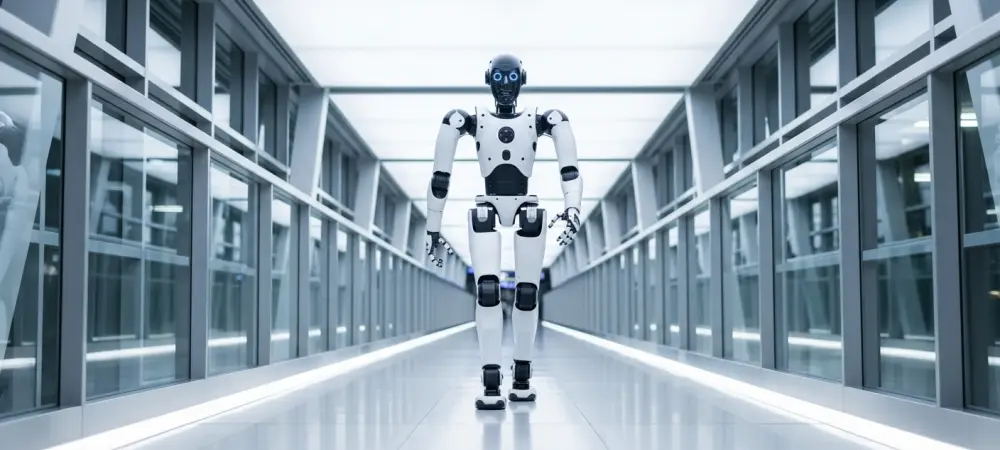
The relentless hum of Tokyo’s Haneda Airport now includes the whirring of precision servos as bipedal machines step onto the tarmac to redefine the future of flight support. Japan Airlines is currently leading a transformative movement by launching a two-year pilot program that integrates humanoid labor into the rigorous environment of ground handling. This initiative signifies a departure from static automation, introducing flexible machines designed to work alongside human crews to ensure operational continuity.
The Dawn of the Robotic Ground Crew
Beginning this May, the airport serves as a live laboratory for sophisticated humanoid robots tasked with navigating the chaotic rhythm of one of the world’s busiest travel hubs. These machines are not confined to safety cages; instead, they move through the same spaces as employees, performing tasks that range from lifting heavy cargo to cleaning aircraft interiors. By utilizing a workforce that can walk and interact with physical tools, the airline aims to create a more fluid operational model.
The trial specifically tests the endurance and adaptability of these robots in outdoor conditions and confined cabin spaces. This technological leap reflects a shift toward systems that can handle the unpredictable nature of aviation logistics. As the program progresses, the goal remains to establish a hybrid workforce where machines take on the physical burden of the tarmac, allowing human supervisors to focus on high-level coordination and safety oversight.
Navigating the Global Aviation Talent Crunch
The aviation sector is currently facing a critical shortage of ground personnel, a trend that threatens to disrupt global flight schedules and passenger services. As the experienced workforce ages and recruitment struggles to keep pace with the rapid post-pandemic surge in travel demand, traditional staffing models are reaching a breaking point. This demographic shift has left a void in labor-intensive roles such as baggage handling and ramp services, which are vital for maintaining on-time departures.
Carriers are increasingly recognizing that relying solely on human recruitment is no longer a sustainable strategy for growth. The vulnerability of ground operations has highlighted the need for a technological buffer that can maintain service levels regardless of labor market fluctuations. Consequently, the integration of autonomous systems has become a strategic imperative for airlines looking to future-proof their operations against ongoing talent scarcity.
Versatility Over Infrastructure: Why the Humanoid Form Wins
Unlike traditional industrial robots that require massive investments in fixed rails or redesigned warehouses, humanoid machines are built to fit into the world as it exists today. The trial at Haneda utilizes the Unitree Robotics G1 and the UBTech Robotics Walker E, robots that feature up to 43 degrees of freedom to mimic human movement. This design allows them to climb stairs, navigate narrow aisles, and operate existing cargo equipment without requiring expensive structural changes to the airport.
By choosing the humanoid form, Japan Airlines avoids the prohibitive costs associated with facility renovations. These robots are capable of performing heavy lifting and repetitive sanitization duties that were previously restricted to human staff. This approach proves that the most effective automation for the aviation industry is technology that adapts to human-centric environments rather than forcing a total overhaul of the existing logistical infrastructure.
Lessons from the Industrial Frontier
The partnership between JAL Ground Service Co. and GMO AI & Robotics follows a global trend of humanoid deployment in high-stakes manufacturing and logistics sectors. Major corporations like BMW and Xiaomi have already begun testing similar machines to bridge gaps in production lines, providing a functional blueprint for the aviation industry. Expert observations suggest that the success of these trials depends on the advanced AI that allows robots to process real-time environmental data.
Observing how these machines perform at a demanding hub like Haneda provides the industry with essential data on the feasibility of large-scale robotic integration. These insights have shown that physical flexibility is just as important as cognitive processing when robots operate in public-facing or high-traffic areas. This industrial crossover highlights a future where cross-sector technological standards help normalize the presence of autonomous assistants in everyday work life.
Integrating Autonomous Technology into Ground Operations
To move beyond the pilot phase, the industry established a framework for scaling these autonomous solutions across global networks. Strategic deployment began with low-complexity roles, such as cabin cleaning and baggage sorting, to ensure safety protocols remained uncompromised. Once these machines demonstrated consistent reliability, the focus shifted toward more complex autonomous tasks, including the operation of ground support equipment and the transport of cargo across the tarmac.
The transition toward a roboticized ground crew required a gradual expansion of responsibilities to maintain a seamless operational flow. Operators sought to balance machine efficiency with human expertise, ensuring that safety standards were enhanced rather than merely maintained. By adopting this phased approach, the aviation sector successfully paved the way for a more resilient and tech-driven infrastructure that addressed labor gaps while boosting overall logistical performance.