

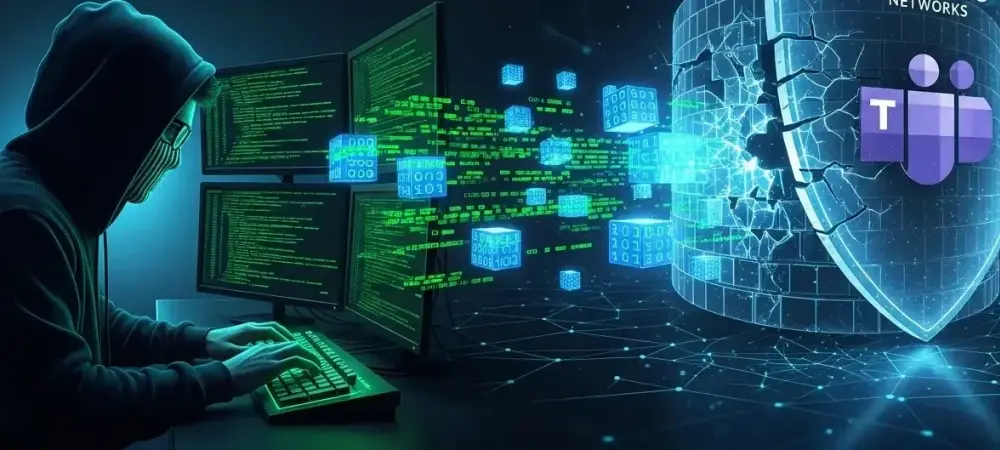
Modern security operations now rely on a delicate web of interconnected applications where a single failure in identity validation can collapse the entire defensive perimeter of a global enterprise. As organizations rush to unify their communication channels with automated response systems, they inadvertently create high-stakes dependencies. The recent discovery of a critical vulnerability in the Microsoft Teams integration for Palo Alto Networks’ platforms underscores the fragility of this ecosystem.
The Convergence of Security Orchestration and Collaborative Communication
Cortex XSOAR and XSIAM serve as the central nervous system for contemporary Security Operations Centers, coordinating thousands of automated actions to neutralize threats. By integrating Microsoft Teams, these platforms allow security teams to receive real-time alerts and execute playbooks directly from their chat interface. This synergy is designed to accelerate response times, yet it also creates a bridge between general employee communication and the core of the security infrastructure. Digital passports and cryptographic signatures act as the invisible gatekeepers that ensure only legitimate commands pass through these bridges. When these signatures are trusted without rigorous verification, the fundamental security of the enterprise perimeter is compromised. The reliance on third-party marketplace integrations, while essential for flexibility, significantly expands the attack surface for organizations managing massive, distributed networks.
Navigating the Evolving Threat Landscape for Automated Defenses
The Rise of API-Based Attacks and Third-Party Integration Risks
Threat actors are increasingly moving away from direct firewall assaults, choosing instead to target the orchestration tools that manage those very defenses. By blinding the defensive teams through their own automation software, attackers gain a silent foothold. The shift toward remote work has made Microsoft Teams a primary target, as it represents a ubiquitous entry point for sophisticated adversaries looking to exploit trusted connections.
Zero-click vulnerabilities have become the most sought-after tools for cyber espionage because they require no user error to succeed. These flaws exploit the gap between collaboration software and security infrastructure, allowing a breach to occur purely through server-side logic failures. This trend reflects a broader evolution where the integration point itself becomes more dangerous than the standalone software it connects.
Quantifying the Impact of Vulnerabilities in Security Infrastructure
The 9.2 CVSS score assigned to the recent Palo Alto Networks advisory highlights a catastrophic level of risk for enterprise management. Given that a majority of the Fortune 500 utilizes these specific platforms for incident response, the potential for widespread disruption is immense. A compromised integration does more than just leak data; it inflates the mean time to remediate by providing attackers with the tools to delete logs and mask their presence.
Market data suggests that the security automation sector will see continued growth through 2028, but this expansion is accompanied by an increasing cost for platform-specific breaches. As businesses invest more in these tools, the financial and reputational penalties for failing to secure the integration layer grow exponentially. Organizations must now account for the reality that their most trusted defensive tools can be turned against them.
Technical Hurdles in Cryptographic Verification and System Integrity
The mechanics of CVE-2026-0234 reveal a fundamental failure in how cryptographic signatures are handled, specifically categorized as CWE-347. This vulnerability allows an unauthenticated remote attacker to forge identity tokens, essentially creating a master key that the system accepts as valid. Without the proper verification logic, the software cannot distinguish between a legitimate security command and a malicious injection from an outside source.
Addressing this complexity is difficult because the exploitability is high while the barrier to entry for the attacker is low. Unauthorized access to security playbooks allows an adversary to manipulate how a company reacts to a breach, potentially disabling automated lockdowns during an active theft. Because there are no temporary workarounds for a broken cryptographic check, the only solution is a complete overhaul of the integration version.
Strengthening Compliance Frameworks in the Era of Digital Supply Chain Attacks
Regulatory standards such as GDPR and SOC2 now place a heavy emphasis on the integrity of cryptographic controls and identity verification. A failure of this magnitude puts organizations at risk of failing audits and facing significant legal penalties. The highest urgency advisory issued by Palo Alto Networks is a direct response to these compliance mandates, reflecting a commitment to transparency that is becoming the industry standard.
The role of external researchers has become indispensable in fortifying the digital supply chain. Bug bounty programs and independent disclosures provide a safety net that internal testing might miss, especially when dealing with complex multi-vendor integrations. Consequently, there is a clear shift toward mandatory automated patching to satisfy both insurance requirements and federal security audits.
Proactive Defense Strategies for the Future of Enterprise SecOps
Emerging technologies are now focusing on identity-first security to ensure that every action within a SaaS ecosystem is backed by verifiable credentials. The industry is moving toward secure-by-design principles where cryptographic validation is baked into the development lifecycle rather than added as an afterthought. This approach aims to eliminate improper validations before they ever reach a production environment or a public marketplace.
AI-driven threat hunting may soon offer a way to identify forged signatures in real-time by analyzing behavioral patterns that deviate from established norms. Furthermore, blockchain-based identity verification is being explored as a more resilient alternative to traditional digital passports. These innovations represent a future where trust is not merely assumed through a signature but constantly re-evaluated through decentralized ledgers.
Securing the Command Center: Strategic Takeaways for IT Leadership
The flaw in the Microsoft Teams integration for Palo Alto Networks served as a wake-up call for IT leaders who viewed automation as a purely defensive asset. Protecting the command center required an immediate transition to version 1.5.52 and a deep audit of historical logs to ensure no prior unauthorized access occurred. The incident demonstrated that even the most robust security platforms are only as strong as their weakest integration point.
Decision-makers looked beyond simple patching and began investing in automated security posture management to monitor the health of their entire software supply chain. They recognized that a resilient, multi-layered defense strategy must include rigorous oversight of how different platforms communicate. By prioritizing integration security, organizations effectively hardened their infrastructure against the next generation of sophisticated, unauthenticated attacks.