

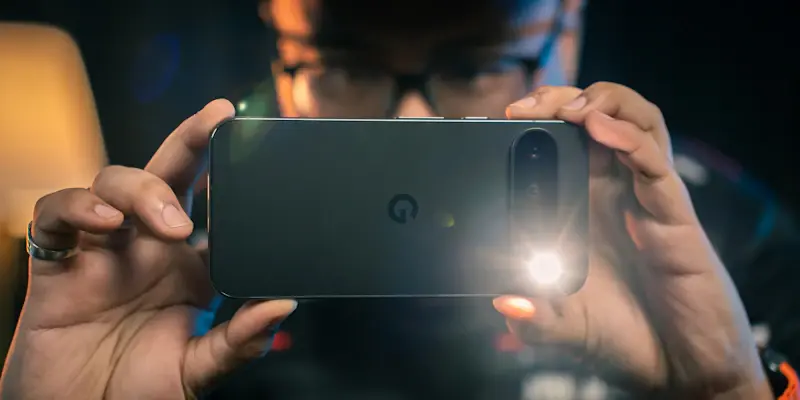
As the technology landscape continues to evolve, competition between smartphone giants becomes fiercer. The launch of Samsung’s Galaxy S25 series has set a new benchmark in the industry, yet Google’s latest Pixel 9 series presents a formidable challenge. With significant discounts on the Pixel 9 Pro and Pixel 9 Pro XL, Google aims to tap into Samsung’s market share by offering competitive alternatives in performance and pricing. Despite Samsung’s reputation for high-end camera performance, Google’s unique software features and strategic pricing make the Pixel 9 series an enticing option for many consumers. This analysis seeks to explore whether Google’s Pixel 9 series can truly rival Samsung’s globally acclaimed Galaxy S25 and S24 series.
Compelling Features and Strategic Pricing
With the Samsung Galaxy S25 series making headlines, Google has taken a bold step by offering substantial discounts on its flagship models. The Pixel 9 Pro and Pixel 9 Pro XL are now $200 off, making them strong contenders against the Galaxy S25 Ultra. Although the Pixel 9 series can’t entirely match the Ultra’s superior camera performance, thanks to its Snapdragon 8 Elite processor, it does offer its own set of unique advantages. Features such as ultra-wide selfies and a distinct interpretation of the Android operating system provide a fresh perspective that appeals to a different segment of the user base. Moreover, the competitive starting price of the Pro XL at $1,000 for a 256GB version undercuts the Galaxy S25 Ultra’s $1,300 price point, even when considering the $200 gift card incentive offered by Samsung.
Further evaluating the Pixel 9 Pro, it shares the same camera setup as the Pro XL, making it a viable alternative to the base Galaxy S25. While the Galaxy S25 lacks the advanced camera features of the Ultra, the Pixel 9 Pro holds its ground with an appealing balance of features. The Pixel’s larger and heavier build, coupled with identical battery performance, presents a solid alternative to Samsung’s offering. Its starting price of $900 against the Galaxy S25’s $860 (including a $100 gift card) keeps the battle evenly matched. This pricing strategy by Google aims to provide consumers with a compelling reason to consider switching from a trusted brand like Samsung to Google’s innovative Pixel line.
Mid-Range Options and Budget Considerations
In addition to its high-end models, Google offers the Pixel 9 as an even more budget-friendly option, available for $650. Although it features a lower-resolution display and omits the telephoto camera, it remains largely similar to the Pro models, appealing to budget-conscious consumers seeking performance without high costs. Samsung counters this with the Galaxy S24 FE, equipped with an Exynos 2400e processor, outperforming Google’s Tensor G4. The S24 FE boasts an 8MP telephoto camera, but compromises with a 12MP ultra-wide camera compared to the Pixel 9’s robust 48MP. This variation in specs highlights the distinct positioning of each brand in the mid-range market.
Moreover, Google’s mid-ranger, the Pixel 8a, priced at $400, offers an additional option for those on a tighter budget. Featuring the older Tensor G3 chip, it comes with slower charging options but provides a capable performance for daily tasks. Another layer of anticipation builds with rumors of the Pixel 9a, expected to launch in late March. This next iteration will likely incorporate advancements that could further influence consumer decisions between the two brands. Google’s strategy of offering various price points aims to capture a wider audience, from tech enthusiasts to those seeking affordable yet powerful smartphones.
Tablet Showdown and Market Diversification
As the technology landscape continually changes, the rivalry between major smartphone manufacturers grows more intense. Samsung’s recent release of the Galaxy S25 series has set a new industry standard. Meanwhile, Google’s introduction of the Pixel 9 series poses a significant threat to Samsung’s dominance. With substantial discounts offered on the Pixel 9 Pro and Pixel 9 Pro XL, Google is strategically positioning itself to capture Samsung’s market share by providing high-performance alternatives at competitive prices. Even though Samsung is well known for its exceptional camera capabilities, Google’s innovative software features paired with aggressive pricing make the Pixel 9 series a very appealing choice for many consumers. This detailed analysis aims to determine if Google’s Pixel 9 series can genuinely challenge the widespread acclaim of Samsung’s Galaxy S25 and S24 series. The competition is heating up as both tech giants strive to innovate and win over the consumer market, making the future of smartphones an exciting area to watch.