

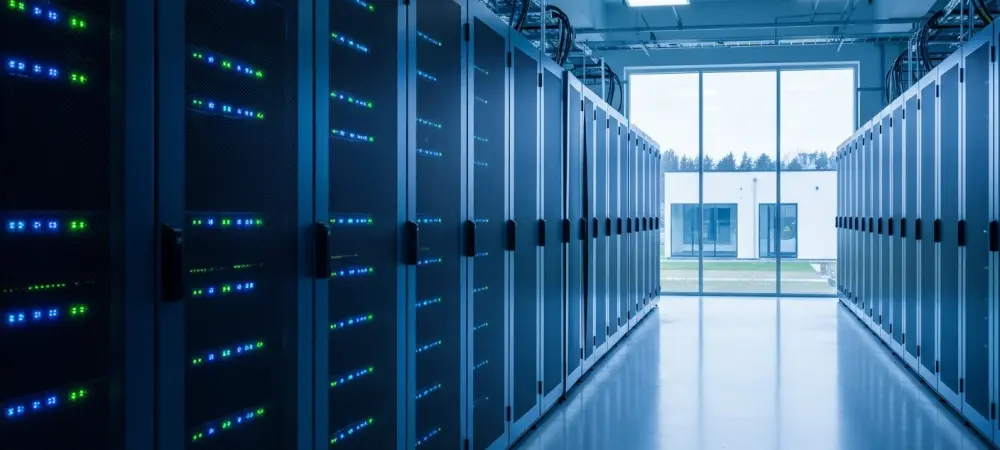
The digital infrastructure powering modern society, from streaming services to the burgeoning artificial intelligence economy, runs on a physical resource that is becoming alarmingly scarce: reliable, round-the-clock electricity. As the demand for data processing skyrockets, the industry is confronting a reality where its expansion is no longer limited by technology or capital, but by the fundamental constraint of power availability. This critical juncture has forced a reevaluation of energy strategies, turning attention toward a long-overlooked resource that harnesses the Earth’s own heat. Geothermal energy, once a niche player, is now emerging as a powerful contender to resolve the data center industry’s escalating power crisis, offering a unique combination of reliability, sustainability, and scalability.
The Unseen Bottleneck of the AI Revolution
The rapid advancements in artificial intelligence are not just a revolution in computing; they represent a seismic shift in energy consumption. The complex algorithms and massive datasets that train and operate large language models require computational power on an unprecedented scale, translating directly into enormous electricity demands. This surge is creating an unseen bottleneck, where the progress of AI is fundamentally tethered to the capacity of regional power grids, many of which are already operating near their limits and were never designed for such concentrated, high-density loads.
This power bottleneck poses a direct threat to continued innovation and economic growth. Data center developers, who are racing to build the infrastructure needed to support the AI boom, are increasingly finding that securing a power connection is the longest and most challenging part of their development timeline. The issue is no longer simply about finding land or capital but about accessing the sheer volume of megawatts required to energize these digital factories. Without a new energy paradigm, the AI revolution risks hitting a power wall, stalling its potential before it is fully realized.
The Data Center Dilemma and Its Insatiable Thirst for Power
The core of the data center industry’s challenge lies in a simple yet profound mismatch: the exponential growth in demand for data processing is far outpacing the linear, often stagnant, expansion of the electrical grid. A single hyperscale data center campus can now require hundreds of megawatts, equivalent to the consumption of a small city. This insatiable thirst for power places immense strain on local and regional grids, creating a competitive and often zero-sum environment for energy access.
For developers, this strain manifests as a logistical nightmare. They are frequently met with overburdened electrical grids that cannot accommodate new large-scale connections without prohibitively expensive and time-consuming upgrades. Consequently, projects are forced into multi-year interconnection queues, waiting behind a long line of other energy and industrial developments. This gridlock effectively throttles the pace of data center deployment, delaying the very infrastructure needed to power digital economies and creating significant uncertainty for multi-billion-dollar investments.
Furthermore, while solar and wind power are critical components of the clean energy transition, their intermittent nature presents a significant challenge for data centers. These facilities require constant, 24/7 power to maintain the 99.999% uptime their clients demand. The variability of sunshine and wind means that these sources alone cannot provide the “firm,” baseload power needed without being paired with massive, costly battery storage or fossil fuel backups, which complicates the sustainability equation and adds another layer of operational complexity.
Geothermal Reimagined as a Mainstream Solution
Historically, geothermal energy was seen as a geographically limited power source, viable only in rare locations where hot water or steam reservoirs existed close to the Earth’s surface. This dependency on unique geological conditions kept its footprint small, with the United States possessing only around 4 gigawatts of installed capacity, concentrated primarily in the geologically active regions of California and Nevada. Conventional geothermal was a powerful but niche resource, unable to be deployed at the scale needed to address a global power challenge.
A technological paradigm shift, borrowing proven techniques from the oil and gas industry’s shale revolution, has fundamentally changed this reality. The advent of Enhanced Geothermal Systems (EGS) allows operators to engineer geothermal reservoirs where they are needed. By using advanced horizontal drilling and hydraulic fracturing, EGS creates a network of fissures deep within hot, impermeable rock. This process enables the creation of a closed-loop system where fluid is circulated to absorb the Earth’s heat and bring it to the surface to generate electricity, effectively turning vast stretches of the planet into potential power plants. This innovation unlocks a colossal resource base, transforming geothermal from a curiosity into a mainstream energy solution. The potential for EGS in the United States alone is measured in the hundreds of gigawatts, expanding its viability far beyond the West Coast. With the ability to tap into the planet’s constant heat virtually anywhere, EGS offers a scalable, repeatable model for generating clean, firm power, positioning geothermal as a direct answer to the energy sector’s most pressing challenges.
A Blueprint for the Future at Cape Station
The theoretical promise of Enhanced Geothermal Systems is being translated into a commercial reality at Fervo Energy’s Cape Station project in Utah. This development serves as a critical proof of concept, demonstrating that EGS can be deployed at the scale required to power modern industry. With the first 100-megawatt phase well under construction and a total planned capacity of 500 megawatts by 2028, Cape Station is validating geothermal as a viable, utility-scale power source.
Market confidence in this new approach to geothermal is already strong. The initial phase of the project is fully contracted with long-term customers, signaling robust demand for clean, reliable, 24/7 power that can be delivered on a predictable schedule. This commercial success is a powerful endorsement of the technology’s readiness and its ability to compete with traditional energy sources on both performance and cost, particularly for consumers who place a high premium on reliability.
Moreover, the project’s design embodies the modular and scalable model that is perfectly suited for phased data center growth. By developing capacity in standardized 50-megawatt units, the power supply can be brought online in lockstep with a data center’s construction and load ramp-up. This “just-in-time” approach to power generation showcases a repeatable blueprint that minimizes risk and optimizes capital deployment, setting a new standard for how critical infrastructure projects can be developed in tandem.
The Four Pillars of the Geothermal Advantage
The alignment between geothermal energy and data center needs can be understood through four distinct advantages that create a new playbook for development. The first pillar is strategic colocation, which fundamentally changes how and where data centers are built. By co-locating a data center directly with a geothermal power plant, developers can bypass the congested public grid entirely, eliminating the multi-year waits in interconnection queues and the energy losses associated with long-distance transmission. This direct-connect model also provides significant cost stability, insulating operators from the volatile prices of fossil fuels and fluctuating grid transmission charges.
The second pillar is a competitive speed to market. The modular nature of EGS allows power capacity to be developed in parallel with the data center it will serve, ensuring that electricity is available precisely when it is needed. This phased deployment contrasts sharply with the long lead times for traditional power infrastructure upgrades. Furthermore, EGS leverages the mature and resilient supply chains of the oil and gas service industry, mitigating the risks of equipment bottlenecks that have delayed other large-scale energy projects in recent years.
Unmatched reliability and consistency form the third pillar. Geothermal energy delivers firm, 24/7 power that is independent of weather or time of day, making it an ideal source to meet the stringent 99.999% uptime requirements of modern data centers. With capacity factors often exceeding 90%—far higher than solar or wind—geothermal plants provide a steady, predictable stream of electricity that perfectly matches a data center’s constant, high-demand load profile, eliminating the need for costly backup systems.
Finally, the fourth pillar combines sustainability with economic resilience. Geothermal provides clean, low-carbon electricity, allowing data center operators and their tenants to meet ambitious corporate decarbonization and ESG mandates without compromising on performance. Because the “fuel” is the Earth’s own inexhaustible heat, operators are freed from exposure to volatile commodity markets and geopolitical supply risks. This “fuel-free” operational model created a predictable, long-term cost structure, offering a level of economic resilience that is increasingly vital in a turbulent global energy landscape.
The convergence of technological innovation in geothermal energy and the escalating power demands of the digital economy marked a pivotal moment. The analysis of Enhanced Geothermal Systems revealed that it was not merely another alternative energy source but a comprehensive solution uniquely tailored to the data center industry’s most pressing challenges. By offering a path to bypass gridlock, ensure 24/7 reliability, and meet sustainability goals, geothermal technology provided a viable and compelling blueprint for the future of digital infrastructure development. The success of projects like Cape Station demonstrated that this vision was already becoming a reality, signaling a fundamental shift in how the world could sustainably power its digital future.