

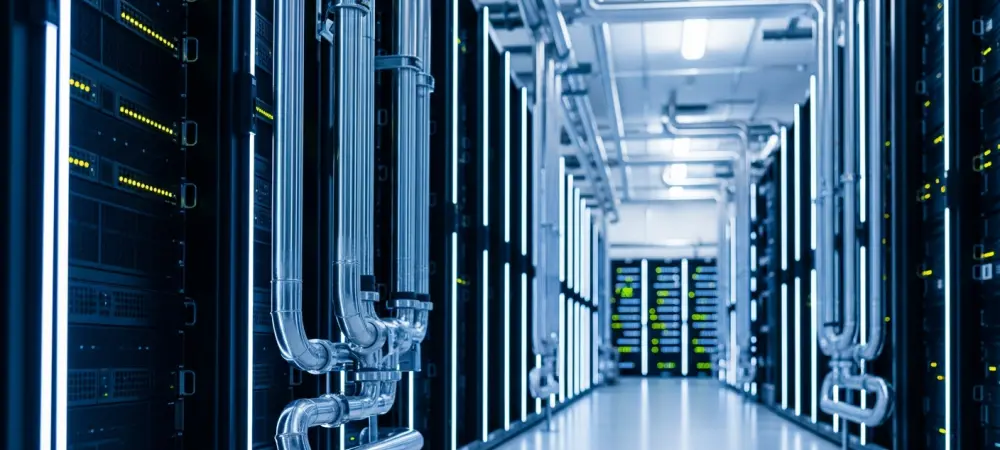
While the modern digital world often feels entirely weightless and ethereal, its physical foundation remains a massive, energy-hungry network of “digital lungs” that are currently undergoing a radical green transformation to meet environmental demands. As global data consumption continues to skyrocket, the environmental footprint of these facilities has emerged as a critical focal point for urban planners, tech giants, and environmental advocates. The sheer volume of energy required to sustain cloud computing, artificial intelligence, and global streaming services has forced a shift in how infrastructure is designed and maintained. This analysis explores the transition from legacy infrastructure to sustainable ecosystems, highlighting recent efficiency breakthroughs, expert perspectives on the industry’s traditional “fortress” mentality, and the future of high-density connectivity.
The significance of this evolution cannot be overstated, as the digital economy now permeates every aspect of human life. What were once viewed as mere utility warehouses are now recognized as the vital organs of modern society, requiring a level of care and architectural sophistication previously reserved for high-profile civic projects. The shift represents a move away from raw power consumption toward a more symbiotic relationship with the urban environments they inhabit. By examining the current landscape, it becomes clear that the path to a sustainable digital future relies on a combination of engineering innovation and a fundamental change in the industry’s cultural approach to transparency and shared resources.
Evaluating the Momentum of Green Data Solutions
Global Adoption Rates and Efficiency Benchmarks
Data centers currently account for a significant portion of global electricity consumption, a reality that has prompted a massive industry shift toward lowering Power Usage Effectiveness (PUE) ratings. Historically, the industry-standard PUE hovered around 1.7, meaning that for every watt used for computing, nearly three-quarters of a watt was wasted on cooling and power distribution. However, recent trends show a decisive move toward highly efficient targets of 1.3 or even lower. This progress is primarily driven by the adoption of advanced closed-loop cooling systems and AI-driven power management tools that optimize energy flow in real-time. These technologies allow facilities to respond dynamically to heat loads, reducing unnecessary expenditure during periods of lower activity. Market statistics indicate that investment in sustainable “refurbishment” projects is now outpacing new builds in major metropolitan hubs like London and Singapore. This trend is a direct result of limited urban space and increasingly strict decarbonization mandates imposed by local governments. Developers have found that retrofitting existing structures is often more viable than seeking new land, provided the “bones” of the building can support modern upgrades. Consequently, the industry is seeing a surge in projects that prioritize the modernization of older facilities, transforming them into high-efficiency nodes that meet modern environmental standards without the carbon cost associated with new construction.
Real-World Application: The Transformation of Telehouse South
The Telehouse South facility serves as a primary case study in architectural reinvention, successfully transforming a legacy modular building into a self-heating facility in the heart of London. Originally designed by Richard Rogers as a flexible office and data space, the structure underwent a total internal overhaul to meet the demands of the modern era. The most significant engineering change involved the total removal of gas-fired boilers and water heaters. By implementing waste heat recovery systems, the facility now repurposes thermal energy generated by the server halls to provide warmth for the entire structure, including administrative offices and common areas. This circular approach to energy usage demonstrates how data centers can act as heat sources rather than just heat sinks. Furthermore, the transition from traditional air conditioning to advanced Computer Room Air Handling (CRAH) units allowed this specific hub to drop its PUE from a mediocre 1.74 to a highly efficient 1.27. These new units utilize a closed-loop water system that mimics the efficiency of a domestic heating circuit, avoiding the constant water consumption typical of older evaporative cooling methods. The success of Telehouse South proves that even complex, established urban infrastructure can be modernized to meet aggressive sustainability goals. This project serves as a blueprint for other operators looking to balance the need for high-density connectivity with the imperative of environmental responsibility.
Expert Insights on the Challenges of Digital Sustainability
Industry leaders emphasize that the “inhuman scale” of modern data centers requires a delicate balance between rigorous security and environmental transparency. For decades, the sector operated in the shadows, characterized by windowless blocks and high fences that prioritized physical safety above all else. While security remains paramount, thought leaders suggest that the biggest hurdle to further sustainability is not technology, but the “fortress-like” mentality of clients who demand extreme privacy. This culture of secrecy can sometimes complicate the implementation of shared cooling or heat-exporting resources, as clients are often hesitant to allow any external integration that might compromise the perceived integrity of their data halls. Professionals in the field argue that the value of a data center is fundamentally shifting from raw compute power to “connectivity density.” In this new paradigm, efficiency is found through localized edge presence rather than massive, sprawling campuses located in remote areas. By placing compute resources closer to the end-user, operators can reduce the energy required for long-distance data transmission. However, this move toward the “edge” requires facilities to be more adaptable and integrated into the community. Experts suggest that the next generation of data centers must be designed as flexible nodes that can offer everything from small-scale racks for local businesses to high-security cages for financial institutions, all while maintaining a minimal environmental footprint.
The Long-Term Trajectory of Eco-Conscious Infrastructure
The future of the industry lies in the widespread adoption of “free cooling” regimes, where facilities utilize ambient air for the majority of the year to drastically reduce reliance on mechanical chillers. This approach is particularly effective in temperate climates, where the external temperature is often sufficient to cool high-density server halls without the need for energy-intensive refrigeration. Potential developments also include the use of massive chilled-water buffer vessels that act as thermal batteries. These insulated tanks can maintain cooling during critical power transitions, providing a layer of resilience that complements modern backup systems. Furthermore, there is a growing trend toward replacing traditional diesel generators with systems that prioritize carbon-neutral fuels, ensuring that even emergency operations align with sustainability goals.
While the transition presents significant challenges, such as the high cost of retrofitting the “bones” of old buildings, the broader implication is a more resilient digital supply chain that can survive both energy fluctuations and environmental scrutiny. The evolution of the data center will likely mirror the history of maritime docks, moving from industrial hubs of physical labor to highly automated, invisible nodes of global trade. Just as the warehouses of the past were essential for the movement of spices and textiles, the data centers of today are the critical infrastructure for the movement of information. The success of this transition depends on the industry’s ability to maintain its technical excellence while embracing architectural adaptability and energy innovation.
Conclusion: Securing a Sustainable Digital Future
The shift from energy-intensive legacy warehouses to high-efficiency, decarbonized connectivity hubs required a fundamental reimagining of how digital infrastructure interacted with the physical world. Stakeholders across the technology and urban planning sectors recognized that the long-term viability of the internet depended on its ability to minimize its environmental impact. The transition involved moving away from isolated, “fortress-like” designs toward integrated systems that prioritized heat recovery, free cooling, and localized edge presence. These changes proved that even the most demanding technical requirements could be met through sustainable engineering, provided there was a commitment to total system reinvention rather than incremental improvements.
As the industry moved forward, the focus expanded beyond simple energy metrics to include the broader social and historical context of the sites being developed. Operators discovered that repurposing historic industrial locations not only preserved urban heritage but also provided the robust foundations necessary for modern data traffic. This approach solidified the idea that the physical structures housing data were as vital to survival as the shipping docks of previous centuries. The progress achieved in thermal efficiency and carbon reduction demonstrated that the digital economy could grow without an equivalent increase in its ecological footprint.
Looking ahead, the continued utilization of waste heat and the development of carbon-neutral backup systems emerged as the next major frontiers for innovation. Industry leaders focused on creating even more adaptable architectural frameworks that could respond to the rapidly changing needs of artificial intelligence and high-speed networking. The lessons learned from successful retrofitting projects provided a clear path for future developments in metropolitan areas where space remained a premium. Ultimately, the successful decarbonization of the data center industry ensured that the internet remained a robust, responsible, and permanent fixture of global civilization.