

The rapid proliferation of generative artificial intelligence and high-density computing clusters has fundamentally transformed the global data center landscape, shifting the industry’s focus from purely electrical efficiency to the increasingly critical challenge of sustainable water consumption. For decades, Power Usage Effectiveness served as the gold standard for facility performance, but the massive thermal loads generated by modern processors now require millions of liters of water daily to maintain operational stability. This transition has turned water availability into a primary constraint for infrastructure expansion, with local governments and environmental regulators scrutinizing new permits based on projected hydrological impacts. While liquid cooling and closed-loop technologies represent the future of high-density thermal management, the vast majority of current infrastructure relies on evaporative cooling systems. Within these existing facilities, the technical variable known as cycles of concentration has emerged as a vital lever for operational efficiency.
Scaling Efficiency: The Mechanics of Cooling and Concentration
Evaporative cooling remains the preferred method for many hyperscale operators because it utilizes the physical principles of latent heat to dissipate enormous amounts of thermal energy with relatively low power input. In this process, a portion of the circulating water evaporates, effectively carrying heat away from the data hall, but this physical phase change leaves behind all the dissolved minerals originally present in the source water. Over time, these minerals, including calcium, magnesium, and various silicates, become increasingly concentrated within the cooling loop. If left unmanaged, these dissolved solids eventually reach a saturation point where they precipitate out of the liquid, forming a dense, insulating scale on heat exchangers and internal surfaces. This scaling phenomenon drastically reduces the thermal conductivity of the system, forcing cooling fans and pumps to consume more electricity to compensate for the lost efficiency, which creates a negative feedback loop.
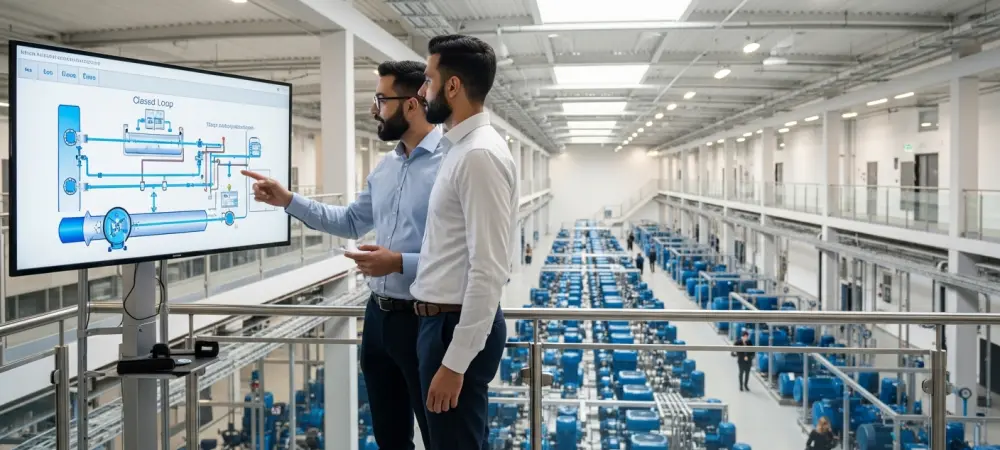
Real-time sensor arrays now measure parameters like conductivity, pH, and oxidation-reduction potential with extreme precision, feeding this data into automated control systems that adjust blowdown and makeup rates on the fly. This shift from manual water testing to continuous digital monitoring allows facility managers to respond instantly to changes in water quality or ambient environmental conditions that might affect evaporation rates. By leveraging these advanced telemetry tools, data centers can operate closer to their chemical limits with a much higher degree of confidence. This granular control not only prevents the gradual accumulation of minerals but also provides the detailed reporting necessary to satisfy increasingly stringent corporate environmental, social, and governance requirements.
To mitigate the risks of mineral scaling and corrosion, facility engineers must periodically perform a process known as blowdown, where a portion of the mineral-heavy water is discharged and replaced with fresh makeup water. The efficiency of this management strategy is measured by the cycles of concentration, representing the ratio of mineral levels in the cooling tower water compared to those in the incoming supply. Many legacy data centers traditionally operate at a conservative cycle count of two or three to avoid equipment damage, but this practice results in significant water waste. By implementing precision monitoring and chemical management to increase these cycles from three to six, an operator can achieve a twenty percent reduction in total water intake. More importantly, this optimization leads to a fifty percent decrease in wastewater discharge, substantially lowering the facility’s environmental footprint while simultaneously reducing the financial costs associated with procurement.
Chemical Barriers: Overcoming Mineral Constraints With Pre-treatment
Achieving higher cycles of concentration is not a universal task because every geographic location presents a unique chemical ceiling determined by the composition of the local municipal or groundwater supply. In regions with high alkalinity or significant concentrations of silica, the cooling water reaches its saturation limit much faster, making it difficult to maintain high efficiency without risking catastrophic equipment failure. Silica is particularly problematic for data center operators because once it deposits onto a surface, it forms a glass-like barrier that is nearly impossible to remove through standard mechanical cleaning or traditional chemical treatments. Because of these localized variations, two identical data center designs situated in different states can exhibit vastly different water usage profiles based solely on the mineral hardness of their respective water sources. Understanding these specific chemical thresholds is the first step toward a more sophisticated approach.
To break through these natural chemical limits, progressive operators are now treating their makeup water as a strategic asset that requires advanced pre-treatment before it enters the cooling tower infrastructure. Technologies such as automated water softening and side-stream filtration are being deployed to remove hardness ions and suspended solids, which allows the cooling loop to run at much higher concentration levels without the threat of scaling. In areas where water quality is exceptionally poor, some facilities have integrated partial reverse osmosis systems to strip away a significant portion of dissolved solids before the water ever touches the heat exchangers. Although these pre-treatment systems require an upfront capital investment and additional maintenance, the long-term benefits are substantial. By reducing the volume of makeup water required and extending the lifespan of the cooling hardware, these technologies provide a clear pathway for facilities to meet ambitious sustainability targets.
Resource Sourcing: Managing Reclaimed Water and Operational Risks
As competition for freshwater resources intensifies between industrial users and local communities, data center operators are increasingly turning to non-potable sources such as reclaimed municipal wastewater for their cooling needs. Utilizing what is commonly known as purple-pipe water allows a facility to significantly reduce its impact on the local drinking water supply, but this shift introduces a new set of complex operational challenges. Reclaimed water often contains higher levels of organic nutrients and biological contaminants, which can lead to the rapid development of biofilms within the cooling infrastructure if not properly managed. These biological layers not only impede heat transfer but also harbor potentially harmful bacteria, necessitating more aggressive biocide programs and robust filtration systems to maintain a safe and efficient environment. Despite these complexities, the integration of reclaimed water combined with optimized cycles of concentration represents a critical strategy.
The path toward sustainable data center operations required a fundamental departure from standardized cooling protocols in favor of site-specific chemistry audits and precision management. Facility planners prioritized detailed assessments of local water hardness, alkalinity, and silica levels to establish the true maximum efficiency of their cooling loops. This transition allowed engineers to implement customized treatment solutions that pushed cycles of concentration to their physical limits, effectively decoupling computational growth from excessive water consumption. By investing in real-time monitoring and advanced filtration, the industry successfully lowered its collective Water Usage Effectiveness without sacrificing the thermal performance necessary for next-generation hardware. These actions demonstrated that masterfully managing the chemical variables of existing infrastructure provided a more immediate and cost-effective solution than complete architectural redesigns. The focus eventually moved toward integrating these chemical insights.