

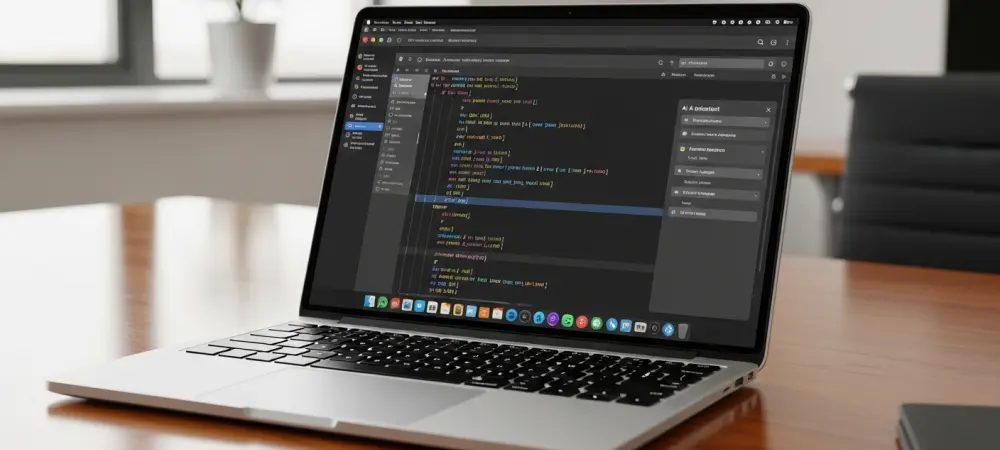
The recent release of Anthropic’s Claude Desktop for the Linux operating system represents a significant shift in how artificial intelligence companies view the technical professional market. For years, the Linux community remained sidelined as major AI providers focused their native application efforts on Windows and macOS, leaving developers and system administrators to rely on browser-based interfaces that often felt disconnected from their local environments. This new desktop application seeks to bridge that gap by offering a dedicated space where the power of generative models can interact more fluidly with the specialized tools that define the Linux experience. By moving away from the constraints of a web browser, Anthropic is effectively acknowledging that high-level technical work requires a level of integration and stability that simple tabs cannot provide. This strategy is a calculated move to embed Claude into the foundational workflows of the engineers who build and maintain modern digital infrastructure.
Professional Engineering: Workflow Optimization
With roughly one-third of the global developer population utilizing Linux distributions as their primary environment, the demand for a native application has never been more apparent or urgent. Native integration allows for far more sophisticated interaction with the operating system, including the use of global keyboard shortcuts and the ability to manage system-level multitasking without the performance overhead of a browser engine. For a backend engineer or a DevOps professional, the ability to summon an AI assistant without switching context from a terminal or an integrated development environment is a massive productivity gain. This seamless integration ensures that Claude becomes an extension of the developer’s toolkit rather than a separate destination. Furthermore, the desktop application provides a more consistent experience across different workspaces, allowing users to maintain their focus on complex tasks while benefiting from the advanced reasoning capabilities that Anthropic has built into its latest models.
Beyond simple productivity, the move to a native Linux application enables much deeper integration with the impressive reasoning and code-generation skills found in Claude 3.5 Sonnet. While browser tabs are often restricted by security sandboxes that limit their access to local file systems and system resources, a desktop application can be granted specific permissions to analyze large codebases or complex documentation more efficiently. This localized presence allows for a much smoother handling of massive data sets, as the application can leverage system memory more effectively than a standard web interface. Users who regularly engage in deep document analysis or require assistance with intricate debugging sessions will find that the native app offers a level of responsiveness and reliability that matches the expectations of professional users. By providing this dedicated environment, Anthropic is positioning its model as a reliable partner in the coding process, capable of handling the heavy lifting of modern software development within a secure and optimized desktop package.
Technical Barriers: Local Execution and Fragmentation
Despite the clear advantages of a native application, the transition toward true local AI execution remains one of the most significant hurdles for the industry to overcome on the Linux platform. Running massive language models directly on local hardware is an attractive prospect for organizations that prioritize total data privacy or require access in offline environments, yet it introduces a host of technical complications. The diversity of the Linux ecosystem, which spans countless distributions and hardware configurations, makes it exceptionally difficult to optimize for local performance across the board. Unlike the uniform hardware found in Apple’s ecosystem, Linux runs on an endless variety of central processing units, graphics cards, and specialized drivers, each requiring a different approach to resource management. Early feedback suggests that shrinking these sophisticated models to fit onto consumer-grade hardware without sacrificing their core intelligence is an ongoing battle, as the trade-offs between speed and accuracy remain difficult to balance.
The successful integration of Claude into Linux-based workflows required a proactive approach from both developers and internal security teams. Engineers who adopted the native desktop application quickly discovered that defining specific access scopes allowed the AI to participate in code reviews and architectural planning without compromising proprietary data. This development encouraged a shift toward hybrid processing models, where less sensitive tasks utilized the power of the cloud while critical local operations remained on isolated machines. Forward-thinking organizations began investing in standardized hardware configurations that supported the high-bandwidth memory required for future local model iterations, effectively solving the hardware fragmentation puzzle. These steps moved the industry beyond mere experimentation, transforming AI from a peripheral chat tool into a central pillar of the professional software development lifecycle. By focusing on the unique needs of the Linux community, the implementation provided a clear roadmap for how high-level technical work would eventually harmonize with advanced generative intelligence.