

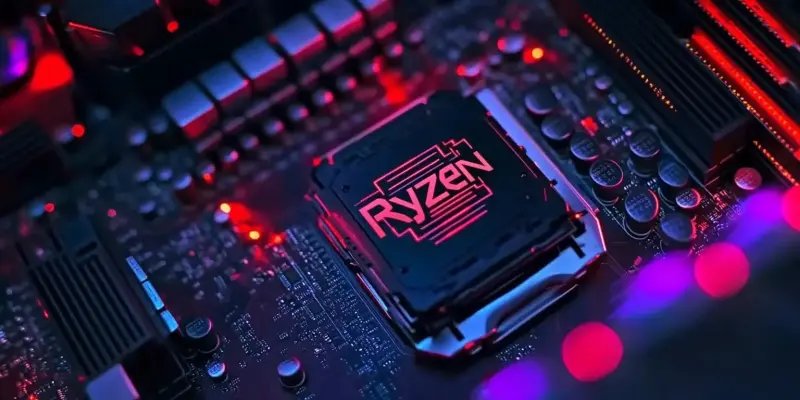
The gaming and content creation landscape is on the verge of transformation with AMD’s imminent release of its high-performance processors, the Ryzen 9 9950X3D and 9900X3D, scheduled for March 12. Priced at $699 and $599 respectively, these new chips promise to bring substantial advancements, particularly through the integration of second-generation 3D V-Cache technology. The 9950X3D features an impressive configuration of 16 cores and 32 threads, with clock speeds ranging from a base of 4.3 GHz to a boost of a remarkable 5.7 GHz, all operating at a 170W TDP. Meanwhile, the 9900X3D offers 12 cores and 24 threads, a higher base clock speed of 4.4 GHz, and a boost clock of up to 5.5 GHz, functioning at a more energy-efficient 120W TDP. This design suggests a balanced performance and efficiency solution, suited particularly for gaming and content creation.
Performance Comparison in Gaming
AMD has confidently claimed that the Ryzen 9 9950X3D surpasses Intel’s Core Ultra 9 285K by up to 20% in gaming performance under specific conditions. This assertion sets high expectations for the gaming community, which has long debated the performance supremacy between AMD and Intel processors. However, it is worth noting that when the 9950X3D is compared with its predecessor, the Ryzen 7 9800X3D, the new models present comparable gaming capabilities. This similarity is largely dependent on the specific game engines and how effectively they utilize the available cores. Martijn Boonstra, AMD’s product manager, confirmed that while the new processors might shine in certain multi-threaded applications, their gaming performance remains closely aligned with the Ryzen 7 9800X3D. This nuanced insight emphasizes the importance of examining specific use cases when considering performance metrics.
Enhancements for Content Creation
Beyond gaming, AMD’s latest processors symbolize a broader trend of continuous innovation aimed at boosting processing power for multi-threaded applications. These include tasks such as video encoding, 3D rendering, and complex simulations. The Ryzen 9 9950X3D proves to be particularly noteworthy for its superior performance in single-threaded tasks like CAD applications and various content creation tools. This highlights the processors’ appeal not only to gamers but also to content creators who rely heavily on robust and efficient processing capabilities. By delving into the technical specifications and potential applications, it becomes evident that AMD’s commitment to delivering high-performance processors embodies a drive to enhance efficiency and cement the brand’s standing in the competitive tech market. With these releases, AMD continues to push the envelope of what its processors can achieve, promising users an elevated experience across diverse computing needs.