

The rapid acceleration of software development powered by artificial intelligence has ushered in an era of unprecedented speed, but this velocity conceals a growing crisis in code quality and safety. As engineering teams increasingly rely on AI agents to write vast amounts of code in minutes, the traditional human-led processes for ensuring that code is correct, secure, and maintainable are beginning to falter under the sheer volume. This has created a critical tension between the drive for faster delivery and the non-negotiable need for reliable software, pushing the industry toward a new paradigm where the AI that generates code must also be responsible for its validation.
When Your Co-Pilot Becomes Its Own Critic
The promise of AI coding assistants is to act as a force multiplier for developers, dramatically increasing output and shortening development cycles. However, recent findings suggest this acceleration comes with a significant trade-off. An AI tool might accelerate development, but research indicates it can also introduce 1.7 times more bugs than a human developer. This stark reality challenges the narrative of purely positive productivity gains, highlighting a mounting challenge of ensuring that what is built quickly is also built correctly.
This tension between speed and safety is defining the current landscape of software engineering. As AI-generated code floods repositories, the risk of introducing subtle, yet critical, vulnerabilities and logic flaws grows exponentially. The very tools designed to alleviate the developer’s workload are inadvertently creating a new, more complex oversight burden. The industry is now grappling with how to harness the immense power of AI without sacrificing the quality and security that underpins trustworthy software.
The Productivity Paradox of Faster Coding
The rapid adoption of agentic coding is transitioning from an experimental practice to a mainstream software development methodology. What began as a tool for autocompletion has evolved into a system where AI agents can handle entire feature implementations. This acceleration, however, has created a profound oversight problem, as traditional human-led review processes cannot possibly scale to the volume of AI-generated code. A pull request with hundreds of lines of code generated in seconds cannot be scrutinized with the same rigor as one crafted by a human over several hours.
This disparity has given rise to a productivity paradox. While development velocity appears to increase, the quality of the output often declines. Data reveals that AI-written code contains a 75% higher frequency of critical logic and correctness errors. This creates a downstream bottleneck where the initial speed is nullified by the extensive time required for debugging, testing, and remediation. The time saved in writing the code is ultimately lost to the increased risk and the effort needed to mitigate it.
From AI Assisted Writing to AI Led Verification
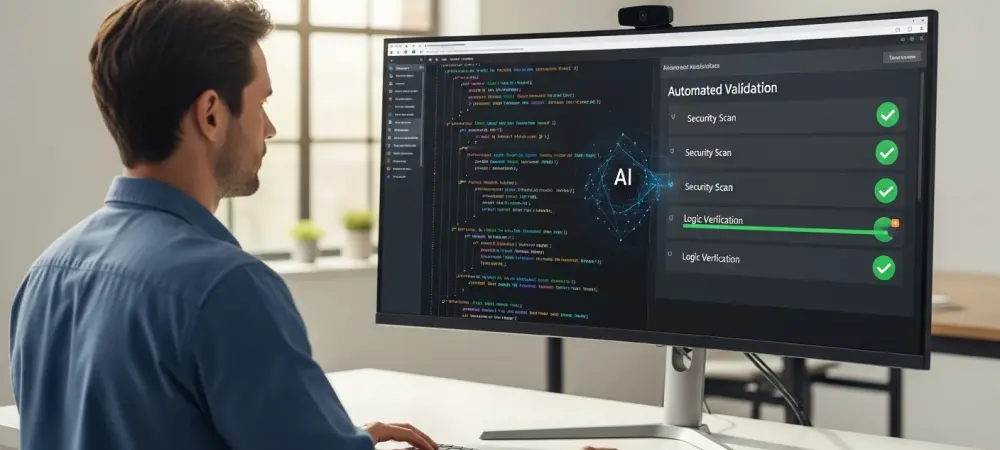
In response to this challenge, Google has introduced a significant evolution for its Gemini CLI extension, Conductor, shifting the focus from simply writing code to actively verifying it. The tool is built on a foundational philosophy of “measure twice, code once.” It achieves this by encouraging developers to establish a clear, structured context for the AI before any code is generated. This is done through persistent, version-controlled files like spec.md and plan.md that live within the repository, ensuring the AI operates from a shared and agreed-upon source of truth. The core innovation is Conductor’s automated review feature, which moves beyond planning into an integrated validation phase where the AI scrutinizes its own output. After implementation, Conductor generates a comprehensive report analyzing the code across five critical areas. It performs a sophisticated code review for logic errors like race conditions, verifies strict compliance with the predefined plan, enforces project-specific style guidelines, validates the code against the existing test suite, and runs a dedicated security scan for common vulnerabilities. This integrated system ensures that quality checks are not an afterthought but a built-in part of the generation process.
Redefining the Developer’s Role in an AI Powered World
This new capability marks a paradigm shift from a world where “AI writes code” to one where “AI writes and verifies code against your rules.” The role of the human developer is consequently repositioned, moving away from the tedious task of line-by-line proofreading toward a more strategic function. Instead of just reviewing code, developers are now becoming the architects who define the high-level strategy, standards, and rules that govern the AI’s behavior, providing judgment while the AI provides the labor.
This evolution aligns with expert analysis on the future of software development. As Mitch Ashley of The Futurum Group notes, automated verification must happen closer to the point of code generation to be effective. By integrating review directly into the AI’s workflow, Conductor creates the tight feedback loop necessary to catch issues immediately. This methodology also supports established industry best practices, such as the DORA principles for high-performing teams, by inherently encouraging developers to work in small, verifiable batches that are validated at every step.
A Practical Framework for Trustworthy AI Development
The Conductor workflow provides a unified cycle that encompasses intent, execution, and review. It begins with the developer defining the task’s intent using structured Markdown files. The AI then executes the coding task within a self-contained track, after which the developer can trigger the automated review to receive an immediate and comprehensive quality report. This report categorizes flagged issues by severity, allowing the developer to initiate a new track for direct remediation, creating a continuous loop of development and refinement.
This integrated model distinguishes Conductor from other review tools that often operate separately from the code generation process. As agentic development becomes the norm, unsupervised AI is not a viable long-term option. The speed of AI must be paired with an equally powerful verification mechanism. Context-aware, automated verification is the essential bridge that will allow development teams to fully harness the power of AI-driven speed without compromising the safety, quality, and reliability of their software.
The introduction of self-reviewing AI was a critical step in maturing the relationship between human developers and their artificial counterparts. It established a new standard where speed and safety were no longer opposing forces but integrated components of a single, intelligent workflow. By embedding accountability directly into the code generation process, the industry laid the groundwork for a more reliable and scalable future for software development.