

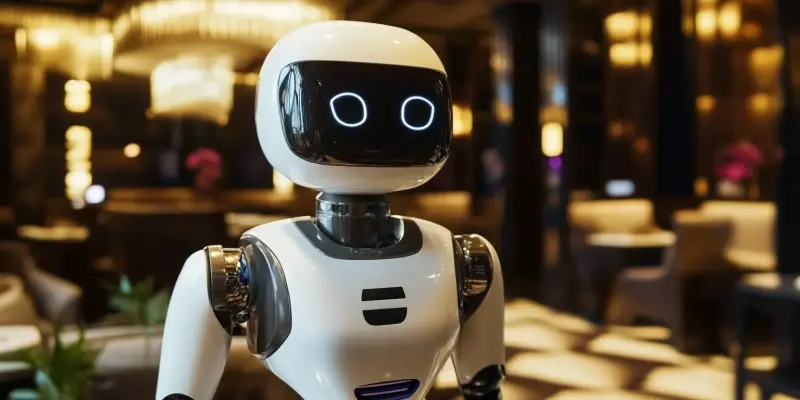
Imagine walking into a bustling cafe, where a friendly humanoid robot takes your order, makes your favorite coffee with precision, and engages in casual small talk while serving you delicious desserts. In Las Vegas, this vision is now a reality at Clouffee and Tea located at Town Square, thanks to an AI-powered humanoid robot named Adam, developed by Richtech Robotics. This robot is equipped with Nvidia’s edge AI technology, allowing it to interact seamlessly with humans, recognize objects, and handle multiple aspects of the café experience. Adam epitomizes the technological advancements that possess the potential to revolutionize the hospitality industry, illustrating new possibilities and drastic efficiency improvements.
Aside from handling the café’s core offerings, Adam collaborates with human associates who manage tasks beyond the robot’s capabilities, such as preparing specific snacks and bottled drinks. Store associates also assist customers with interacting with Adam, ensuring a smooth and delightful user experience. A touchscreen point-of-sale system allows the robot to efficiently process orders and payments, consistently serving up to 200 cups of coffee and tea daily. This innovative synergy between human and AI-powered colleagues demonstrates a harmonious model where AI complements and enhances human labor rather than replacing it outright.
The Role of AI in Enhancing Customer Experience
The introduction of Adam in Clouffee and Tea reveals just a glimpse of the broader trend towards integrating AI and robotics into customer service roles. AI capabilities enable Adam to perform tasks such as language translation and personalized drink recommendations, showcasing an advanced level of human-robot interaction. The robot’s presence introduces an elevated service standard, contributing to an overall improved customer experience. This integration emphasizes the importance of AI in enriching and customizing engagements with patrons, exhibiting a shift towards tech-powered hospitality and placing customer satisfaction at the forefront.
This glimpse into the upcoming AI collaboration extends beyond the café ambiance. At the Consumer Electronics Show (CES) in Las Vegas, Richtech Robotics showcased a variety of robots designed for the hospitality and health care sectors. Among these innovations was Scorpion, an AI-powered one-arm drink-serving robot, and Adam itself, which already operates in Walmart Ghost Kitchens and several Walmart stores across Arizona, Colorado, and Texas. These demonstrations project an exciting future where robots play critical roles in diverse customer service environments, highlighting their potential to enhance operational efficiency and forge new industry standards.
Expanding Horizons with AI-Powered Robotics
Richtech Robotics’ breakthrough with Adam isn’t isolated to a single establishment. The company has ambitious plans to replicate and expand the Clouffee and Tea model across different locations, cementing the robot’s presence in the hospitality industry. Their AI cloud platform further amplifies this vision by analyzing and optimizing operational workflows based on data collected from environments such as restaurants, hotels, and hospital settings. This analytical prowess ensures continuous improvement in performance and enforces data-driven service models that can adapt and evolve with user needs.
This strategic expansion reflects an imminent shift towards wider AI and robotics usage in everyday customer experiences, driving efficiency and setting new standards for automation within the hospitality industry. With each deployment, the narrative crystallizes into a broader acceptance of robotics being integral to customer-centric services. Richtech’s endeavors provide compelling evidence that AI-powered robots like Adam and Scorpion can effectively balance human interaction and service automation, making substantial contributions to a futuristic yet presently achievable hospitality landscape.
Future Considerations and Innovations
The integration of AI-powered robots into the hospitality industry raises important considerations and potential innovations. Future advancements could focus on enhancing robots’ ability to understand and respond to a wider range of human emotions and languages, making the interaction even more seamless and personalized. As AI technology evolves, so too will the possibilities for robots to perform increasingly complex tasks, further elevating the customer experience and operational efficiency. The continued collaboration between human staff and AI-powered robots will likely lead to innovative solutions that address the unique challenges and opportunities within the hospitality sector, paving the way for a more automated, yet highly personalized, service landscape.