

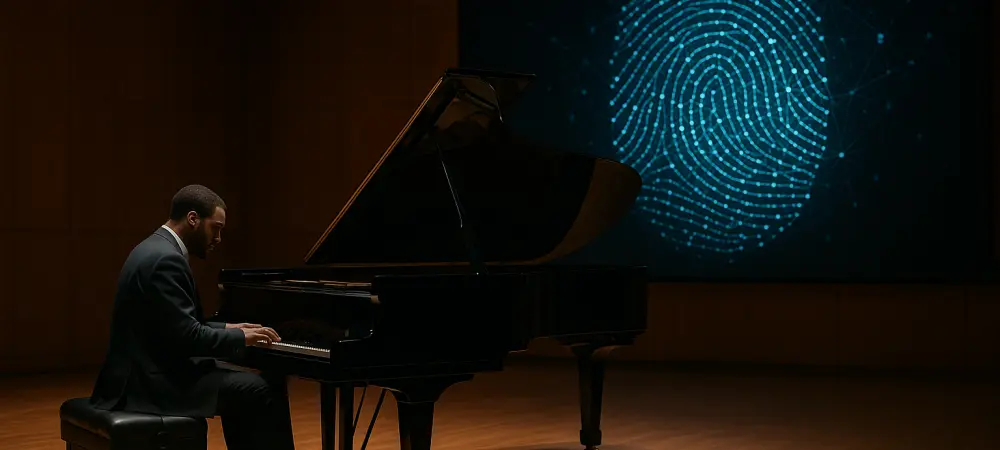
The discovery that a pianist’s stylistic markers shift depending on whether they are playing solo or in a trio highlights the fluid and collaborative nature of jazz improvisation. While classical music relies on the rigid adherence to a written score, jazz thrives on the subtle, often imperceptible deviations from the beat that define a performer’s unique voice. Recent computational studies have attempted to isolate these artistic fingerprints by training deep learning models on thousands of hours of MIDI-encoded performances. These systems are designed to look past the notes themselves, focusing instead on the ‘ghost in the machine’—the microscopic variations in touch and timing that distinguish a legend like Bill Evans from a technical virtuoso like Oscar Peterson. As these technologies mature, they provide musicologists with a quantifiable lens through which to view the evolution of jazz style. The challenge lies in determining if a digital signature remains consistent across various settings or if the performer truly becomes a different artist when joined by others.
Decoding Musical DNA through Machine Learning
Algorithmic Recognition: Isolating Performance Traits
To understand how a machine perceives jazz, one must look at the specific features extracted from performance data, such as inter-onset intervals and velocity curves. These metrics represent the core of a pianist’s expressive range, capturing how hard a key is struck and the precise millisecond a note is played relative to the metronomic grid. Sophisticated neural networks can now categorize these patterns with high accuracy, identifying the ‘swing ratio’ that makes a particular artist’s groove recognizable even to an untrained ear. By analyzing a vast dataset of performances recorded between 2026 and 2028, researchers have demonstrated that certain artists maintain a remarkably consistent micro-rhythmic signature regardless of the composition. This suggests that the subconscious habits of a musician, often developed over decades of practice, are as distinct as a biological fingerprint. This technical approach allows for a level of objectivity that traditional music criticism often struggled to achieve through purely qualitative descriptions.
Quantitative Methods: The Role of MIDI Data
Central to the success of this computational endeavor is the transition from raw audio files to high-fidelity digital transcriptions. While audio recordings capture the timbre and atmosphere of a room, MIDI provides a sanitized, event-based representation of every physical action the pianist took during the session. This clarity is essential for training models that are sensitive enough to detect the minute differences between players who share similar influences. For example, two students of the bebop tradition might use similar scales, but their velocity profiles—the way they vary the volume of notes within a run—will likely diverge significantly. Current research projects are building massive libraries that normalize these recordings, allowing for side-by-side comparisons of different eras and recording qualities. By stripping away the distractions of audio fidelity and production techniques, the AI can focus solely on the mechanical and rhythmic choices that define the artist’s creative identity in its purest form.
Contextual Variability in Jazz Performance
Interaction Effects: The Impact of Ensemble Dynamics
The most striking finding in recent studies is the revelation that a pianist’s stylistic consistency is often compromised by the presence of a rhythm section. When performing solo, a musician has total control over the tempo and harmonic structure, allowing their personal fingerprint to emerge without interference. However, the introduction of a bassist and drummer creates a feedback loop where the pianist must constantly adjust their timing to maintain cohesion with the ensemble. This collaborative pressure often forces the pianist to simplify certain rhythmic idiosyncrasies or adopt a more driving, conventional swing to cut through the texture of the band. Data analysis shows that the micro-timing patterns of many famous pianists shift measurably when they move from a solo setting to a trio configuration. This suggests that the artistic fingerprint is not a static entity but a flexible response to the environment. Understanding this shift is crucial for developing AI that can truly appreciate the social nature of jazz.
Future Directions: Educational and Historical Insights
The integration of artificial intelligence into the world of jazz performance ultimately provided a new framework for understanding the balance between expression and harmony. Researchers realized that the most effective way to utilize these tools was through a hybrid approach that combined algorithmic precision with human intuition. They encouraged musicians to view these digital fingerprints not as rigid templates, but as historical markers that informed the future of the genre. By embracing these insights, the industry moved toward a more transparent and documented appreciation of artistic labor. The project demonstrated that while technology could map the mechanics of a performance, the underlying soul of jazz remained an elusive quality that thrived on unpredictability. This exploration paved the way for more sophisticated collaborations between humans and machines, ensuring that the legacy of great performers was preserved while fostering an environment where new voices could continue to evolve and flourish.