

What happens when a cashier asks, “How can I help you?” and the response is nothing but a blank, unblinking gaze? This moment, often dubbed the “Gen Z stare” on social media platforms, reveals more than just a fleeting awkwardness—it uncovers a deeper struggle for a generation raised in a digital bubble, where face-to-face interactions are increasingly rare. As a result, many young people find themselves unprepared for the simplest verbal exchanges. Yet, in an era where technology often isolates, could artificial intelligence (AI) and virtual reality (VR) offer a way to bridge this communication chasm?
Unpacking the Silent Struggle in a Digital Era
The phenomenon of the Gen Z stare isn’t merely a punchline on TikTok; it reflects a genuine barrier for many in Generation Z when navigating real-world conversations. This blank expression often emerges in mundane settings—think retail counters or job interviews—where a quick reply is expected but not delivered. Social media clips capturing these moments have gone viral, amassing millions of views, yet they point to a serious issue: a discomfort with spontaneous dialogue that can hinder personal connections and professional opportunities.
Beyond the memes lies a generation grappling with skills that previous cohorts took for granted. The impact of this communication gap stretches into critical areas like networking, customer service roles, and even casual social settings. Without intervention, these missed moments of connection risk stunting growth in a world that, despite its digital leanings, still values human interaction as a cornerstone of success.
Digging Deeper: Roots of Gen Z’s Communication Challenges
Several societal shifts have converged to create this unique hurdle for Gen Z. The COVID-19 lockdowns, which struck during formative teenage years for many, slashed opportunities for in-person socialization at a time when peer interaction is vital for learning social cues. Even before that disruption, data from the World Economic Forum shows a stark decline in daily face-to-face engagement among teens, dropping significantly over recent decades, highlighting a pre-existing trend toward isolation.
Economic changes have also played a role in limiting real-world exposure. The decline of traditional summer jobs, once a training ground for workplace banter and etiquette, stems from a tighter job market, automation of entry-level positions, and a heavier focus on academic credentials. These factors have left many young individuals without the practical experiences that build conversational ease, creating a cycle of avoidance and anxiety around verbal exchanges.
Technology’s Double-Edged Sword: Problem and Potential Fix
Often criticized as the culprit behind Gen Z’s preference for screens over spoken words, technology has undeniably reshaped communication norms. Texting and video calls dominate daily exchanges, offering control and distance that in-person talks lack. However, this same digital landscape holds untapped potential to reverse the damage, with AI and VR emerging as innovative tools to rebuild interpersonal skills in a controlled, low-risk environment.
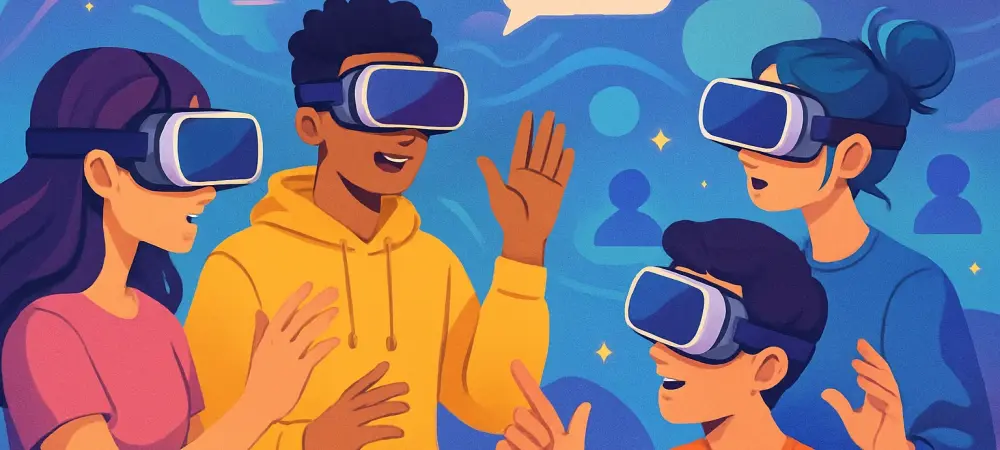
Platforms like Bodyswaps, already adopted by universities and Fortune 100 companies, demonstrate the power of VR simulations to mimic real-world scenarios. Users don headsets to practice job interviews or customer interactions, gaining feedback in real time. Reports from educators using these tools are striking: 95% see higher student engagement, 90% observe boosted confidence, and 88% of students feel more focused during these exercises. Such stats suggest that technology, when harnessed correctly, can turn a weakness into a strength.
Expert Insights and Real Stories from the Tech Frontier
Voices from those implementing and experiencing these solutions paint a vivid picture of transformation. Educators behind VR platforms note that simulated environments allow students to fail safely, learning from mistakes without the sting of real-world judgment. A developer from a leading VR training program shared, “Young users often start hesitant, but after a few sessions, they’re initiating conversations they’d never dare attempt in person.”
Students echo this optimism. One university participant described VR practice as a game-changer, stating, “I used to freeze up at the thought of small talk, but now I’ve got a mental script from these simulations—it’s like a cheat code for socializing.” Research backs these anecdotes, with studies showing that immersive tech can accelerate skill acquisition by replicating the emotional stakes of real interactions, offering a lifeline to those paralyzed by the Gen Z stare.
Empowering Gen Z: Practical Steps with AI and VR
Turning this potential into tangible progress demands a structured approach. VR scenarios can be tailored to individual needs, allowing users to rehearse specific situations—whether it’s a tough job interview or a casual chat—until confidence builds. This repetitive exposure, akin to therapeutic techniques for overcoming phobias, helps desensitize users to the fear of verbal missteps, fostering a readiness for real-life encounters.
Meanwhile, businesses and educational institutions can play a pivotal role by integrating these tools into training programs, balancing digital communication preferences with essential verbal practice. Equally important is the adaptation of older generations to Gen Z’s norms, such as prioritizing quick texts over long calls, while still advocating for the irreplaceable value of face-to-face dialogue. Together, these steps create a hybrid framework where technology empowers rather than isolates, equipping young individuals for a future where human connection remains vital despite AI’s growing presence.
Reflecting on a Path Forward
Looking back, the journey to address the Gen Z stare revealed a generation caught between digital comfort and real-world demands, yet not without hope. The stories of students who transformed hesitation into assurance through VR, coupled with expert endorsements of AI-driven solutions, underscored a powerful truth: technology, once a barrier, had become a bridge. The next steps were clear. Educational systems and workplaces needed to prioritize access to immersive training tools, embedding them into curricula and onboarding processes. Families and mentors also had a role, encouraging small, everyday interactions to complement virtual practice. As these efforts gained momentum, the blank gaze that once defined a generation began to fade, replaced by the promise of confident smiles and meaningful conversations in an ever-evolving world.