

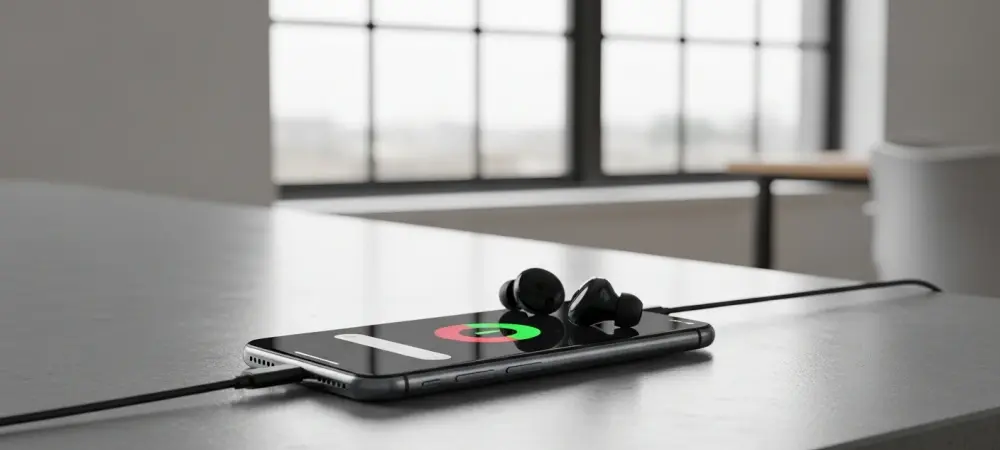
The familiar anxiety of a smartphone battery dipping into the red has become an almost universal modern experience, tethering users to a constant cycle of charging and, eventually, costly device replacement. This planned obsolescence has long been the industry standard, but a new contender is challenging the notion that a phone’s power source must have an expiration date. The global launch of the Realme P4 Power 5G introduces a device built around an audacious promise: a battery designed not just for days of use, but for nearly a decade of reliability.
Does Your Phone’s Battery Life Feel Like a Countdown Timer?
For most smartphone users, the performance on day one is a distant memory by year two. The vibrant, all-day battery life gradually degrades into a frantic search for an outlet by midday. This decline is not just an inconvenience; it shapes user habits, creates reliance on power banks, and fosters a throwaway culture where devices are discarded not because they are broken, but because they can no longer hold a charge. This predictable decay has been accepted as a necessary evil of mobile technology, a fundamental limitation that forces consumers into a repetitive upgrade cycle.
The impact extends beyond personal frustration. The constant manufacturing and disposal of smartphones contribute significantly to electronic waste, a growing environmental concern. By normalizing a two-to-three-year lifespan, the industry has created a system where the internal components, particularly the battery, are the primary drivers of obsolescence. A device with a battery that could maintain its health for significantly longer would not only offer better value to the consumer but could also represent a meaningful step toward more sustainable technology.
The Vicious Cycle of Battery Degradation Explained
At the heart of this problem is the chemistry of lithium-ion batteries. Every time a phone is charged from 0% to 100% and then discharged, it completes a “charge cycle.” With each cycle, tiny, irreversible chemical changes occur inside the battery, reducing its maximum capacity. Over hundreds of cycles, this degradation becomes noticeable, leading to the shorter battery life that users experience. Factors like heat, fast charging, and charging habits can accelerate this process, making the battery the weakest link in a smartphone’s longevity.
This degradation is precisely what the Realme P4 Power 5G aims to solve. While typical phone batteries are rated to retain about 80% of their capacity after 500 to 800 cycles—roughly two to three years of average use—Realme is making a far bolder claim. By re-engineering the battery’s core chemistry and pairing it with intelligent management systems, the company asserts it has created a power source that defies the industry’s established timeline for decline, fundamentally altering the long-term ownership proposition.
Unpacking the Promise of Enduring Power
The foundation of the phone’s endurance is its groundbreaking 10,001 mAh silicon-carbon battery. This massive capacity is a significant leap from the industry average, but the innovation lies in its composition, which is designed for superior stability and longevity. To complement this, the device supports 80W wired fast charging, ensuring the enormous cell can be replenished quickly. While it omits wireless charging, it includes a highly practical 27W reverse charging feature, effectively turning the phone into a powerful portable battery for other gadgets.
However, a great battery needs an efficient system to support it. The Realme P4 Power 5G is powered by the MediaTek Dimensity 7400 Ultra chipset, a processor engineered for a balance of high performance and low power consumption. To manage the heat generated during intensive tasks and fast charging—a key factor in battery degradation—the phone incorporates a large 4,613 mm² vapor chamber cooling system. This synergy between the battery, processor, and cooling is crucial for delivering not just long daily usage but also sustained health over many years.
Analyzing the Eight Year Longevity Claim
Realme substantiates its ambitious claim with specific lab-tested metrics. The company asserts that the silicon-carbon battery will retain at least 80% of its original capacity after an impressive 1,650 charge cycles. For a typical user who fully charges their phone roughly once every other day due to the massive capacity, this calculation extends to approximately eight years of reliable performance before any significant degradation is felt. This figure more than doubles the lifespan of conventional smartphone batteries, setting a new benchmark for durability.
To ensure the rest of the device can survive that long, Realme has fortified it against physical damage. The phone boasts an exceptional combination of IP66, IP68, and IP69 water and dust resistance ratings, offering protection against everything from dust ingress to high-pressure, high-temperature water jets. This level of physical resilience is rare in the mid-range market and signals that the device is intended as a long-term investment, built to withstand the rigors of daily life for years to come.
A Phone Built for the Future or Just a Gimmick
A battery that lasts eight years is only valuable if the phone remains usable for that duration. Realme has addressed this by equipping the P4 Power 5G with components that are not likely to feel dated quickly. The 6.8-inch curved AMOLED display features a fluid 144 Hz refresh rate and an exceptionally high peak brightness of 6,500 nits, ensuring a premium viewing experience. The camera system is led by a capable 50 MP Sony IMX882 primary sensor with Optical Image Stabilization, promising high-quality photos and videos.
The most critical piece of the longevity puzzle is software support. A phone is rendered obsolete just as quickly by outdated software as by a failing battery. Recognizing this, Realme commits to three major OS upgrades and four years of security patches, starting with Android 16. While this support does not span the full eight-year battery projection, it is a strong commitment that ensures the phone will remain secure and functional for a significant portion of its lifespan. With a starting price of INR 27,999 (~$304.28), the device presented a compelling package that balanced forward-looking technology with affordability.
In conclusion, the Realme P4 Power 5G represented a significant shift in smartphone design philosophy. By tackling the primary point of failure—the battery—and backing it with durable hardware and a solid software commitment, the device challenged the industry’s reliance on short upgrade cycles. It offered a practical vision where a single device could remain a reliable companion for many years, blending performance with unprecedented longevity. This approach not only provided better long-term value for consumers but also set a new, more sustainable standard for the entire market to follow.