

The traditional perception of a high-performance gaming computer costing exactly one thousand dollars has been thoroughly dismantled by the economic realities of the current hardware landscape. As of 2026, the global semiconductor supply chain has entered a period of intense volatility, driven by a convergence of manufacturing bottlenecks and a severe shortage of essential memory components. For many enthusiasts, the dream of a budget-friendly powerhouse has been replaced by a necessity for strategic spending, as the costs of Graphics Processing Units and high-speed storage have climbed beyond historical norms. This shift has forced a fundamental reevaluation of what constitutes a mid-range system, moving the entry point for a truly capable gaming rig toward the thirteen-hundred-dollar mark. Navigating this environment requires a departure from simply buying the newest parts on the shelf, favoring instead a calculated selection of mature, high-performance architectures that offer stability in an otherwise unstable market. By focusing on components that provide the best price-to-performance ratio rather than chasing the latest marketing trends, a builder can still assemble a machine that dominates modern titles without overextending their financial resources.
Navigating the Economic Shift in Hardware
Adapting to the RAMpocalypse: Market Volatility
The most significant hurdle facing modern PC builders is the dramatic inflation of memory and storage costs, a phenomenon colloquially known as the RAMpocalypse. Over the course of the current year, the prices of DRAM and NAND flash have surged due to a combination of high demand for artificial intelligence hardware and limited manufacturing expansion. This trend has made the latest DDR5 memory modules prohibitively expensive for those working within a fixed budget, often forcing compromises in other critical areas like the graphics card or the processor. To counter these market forces, a strategic pivot toward the DDR4 platform has become the most viable path for maintaining a high-performance standard while keeping total system costs under control. While newer platforms promise higher theoretical speeds, the real-world gaming performance delta often fails to justify the massive price premium currently attached to cutting-edge memory kits. By opting for a reliable 16 GB V-Color DDR4 kit clocked at 3200 MHz, a builder can achieve a stable foundation for gaming without sacrificing a massive portion of their budget to the memory market. This specific choice allows for a more equitable distribution of funds across the entire system, ensuring that the primary gaming components receive the investment they deserve. In a market where every dollar counts, the pragmatic decision to stick with a mature memory standard provides the necessary financial breathing room to secure a high-tier graphics card. This approach does not represent a step backward in technology but rather a sophisticated understanding of resource allocation. It recognizes that while the industry is pushing toward a DDR5-only future, the current hardware climate rewards those who prioritize tangible gaming frame rates over the expensive pursuit of bleeding-edge specifications that offer diminishing returns in daily use.
Strategic Resource Allocation: Value over Hype
The decision to utilize the AM4 socket instead of the newer AM5 platform is perhaps the most critical tactical move in this entire assembly process. As the industry transitions to newer architectures, the legacy platforms often see a stabilization in pricing that makes them incredibly attractive for high-end, cost-conscious builds. The AM5 ecosystem, while impressive, carries a significant early-adopter tax that includes not only the higher cost of the motherboards themselves but also the mandatory requirement for expensive DDR5 memory. By contrast, the AM4 platform is a mature, battle-tested environment with a vast array of high-quality components available at competitive prices. This allows the builder to redirect several hundred dollars toward the graphics card, which remains the single most important factor in determining the quality of the visual experience in modern AAA titles.
Furthermore, this strategic allocation of resources ensures that the system is not merely a collection of the cheapest possible parts, but a curated selection of high-value hardware. The goal is to create a machine that feels modern and powerful, capable of handling the most demanding games at high refresh rates without the stuttering or slowdowns often associated with poorly balanced budget builds. Focusing on the AM4 ecosystem provides access to high-end motherboards and processors that were considered flagship-level just a short time ago, offering a level of build quality and feature sets that are often missing from the entry-level options of the newer platforms. In the context of 2026, where hardware prices are at a premium, the ability to secure a robust and reliable platform for a fraction of the cost of the latest technology is a significant competitive advantage for any PC enthusiast.
Core Architecture and Thermal Management
Leveraging the Longevity: The AM4 Platform
At the center of this powerful gaming configuration is the AMD Ryzen 7 5800XT, a processor that continues to prove the incredible staying power of the Zen 3 architecture. With 8 cores and 16 threads, this CPU provides the multi-threaded muscle required to navigate the complexities of modern gaming engines and light productivity workloads simultaneously. While newer generations have been released, the 5800XT remains a top-tier choice for mid-range builds because it eliminates the typical bottlenecks that can hamper high-speed graphics cards. Its high clock speeds and efficient cache structure ensure that frame times remain consistent even during the most chaotic scenes in competitive shooters or expansive open-world environments. This processor represents the pinnacle of what the AM4 platform can offer for gamers who need reliable performance without the extreme power draw or heat generation of some more recent alternatives.
The longevity of the AM4 platform is not just a testament to AMD’s engineering but a practical benefit for the modern consumer who values a stable and predictable upgrade path. By selecting a high-end octa-core chip like the 5800XT, the user is guaranteed a level of performance that will remain relevant for several years to come. This chip was specifically engineered to extract every bit of performance from the mature 7nm process, resulting in a refined silicon product that is remarkably stable under pressure. Because the platform has been around for so long, the BIOS support is incredibly robust, meaning that users are unlikely to encounter the compatibility issues or stability bugs that often plague newer, less mature hardware releases. It is a calculated, low-risk investment that delivers high-reward results in every measurable gaming metric, providing a smooth experience across a wide variety of software applications.
Thermal Solutions: Sustaining Peak Performance
Maintaining high performance during extended gaming sessions requires more than just raw processing power; it demands a sophisticated thermal management system that can prevent the dreaded phenomenon of thermal throttling. The inclusion of the MSI MAG CoreLiquid A13 240mm AIO is a strategic response to the high heat output of modern high-performance CPUs when they are pushed to their limits. Unlike basic air coolers that can struggle to dissipate heat quickly enough during intense workloads, this liquid cooling solution provides a massive surface area for heat exchange, ensuring the Ryzen 7 5800XT stays well within its optimal temperature range. This thermal headroom is essential for maintaining peak boost clocks, which directly translates to higher and more stable frame rates in games that are sensitive to CPU frequency fluctuations.
Beyond the purely functional benefits of superior cooling, the choice of an all-one-one liquid cooler also addresses several practical concerns regarding system assembly and long-term maintenance. Traditional high-end air coolers are often massive, bulky units that can block access to memory slots or interfere with the installation of other components inside a mid-sized chassis. The AIO setup moves the bulk of the cooling hardware to the edge of the case, opening up the internal space for better airflow and a much cleaner aesthetic. This improved clearance is particularly important when using memory kits with tall heat spreaders, as it ensures there is no physical conflict between the cooler and the RAM. Furthermore, the reduced mechanical stress on the motherboard, compared to a heavy air cooler hanging off the socket, contributes to the overall structural integrity and longevity of the system, making it a sound investment for any serious builder.
Establishing a Reliable System Backbone
Motherboard Integration: The Stabilizing Force
The GIGABYTE B550 Gaming X V2 serves as the central nervous system for this build, providing the robust electrical infrastructure necessary to support high-performance components. One of the most critical aspects of any motherboard is its Voltage Regulator Module or VRM, and this board features a 10+3 power phase design that ensures the CPU receives a clean and consistent supply of power even under heavy overclocking loads. This level of power delivery is essential for maintaining system stability during the long, demanding sessions typical of modern gaming. While some might argue for the newer PCIe 5.0 standard, the current reality is that PCIe 4.0 provides more than enough bandwidth for the latest graphics cards and NVMe storage drives, making the B550 platform a fiscally responsible choice that does not sacrifice meaningful real-world performance.
In addition to its electrical prowess, the motherboard includes several user-friendly features that simplify the building process and ongoing system maintenance. The Q-Flash Plus button is a standout inclusion, allowing users to update the BIOS using only a USB flash drive and a power supply, without needing to install a processor or memory first. This is an invaluable tool for ensuring compatibility with the latest hardware revisions or for recovering from a corrupted BIOS update. The board also features a comprehensive array of connectivity options, including multiple M.2 slots for high-speed storage and a variety of USB ports for peripherals. By selecting a board that focuses on high-quality components and practical features over flashy, unnecessary extras, the builder secures a reliable foundation that will keep the system running smoothly for years without the premium price tag associated with enthusiast-grade chipsets.
Memory Pragmatism: Navigating High Costs
In an era where high-end memory kits can easily consume a quarter of a total build budget, the decision to stick with a high-quality 16 GB DDR4 kit is a masterclass in pragmatic PC building. This amount of memory remains the sweet spot for the vast majority of modern titles, providing enough capacity to handle ultra-high texture settings and background tasks without causing system slowdowns. By choosing the V-Color DDR4 kit at 3200 MHz, the builder is tapping into a mature and highly optimized technology that offers excellent latency and reliability. This specific frequency is widely considered the ideal balance for the Ryzen 5000 series, as it matches perfectly with the processor’s internal clock speeds, ensuring the lowest possible memory latency and the smoothest gaming experience.
While the current market prices for memory are volatile, the choice of a motherboard with four DIMM slots provides a clear and affordable path for future upgrades. As memory intensive applications and games continue to evolve, the user can easily add another 16 GB of identical RAM to bring the system total to 32 GB, effectively doubling the capacity once market prices begin to stabilize or drop. This modular approach to system building allows for immediate high-level performance while maintaining the flexibility to expand the machine’s capabilities as needed. It avoids the trap of overspending on capacity that may not be fully utilized today, instead focusing those funds on the GPU where they will have a much more immediate and visible impact on gaming performance. This focus on value and scalability is the hallmark of a well-planned mid-range system in 2026.
Visual Dominance and Storage Efficiency
Prioritizing VRAM: The RX 9060 XT Advantage
The visual heart of this machine is the AMD Radeon RX 9060 XT, equipped with 16 GB of dedicated VRAM, a component choice that directly challenges the industry’s recent trend toward skimpy memory buffers. Modern game developers are increasingly utilizing high-resolution textures and complex shaders that can easily exceed 8 GB or 12 GB of video memory, leading to stuttering and graphical glitches on lesser cards. By providing a generous 16 GB buffer, this Sapphire edition card ensures that the system is fully prepared for the most demanding “Ultra” settings in current and upcoming AAA titles. This extra memory is not just about today’s performance; it is a critical insurance policy against the rapidly increasing demands of modern game engines, allowing the user to keep the card in their system much longer than a lower-capacity alternative.
Beyond the raw capacity of its video memory, the RX 9060 XT excels in pure rasterization performance, often outperforming its competitors at similar price points in traditional rendering tasks. This makes it an ideal candidate for high-refresh-rate gaming at 1080p, where it can easily push hundreds of frames per second in competitive titles, and a formidable performer at 1440p for immersive cinematic experiences. When the hardware is pushed to its absolute limit, the inclusion of AMD’s FSR 4 and Frame Generation technologies provides a powerful set of tools to maintain smooth gameplay without sacrificing visual fidelity. These scaling features are essential for modern gaming, allowing the card to punch well above its weight class and provide a premium experience that would have previously required a much more expensive flagship GPU.
Storage Performance: Balancing Speed and Capacity
The storage solution for this build focuses on minimizing downtime and maximizing the responsiveness of the operating system through the use of the Kingston NV3 1 TB SSD. Utilizing the PCIe 4.0 interface, this drive achieves sequential read speeds of up to 6,000 MB/s, which means that the time spent staring at loading screens is reduced to almost nothing. In the modern gaming landscape, where file sizes frequently exceed 100 GB, the speed at which data can be pulled from the drive is a major factor in the overall feel of the system. This NVMe drive ensures that the computer boots in seconds and that large game assets are streamed into memory seamlessly, preventing the micro-stuttering that can occur when using slower SATA-based or mechanical storage solutions.
While 1 TB of storage is a generous starting point that can hold a significant collection of modern titles, the reality of digital libraries means that expansion is almost inevitable. The motherboard’s secondary M.2 slot and multiple SATA ports are designed to accommodate this growth, allowing the user to add more storage as their budget permits. This “start fast, expand later” strategy is the most effective way to handle the current NAND price spikes, as it provides high-speed primary storage for the operating system and most-played games while leaving room for cheaper, high-capacity secondary drives in the future. By prioritizing a high-speed PCIe 4.0 boot drive now, the builder ensures that the core user experience remains snappy and efficient, regardless of how many games are eventually added to the system’s library.
Reliability, Housing, and the Path Forward
Sustainable Power: Meeting Modern Standards
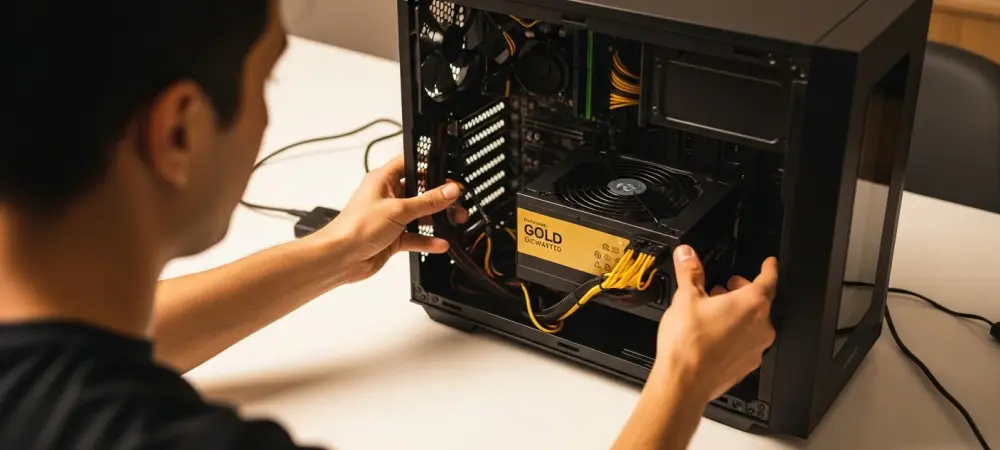
A high-performance PC is only as reliable as the power supply that feeds it, and the Corsair RM750e is chosen for its strict adherence to the latest industry standards. This 750-watt unit is 80+ Gold certified, meaning it operates with high electrical efficiency, reducing wasted energy and heat generation. More importantly, it is fully compliant with the ATX 3.1 and PCIe 5.1 standards, which include the specialized 16-pin power connectors required by the most advanced graphics cards. This inclusion is a vital piece of future-proofing, as it ensures that the user can upgrade to a next-generation GPU in the future without needing to replace the power supply or fumble with cumbersome and potentially unreliable adapters. It is a cornerstone of a build intended to last for several hardware cycles.
The modular design of the RM750e further enhances the build process by allowing the user to connect only the cables they actually need. This significantly reduces the amount of clutter inside the case, which is not just an aesthetic benefit but a functional one as well. Less cable clutter means better airflow, as there are fewer obstructions for the intake and exhaust fans to work around, helping to keep the internal components cool and quiet. The high-quality internal capacitors and the quiet cooling fan inside the PSU ensure that the system remains stable and silent even under the heaviest gaming loads. Investing in a premium power supply from a reputable manufacturer is the best way to protect the other expensive components in the build from power surges or fluctuations, providing the peace of mind that every enthusiast deserves.
Chassis Selection: Airflow and Assembly
The final component that ties the entire build together is the NZXT H5 Flow, a chassis that has earned its reputation for exceptional thermal performance and ease of use. In a system with a high-TDP processor and a powerful graphics card, the ability to move large volumes of air through the case is paramount. The H5 Flow features a perforated front panel and a dedicated intake fan positioned at an angle to provide direct cooling to the GPU, a design choice that significantly lowers temperatures during heavy gaming. The spacious interior and well-thought-out cable management channels make the assembly process straightforward even for first-time builders, ensuring that the final result is as organized and efficient as it is powerful. Ultimately, the goal of this thirteen-hundred-dollar build is to provide an unstoppable gaming experience at both 1080p and 1440p resolutions. While it is not intended for the extreme hardware demands of 4K gaming, it excels in the sweet spot where most gamers spend their time, offering ultra-high settings and smooth frame rates across the board. The machine is a testament to the fact that by making smart compromises on mature platforms like AM4 and DDR4, one can still achieve a top-tier result in a challenging economic environment. The combination of a high-VRAM GPU, efficient liquid cooling, and a robust power supply creates a balanced system that is ready for the games of today and the hardware upgrades of the future. The strategic assembly of this system demonstrated that even in a volatile hardware market, a disciplined approach to component selection yields a machine capable of exceptional performance. By prioritizing a high-VRAM graphics card and a stable, mature processor platform, the build successfully avoided the inflated costs associated with emerging technologies while maintaining a competitive edge in modern titles. The integration of advanced thermal management and a future-ready power supply ensured that the hardware could sustain its peak performance without the risk of long-term instability. Moving forward, those who wish to maintain this level of performance should monitor the storage and memory markets for price corrections to expand their system capacity affordably. This build established a powerful blueprint for navigating the complexities of the current economy, proving that a well-balanced mid-range PC remains an attainable and formidable reality for dedicated enthusiasts.