

A Strategic Leap into the Heart of Macau’s Digital Future
Global digital infrastructure markets are witnessing a tectonic shift as the demand for high-performance artificial intelligence computing outpaces the traditional capacity of physical construction methodologies worldwide. BrightRay, a pioneer in prefabricated data center solutions, recently announced a landmark expansion into Macau with the development of a 40MW AI-focused facility. This project represents more than just a localized infrastructure boost; it signals a fundamental transition in how digital capacity is delivered to meet the relentless demands of a modern intelligence economy. By integrating high-density computing capabilities with innovative manufacturing methodologies, the initiative aims to bridge the gap between burgeoning software needs and the physical limitations of legacy building practices. This development follows the strategic acquisition of BrightRay by the Nasdaq-listed BUUU Group, a move that provides the capital necessary to industrialize data center infrastructure on a global scale.
The Evolution of Infrastructure: From Construction to Manufacturing
Historically, data centers were viewed as bespoke construction projects, often plagued by long lead times and logistical complexities that hindered rapid scaling. However, the rapid rise of generative AI has fundamentally altered the industry’s requirements, demanding faster deployment and significantly higher power densities that traditional methods struggle to provide. BrightRay has emerged as a key player in this transition, moving away from conventional “bricks and mortar” toward a “manufacturable product” philosophy. This approach was refined through extensive work in Johor, Malaysia, where the firm successfully managed over 70MW of capacity. The move into Macau represents a maturation of this model, applying lessons learned from regional successes to a market characterized by high demand and extremely limited spatial availability.
Engineering the Future of High-Density AI Computing
Maximum Efficiency in a Land-Constrained Environment
The planned facility on Rua das Albizias in Coloane is a masterclass in land-use optimization, a necessity for the space-constrained Macau Special Administrative Region. Spanning 9,000 square meters across five stories, the Tier III-quality facility utilizes a Fully Prefabricated Data center (FPD) solution to maximize vertical space. This modular design allows for a density that is difficult to achieve with standard builds, treating the facility as a series of integrated, pre-engineered components. By maximizing every square inch, the footprint delivers the highest possible computational output per square meter. This efficiency remains critical for Macau, where land is at a premium and digital transformation is a primary government priority.
Advanced Cooling and Power for Next-Generation Hardware
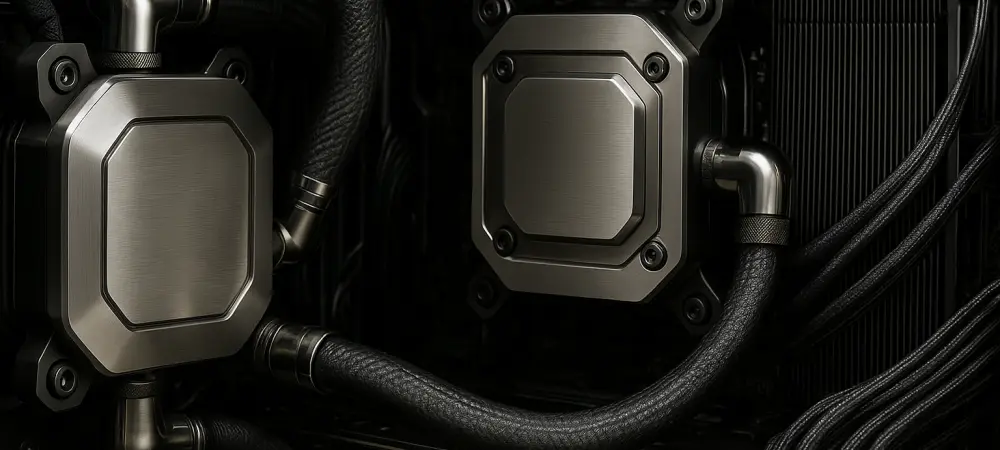
To support the intense thermal demands of modern AI chips, the Macau data center is engineered for extreme flexibility in power and thermal management. Technical specifications support rack densities ranging from 10kW to an unprecedented 500kW, accommodating a wide array of specialized hardware. To manage these diverse loads, the center will offer air-cooled, fully liquid-cooled, and hybrid cooling configurations. This versatility ensures that the infrastructure can host everything from standard enterprise servers to the most advanced liquid-cooled GPU clusters. By removing the thermal bottlenecks that often limit performance, the facility provides a future-proof environment for the next generation of high-performance computing.
Navigating Market Dynamics and Strategic Partnerships
The expansion is underpinned by a strategic framework agreement with a local developer, though final execution depends on securing a tenant by the third quarter of 2027. This phased approach reflects a pragmatic entry into a market that remains underserved by modern AI infrastructure despite high regional demand. While the Companhia de Telecomunicações de Macau remains a primary provider, other regional players have seen their projects stall, leaving a vacuum in the high-density segment. By aligning with local stakeholders and leveraging a proven modular delivery system, the project mitigates traditional development risks while positioning the firm as a primary contender in the regional tech ecosystem.
Industrializing the Global AI Supply Chain
The data center industry is entering a new era where the primary constraint on growth is no longer chip supply, but the availability of specialized buildings and power. In response, the sector is shifting toward a manufacturing-centric model that treats data center deployment as an assembly-line process. The acquisition of a 60% majority stake in BrightRay by BUUU Group—supported by a $60 million capital injection—is a clear indicator of this trend. This partnership seeks to scale an international footprint by building entire data halls off-site for rapid global shipment. This shift drastically reduces the time between capital investment and an operational facility, allowing for a more responsive digital supply chain.
Actionable Insights for a Modular Digital Economy
For stakeholders in the technology and real estate sectors, this expansion offers several key takeaways for future planning. First, businesses must prioritize speed to market by exploring prefabricated and modular options that bypass the delays of traditional construction. Second, as AI hardware continues to evolve, investing in hybrid cooling solutions is no longer optional but a requirement for long-term viability in high-density environments. Finally, companies should look toward emerging hubs like Macau, where a lack of existing specialized infrastructure provides a unique opportunity for early movers to establish market dominance. Leveraging these strategies allows firms to remain competitive in a landscape where physical capacity is the ultimate currency.
Conclusion: Setting a New Standard for Digital Expansion
The industrialization of data centers transformed how capital was deployed across the technology sector. This shift favored companies that integrated manufacturing logic into their expansion plans rather than relying on slow construction cycles. The evolution of the Macau site established a benchmark for urban infrastructure in land-scarce environments. Strategic planners recognized that physical capacity became the ultimate currency in a digital-first economy, leading to a move away from bespoke builds toward standardized, high-output computational hubs. Future readiness relied on the adoption of high-density cooling and modular frameworks that supported rapid scaling. These advances proved that the speed of infrastructure delivery was just as critical as the performance of the chips themselves.