

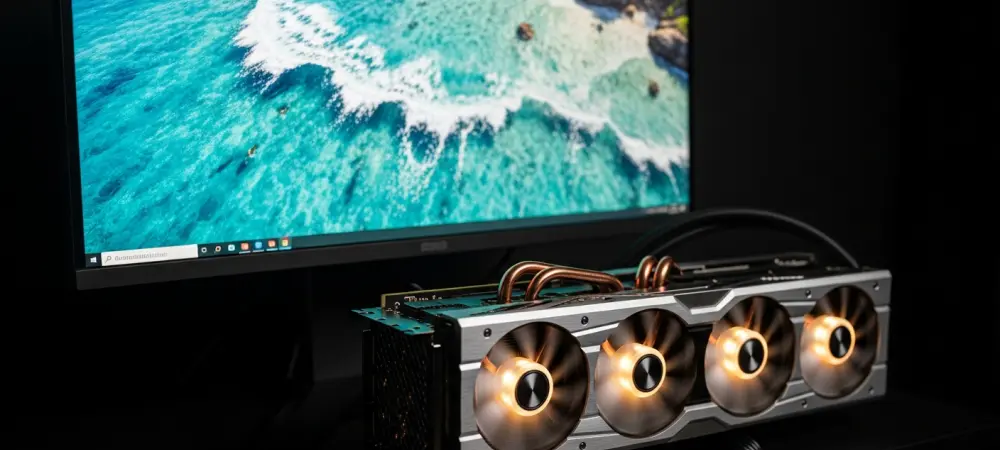
The digital reconstruction of a masterpiece often reveals the widening chasm between the hardware limitations of a bygone era and the unrestrained graphical potential of the current rendering landscape. The Assassin’s Creed Black Flag Resynced project represents a significant advancement in the gaming technology and rendering industry. This review will explore the evolution of the technology, its key features, performance metrics, and the impact it has had on various hardware applications. The purpose of this review is to provide a thorough understanding of the technology, its current capabilities, and its potential future development. By scrutinizing the intricacies of this technical overhaul, one gains a clearer perspective on how legacy content can be revitalized for a modern audience without sacrificing its original spirit.
The Evolution of a Pirate Classic through Technical Reconstruction
The migration of a title as iconic as the 2013 original into a modern rendering pipeline is an undertaking that far exceeds the scope of a standard high-definition remaster. This project required an extensive overhaul of the Anvil engine, effectively transplanting the logic and assets of a decade-old game into an architecture designed for the high-concurrency demands of contemporary silicon. This reconstruction involves a fundamental shift in how the game interacts with system resources, moving away from the single-threaded bottlenecks of the past toward a multi-threaded execution model that leverages every available cycle of a modern processor. The result is a world that feels more responsive and visually coherent, providing a solid foundation for the advanced graphical features that follow. The transition from static legacy assets to physically based rendering (PBR) represents the most visible change in this technological landscape. In the original release, materials were often represented by simple diffuse textures and rudimentary specular maps that failed to react realistically to varying light conditions. The Resynced version replaces these with a complex PBR workflow where every surface—from the salt-worn wood of the Jackdaw to the silk waistcoats of the Havana elite—possesses unique physical properties like roughness and metallic reflectance. This ensures that light interacts with the environment in a mathematically accurate way, creating a sense of tangibility and depth that was previously impossible.
Modern geometry handling has also been revolutionized through this engine migration. The legacy version relied on aggressive level-of-detail (LOD) swapping, which often resulted in noticeable visual popping as the player traversed the environment. The new pipeline utilizes a more granular approach to vertex management, allowing for significantly higher geometric complexity without the traditional performance penalties. This technological leap is particularly relevant in the broader context of the industry, as it demonstrates how older titles can be brought in line with current visual standards while maintaining the core gameplay loop that made them successful in the first place.
Modern Rendering Architecture and Core Technical Features
Implementation of Multi-Tiered Ray Tracing
The core of the visual upgrade lies in the implementation of a multi-tiered ray-tracing system that addresses the shortcomings of traditional rasterized lighting. The “Standard” tier focuses primarily on Ray-Traced Global Illumination (RTGI), which replaces the pre-baked lightmaps of the original game. RTGI calculates the bounce of light between surfaces in real-time, allowing for a more natural distribution of color and luminance. This effectively eliminates the “light bleed” issues common in older titles, where interior spaces would inexplicably glow or shadows would appear disconnected from their sources. By simulating the way photons naturally interact with the environment, the engine creates a cohesive atmosphere that shifts dynamically based on the time of day and weather conditions.
Advancing to the “Extended” tier introduces Ray-Traced Reflections, which provide a level of specular accuracy that screen-space reflections (SSR) simply cannot match. While SSR is limited by what is currently visible on the screen, ray-traced reflections can account for objects behind the camera or tucked around corners, ensuring that water surfaces and polished marble look authentic from every angle. This system is particularly effective in the Caribbean setting, where the interaction between the sun and the vast ocean surface is a constant visual element. The elimination of SSR artifacts, such as the flickering or disappearing of reflections at the edge of the screen, significantly enhances the immersion of the seafaring experience.
The unique implementation of ray tracing in this project also accounts for varying hardware capabilities through a hybrid rendering approach. Instead of forcing a purely ray-traced path, the engine intelligently mixes rasterized elements with ray-traced lighting to maximize efficiency. This allows for a more scalable experience where the most critical visual elements receive the highest degree of technical polish. The implementation of ray-traced ambient occlusion further refines the contact between objects and surfaces, providing subtle shadows in crevices and corners that ground the character models within the world.
Advanced Environmental and Fluid Simulations
The jungle environments of the West Indies have been entirely reimagined through the use of Micropolygon Virtual Geometry. This technology allows for an incredible density of foliage and terrain detail, as it breaks down traditional meshes into sub-pixel polygons that are only rendered when necessary. This means that a single palm frond or a jagged limestone cliff can possess thousands of individual geometric points without overwhelming the GPU. The impact on the jungle locations is transformative; the previously flat and repetitive vegetation is replaced by a lush, layered ecosystem where every leaf and blade of grass feels like a distinct physical entity. Perhaps the most impressive technical achievement is the entirely rebuilt ocean system, which serves as a benchmark for fluid simulation in the current era. This system goes beyond simple wave displacement, incorporating advanced foam simulation and subsurface scattering. Subsurface scattering mimics the way light penetrates the water’s surface and scatters within it, giving the Caribbean waves their characteristic turquoise glow. The foam simulation is dynamically generated based on the interaction between the ship’s hull and the water, creating realistic wakes and whitecaps that dissipate naturally over time. These simulations are not merely aesthetic; they interact with the ship’s physics model to create a more authentic sense of buoyancy and momentum.
The environmental simulation also extends to a reworked weather system that utilizes volumetric clouds and atmospheric scattering. The transition from a clear tropical sky to a violent hurricane is now a seamless process, with the air density and light filtration changing in real-time. Volumetric fog reacts to light sources, casting “God rays” through the dense canopy of the jungle or through the sails of the Jackdaw. This creates a palpable sense of atmosphere that makes the world feel alive and unpredictable, pushing the boundaries of what environmental storytelling can achieve through purely technical means.
Integration of Next-Generation Upscaling Solutions
To manage the heavy computational load imposed by these advanced features, the engine integrates a comprehensive suite of upscaling solutions, including Nvidia DLSS 4.5, AMD FSR 4.1, and Intel XeSS 3. These technologies have moved beyond simple spatial upscaling to incorporate sophisticated temporal reconstruction and frame generation. Nvidia’s DLSS 4.5, for instance, utilizes a specialized AI model trained on high-resolution imagery to reconstruct lost detail and eliminate shimmering in fine geometric structures like ship rigging. This allows players to achieve high frame rates at 4K resolution without the blurring or ghosting that plagued earlier iterations of upscaling tech.
AMD FSR 4.1 and Intel XeSS 3 offer competitive alternatives, ensuring that users across all hardware platforms have access to performance-enhancing tools. AMD’s solution has made significant strides in temporal stability, particularly in scenes with high-frequency detail like the rippling ocean or wind-blown foliage. Intel’s XeSS 3 utilizes its own XMX hardware on Arc GPUs to provide high-quality reconstruction, though its software-based fallbacks also provide a respectable boost for older hardware. The inclusion of frame generation in all three suites is a critical component for maintaining fluidity when ray-tracing tiers are pushed to their limits.
The way the engine handles these upscaling modes is deeply integrated into the rendering pipeline, allowing for a more efficient handoff between the upscaler and the post-processing effects. This ensures that effects like motion blur and depth of field are applied correctly to the reconstructed image, preventing the “hallucination” artifacts that can sometimes occur in less optimized implementations. The result is a highly flexible system that caters to both the enthusiast with top-tier silicon and the budget-conscious gamer looking to maximize their hardware’s lifespan. This inclusivity is a hallmark of the Resynced project’s technical philosophy.
Performance Scaling and Benchmarking Methodology
The methodology for these benchmarks was designed to push the engine to its absolute limits while maintaining a controlled environment to isolate GPU performance. Testing was conducted using the Ryzen 7 9800X3D, a processor known for its massive L3 cache and exceptional gaming throughput, which effectively eliminates any potential CPU bottlenecks. The system was equipped with high-speed DDR5 memory and tested under a standardized sequence that covers both intense naval combat and dense terrestrial exploration. This ensures that the data reflects real-world gameplay scenarios rather than idealized, static shots. The scaling across various quality presets reveals an engine that is remarkably flexible but also highly demanding at its peak. Moving from the “Low” preset to “Ultra High” involves more than just a change in texture resolution; it activates the full suite of virtual geometry, volumetric effects, and ray-tracing structures. The data shows that the engine scales in a predictable manner, with the most significant performance hits occurring when shifting to the ray-traced “Extended” tier. However, the diminishing returns observed in different upscaling modes suggest that the engine reaches a point of internal saturation where simply throwing more resolution at the problem does not yield a linear increase in visual quality.
The performance scaling also highlights the importance of hardware-level features like hardware-accelerated ray tracing and dedicated AI cores. While the engine can run on older hardware, the gap between traditional rasterization and the new modern pipeline becomes increasingly apparent as resolution increases. The benchmarking methodology specifically focused on how the engine manages memory allocation and frame pacing, two critical factors for a smooth experience in an open-world setting. By monitoring the one percent low frame rates, the testing provides a more accurate picture of the perceived fluidity than average frame rate metrics alone could offer.
Comparative Performance Analysis across GPU Architectures
An analysis of 50 different GPUs reveals that the Anvil engine used in this project exhibits a notable preference for specific architectural designs. AMD’s RDNA architecture performed exceptionally well in this title, often punching above its weight class when compared to similarly priced Nvidia offerings. This can likely be attributed to the engine’s efficient use of compute shaders and the way it handles high-bandwidth memory operations, which aligns perfectly with the design philosophy of Radeon hardware. The RX 7900 XTX, in particular, showed impressive resilience in the 4K native benchmarks, maintaining a lead over several competitive Blackwell models in raw rasterized performance. In contrast, Nvidia’s Blackwell architecture showed more modest generational gains compared to the previous Ada Lovelace generation in this specific title. While the RTX 5090 remains the undisputed performance king, the mid-range and upper-mid-range Blackwell cards did not provide the massive leap in frame rates that some enthusiasts might have expected. This suggests that the Anvil engine is hitting architectural limits that are not easily solved by simply increasing core counts or clock speeds. Instead, the Blackwell cards find their advantage in the efficiency of their ray-tracing cores and the superior temporal stability of the DLSS 4.5 implementation, which provides a cleaner image than raw rasterization at comparable frame rates.
The performance of Intel’s Arc architecture also deserves mention, as it showed significant improvement through ongoing driver optimizations. The Arc A770, while not a top-tier performer, delivered a stable experience at 1080p and 1440p using XeSS, proving that a well-optimized software stack can compensate for some hardware limitations. This comparative analysis underscores the reality that “best” performance is often a matter of context, depending on whether a player prioritizes raw frame rate, image clarity, or the nuance of ray-traced lighting. The diversity of performance across these architectures provides a fascinating look into the current state of GPU competition.
Critical Hardware Challenges and Memory Bottlenecks
One of the most significant technical hurdles revealed by these benchmarks is the “VRAM cliff” facing 8GB graphics cards. As the game engine scales to higher resolutions and more complex ray-tracing tiers, the memory required to store high-fidelity textures and ray-tracing acceleration structures increases exponentially. On 8GB cards, this often results in a catastrophic drop in performance as the system is forced to swap assets into much slower system RAM. This bottleneck is not just about the amount of memory but also the bandwidth available to move data, making older mid-range cards struggle even when their raw compute power seems sufficient.
The technical hurdles of maintaining ray-tracing structures—known as the Bounding Volume Hierarchy (BVH)—are particularly memory-intensive. When “Extended” ray tracing is active, the GPU must keep a detailed map of the entire scene’s geometry in its memory to calculate light bounces correctly. For an 8GB card, this leaves very little room for the ultra-high-resolution textures that define the Resynced experience. To mitigate these hardware limitations, the engine requires aggressive memory management, which sometimes leads to visible texture blurring as the game prioritizes lighting calculations over surface detail.
Ongoing optimization efforts have sought to address these memory constraints through more efficient asset streaming and variable rate shading. However, for many users, the necessity of stepping down to the “High” preset remains the most effective way to avoid the VRAM cliff. This preset scales back the texture pool and disables the most memory-intensive ray-tracing features, providing a much smoother frame delivery without a total loss of the visual upgrades. This situation highlights a growing trend in the industry where VRAM capacity is becoming just as important as core performance, especially for those aiming for 1440p or 4K gaming in modern titles.
Future Outlook for the Anvil Engine and Remake Standards
The technical achievements of the Black Flag Resynced project provide a compelling blueprint for the future of title revitalizations. By demonstrating that a legacy game can be successfully migrated to a modern engine with such high levels of visual fidelity, the project sets a new standard for what a “remake” should entail. The use of virtual geometry and advanced fluid simulations is likely to become a mainstay in future titles, as these technologies allow for a level of detail that was previously cost-prohibitive or technically impossible. This project proves that with the right engine architecture, the gap between old and new can be bridged effectively.
Future breakthroughs in virtual geometry are expected to further reduce the overhead of high-density scenes, potentially allowing mid-range hardware to achieve results currently reserved for enthusiast-grade systems. As the technology matures, we may see the long-term impact of high VRAM requirements influencing the design of the mid-range GPU market, with manufacturers forced to include more memory as a standard feature. The Anvil engine’s evolution toward a more modular and scalable design suggests that it will remain a relevant force in the industry, capable of powering both current-gen spectacles and future-proofed remakes of other classic franchises. The broader impact on the gaming industry is significant, as this project encourages developers to look back at their libraries not just for nostalgia, but as candidates for technical rebirth. The success of this reconstruction could lead to a wave of similar projects, each pushing the boundaries of rendering technology in their own right. As we move away from the static, pre-baked worlds of the past, the lessons learned from the Resynced project will undoubtedly inform the development of next-generation engines that prioritize dynamic, physically accurate environments above all else. This evolution toward total realism is a journey that is only just beginning.
Comprehensive Assessment of the Resynced Technical Achievement
The overall technical achievement of the Resynced project was characterized by a successful fusion of legacy design and cutting-edge rendering techniques. The project proved that the Anvil engine could be adapted to meet modern standards, provided that the underlying hardware was capable of handling the increased computational demands. Architectural efficiency was a major theme throughout the testing, as the game’s preference for certain GPU designs highlighted the importance of matching software optimization with hardware strengths. The vital role of upscaling was also clear, as it allowed a much wider range of hardware to participate in the high-fidelity experience that would have otherwise been restricted to a tiny fraction of the market.
The longevity of legacy hardware, such as the RX 5700 XT, showed that a well-optimized title could still provide a playable experience on older architectures, even if the highest settings remained out of reach. This balance between pushing the envelope and maintaining accessibility was a key takeaway from the benchmarking process. The hardware benchmarks revealed that while the 8GB VRAM limit was a significant hurdle, the engine’s scalability provided enough flexibility for most users to find a stable configuration. The impact of these findings on hardware recommendations for 1080p, 1440p, and 4K gaming remains significant, as it emphasizes the need for balanced system building where memory capacity and compute power are given equal weight.
Ultimately, the technical reconstruction of this pirate classic reached a level of quality that respected the original source material while fully embracing the possibilities of modern silicon. The data gathered from the 50-GPU analysis provided a comprehensive map of the current hardware landscape, offering clear insights into where the industry is headed. The project successfully transitioned from a 2013 foundation to a modern showcase of ray tracing, virtual geometry, and advanced simulations. This achievement ensured that the Caribbean odyssey of the Jackdaw remained as visually captivating as it was over a decade ago, providing a definitive roadmap for future technical revitalizations in the gaming industry.