

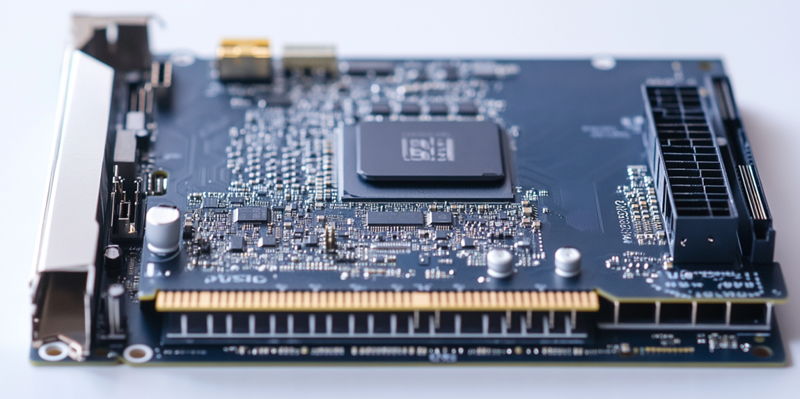
The Biostar X870E Valkyrie motherboard stands at the forefront of AMD’s cutting-edge technology, built on the newly launched 800-series chipset platform, promising to deliver high performance for both gaming and professional applications. This advanced motherboard capitalizes on the capabilities of the AMD AM5 platform, which marks a significant leap from its predecessor, the AM4 platform. Key enhancements include improved connectivity options, greater memory support, and sophisticated overclocking features, positioning it as an essential component for any high-end rig. This article will delve deeper into the fascinating world of AMD’s transition from AM4 to AM5, scrutinize essential upgrades in the 800-series chipsets, and evaluate the Biostar X870E Valkyrie’s capabilities through various performance tests.
AMD’s Transition from AM4 to AM5
AMD’s AM4 platform, introduced in 2017, was a game-changer for modern computing, supporting multiple generations of Ryzen CPUs. Over the years, it supported notable series like the Ryzen 7000, 8000, and 9000, providing users with remarkable performance and longevity. Despite its continued relevance, AMD has moved forward with the AM5 platform, seeking to stay ahead of technological advancements. The AM5 platform supports newer technologies, better input/output memory, and advanced overclocking capabilities, making it a formidable successor. Furthermore, AMD has committed to ensuring this platform remains relevant until at least 2027, emphasizing their dedication to long-term support and backward compatibility. With this transition, AMD introduced the LGA 1718 socket, shifting from the Pin-Grid-Array (PGA) design to the Land-Grid-Array (LGA) design, enhancing pin connections for improved communication and feature support. Importantly, cooler compatibility remains simple, as existing Ryzen-compatible coolers work seamlessly with the new CPUs.
The AMD 800-Series Chipsets
The 800-series chipsets, divided into the X870E and X870 categories, cater to high-end enthusiasts and gamers who crave exceptional performance and connectivity. This chipset series offers substantial enhancements over its predecessors, with the standout inclusion being the USB 4.0 standard across all X870E and X870 motherboards. The PCIe Gen5 support is another major feature, providing compatibility for both NVMe storage and graphics cards, which is critical for users looking to build future-proof systems. Moreover, higher EXPO memory clock support bolsters the potential for overclocking, ensuring that enthusiasts can push their systems to the limit. The X870E chipset utilizes dual Promontory 21 dies for increased lanes and capabilities, catering to those who need the utmost in connectivity and performance. In contrast, the X870 employs a single Promontory 21 die, retaining key features while offering a more streamlined configuration. Both chipsets provide support for USB4 and PCIe Gen5, which are essential for modern computing needs. DDR5 memory, with native support up to 5600 MT/s and the potential to exceed 8000 MT/s in some high-end models, represents another critical upgrade, allowing for faster data processing and more efficient multitasking.
Key Features and Upgrades
Beyond the high-end X870E and X870 chipsets, AMD’s 800-series also includes future B850 and B840 chipsets designed for mainstream and entry-level segments, broadening the appeal of the platform. These options offer Gen 5 GPU support and, optionally, Gen 5 M.2 support, bringing advanced features to a wider audience. The B840 chipset, using Promontory 19 die, supports Gen 4 GPU/SSD and memory overclocking, providing a cost-effective alternative to Intel’s sub-$200 offerings. The X870E and X870 chipsets remain the pinnacle of the series, aimed explicitly at high-end users who demand the best in performance and connectivity. Enthusiasts and overclockers will find the X870E particularly appealing due to its extensive I/O capabilities, dual Promontory 21 dies, and maximum lane allocation. Meanwhile, mainstream users will appreciate the B850, which offers a balanced blend of performance and cost-efficiency, suitable for mid-range builds without compromising on essential features.
The Biostar X870E Valkyrie
This section centers on the Biostar X870E Valkyrie motherboard, a flagship product that exemplifies high-end features and robust design aimed at gaming and content creation. The unboxing and close-up inspection reveal a meticulously designed piece of hardware, inclusive of top-notch build quality and a rich array of included accessories. The motherboard’s design emphasizes durability and efficiency, ensuring a long lifespan even under demanding conditions. The test setup, detailed in this section, outlines the hardware and software environment used for rigorous benchmarking tests. These benchmarks underscore the motherboard’s prowess, demonstrating its ability to harness the full potential of the Ryzen 9000 series CPUs, delivering impressive multi-threaded performance and excelling in single-threaded workloads. The evaluation of gaming performance highlights the Valkyrie’s capabilities in various gaming scenarios, particularly when paired with high-end GPUs. Performance metrics consistently showcase the efficiency and enhanced experience facilitated by PCIe Gen5 and high memory support, cementing the motherboard’s status as a top choice for gamers.
Power Consumption and Temperature
Understanding the power consumption and temperature management of the X870E Valkyrie is crucial for power users and enthusiasts alike. Power consumption tests delve into the efficiency of the motherboard under different workloads and stress scenarios, revealing that the X870E Valkyrie optimizes power management effectively. This efficiency makes it an attractive option for users who need a powerful system without excessive energy consumption. The examination of temperature controls focuses on the performance of the motherboard’s cooling solutions during intensive tasks. The Valkyrie’s cooling system is evaluated for its ability to maintain stability and reliability under a variety of conditions, ensuring that the components remain cool and functional even under heavy load. These tests confirm that the X870E Valkyrie not only delivers exceptional performance but also offers impressive power efficiency and robust thermal management, making it a reliable choice for demanding applications.
Overview of AMD’s 800-Series Motherboards
When comparing the evolution from the 600-series to the 800-series, it’s evident that AMD has made significant strides in connectivity, performance, and overclocking capabilities. The 800-series chipsets, particularly the X870E and X870, stand out with their support for USB 4.0 and PCIe Gen5, which are crucial for modern high-performance systems. These upgrades position AMD’s 800-series as a leading choice for high-end users who require cutting-edge technology and reliable performance. The market positioning of the 800-series also reflects AMD’s strategic approach to catering to various consumer needs. The X870E and X870 chipsets are aimed at enthusiasts and overclockers who demand the best, while the B850 and B840 chipsets provide mainstream users with affordable but capable options. This diversified approach ensures that AMD’s 800-series can meet the needs of a broad audience, from high-end enthusiasts to everyday users looking for reliable performance.
Conclusion and Review
The 800-series chipsets, which include the X870E and X870 models, are designed for high-end enthusiasts and gamers seeking superior performance and connectivity. This series represents a significant upgrade over its predecessors, notably featuring USB 4.0 across all X870E and X870 motherboards. Another key component is PCIe Gen5 support, crucial for compatibility with both NVMe storage and graphics cards essential for building future-proof systems. Enhanced EXPO memory clock support further increases the overclocking potential, allowing enthusiasts to maximize their systems’ capabilities. The X870E chipset employs dual Promontory 21 dies for expanded lanes and capabilities, ideal for users demanding the highest connectivity and performance. Conversely, the X870 features a single Promontory 21 die, offering more streamlined yet robust functionality. Both chipsets boast support for USB4 and PCIe Gen5, vital for current computing demands. Additionally, DDR5 memory support, native up to 5600 MT/s and potentially surpassing 8000 MT/s in premium models, enhances data processing speeds and multitasking efficiency.