

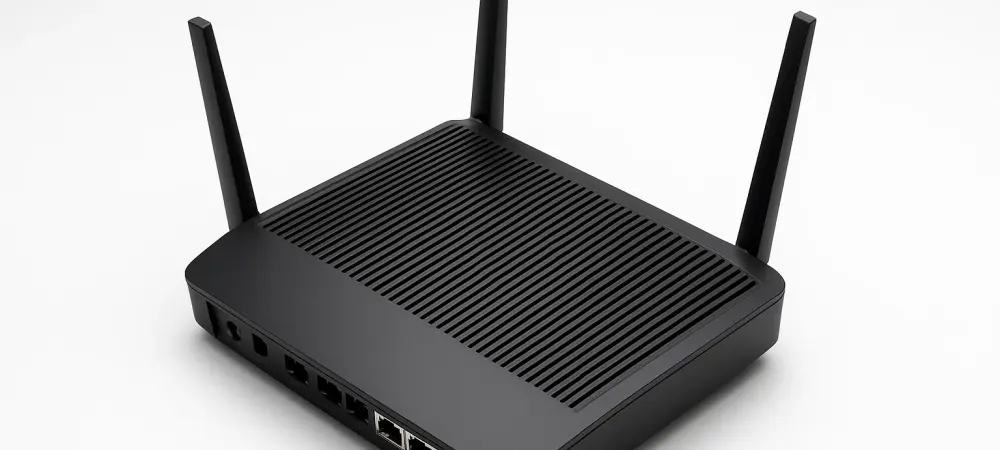
A significant shift is occurring in the networking hardware market as manufacturers like TP-Link begin to integrate advanced security and parental controls into subscription-based software models such as the HomeShield suite. This evolution reflects a broader transformation where the router is no longer just a simple gateway but the central nervous system of a sophisticated digital ecosystem. As modern households move toward 2027 and 2028, the density of connected devices continues to skyrocket, placing unprecedented stress on traditional networking hardware. While the standard four-port configuration provided by most internet service providers was once adequate, it has become a bottleneck for power users who manage gaming consoles, smart home hubs, and high-speed workstations simultaneously. The reliability of a hardwired Ethernet connection remains unmatched, prompting a surge in demand for routers that offer expanded physical connectivity without the added clutter of external network switches.
Premium Performance: The Asus RT-BE96U Hardware
The Asus RT-BE96U represents a significant milestone for enthusiasts who refuse to compromise on local network speed or hardware durability. This tri-band beast is engineered to handle the most demanding multi-gigabit fiber connections, providing five LAN ports that serve as a high-speed backbone for the home. Most notable is the inclusion of a dedicated 10 Gbps port, which is essential for professional creators who regularly move massive video files to network-attached storage or communicate between powerful workstations. To maintain this level of performance, the device incorporates a sophisticated cooling system featuring a quadruple heatsink, preventing the internal processors from throttling during sustained heavy loads. This focus on thermal management is a direct response to the increasing power consumption of modern chips, ensuring that users experience a consistent, high-speed connection even when the local network is being pushed to its absolute technical limits.
Beyond the impressive physical specifications, the software experience of the RT-BE96U provides the level of granular control that power users have come to expect from high-end hardware. The dual-mode interface, accessible via a streamlined mobile application or a comprehensive web browser dashboard, allows for precise traffic prioritization and real-time monitoring of every connected device. Gaming traffic can be isolated and given the highest priority to minimize latency, while work-from-home applications are protected by enterprise-grade security protocols. While the hardware is widely recognized for its exceptional throughput and range, early adopters have navigated the complexities of cutting-edge firmware, which is a common trade-off when investing in the latest networking standards. This router serves as a definitive solution for those who require professional-grade connectivity integrated into a single, manageable device that can adapt to the shifting needs of a modern home.
Next-Generation Value: Exploring the Archer BE800
The TP-Link Archer BE800 serves as a bridge for users who want to embrace the Wi-Fi 7 standard without the astronomical price tags often associated with top-tier equipment. It provides a unique configuration of five LAN ports, with four supporting 2.5 Gbps and one dedicated to 10 Gbps, offering a versatile range of speeds for diverse device requirements. This specific layout is particularly beneficial for households that have transitioned to multi-gigabit internet plans, as it allows for multiple high-speed devices to operate at full capacity simultaneously. The physical design of the BE800 also breaks away from traditional industrial aesthetics, utilizing internal antennas to create a sleek, minimalist profile that fits naturally into a contemporary living space or office. By hiding the antennas, the manufacturer has managed to combine high-performance wireless coverage with a form factor that is less intimidating while maintaining excellent throughput for heavy users. Technical efficiency is the cornerstone of the Archer BE800, which leverages a 320 MHz channel width to double the data transmission capacity compared to previous wireless generations. The inclusion of Multi-Link Operation allows devices to connect across different frequency bands at the same time, significantly reducing interference and improving overall network stability in crowded urban environments. This capability is critical as more residential areas become saturated with wireless signals from neighboring units. While the router excels in providing high-speed access for smaller homes and apartments, some long-term reports have highlighted the importance of hardware longevity and the potential for manufacturing variances in early production runs. Despite these considerations, the inclusion of a two-year warranty provides a safety net for users who are eager to upgrade their infrastructure. This balance of competitive pricing and advanced technical features makes it a standout option.
Maximum Port Density: The Archer AXE300 Advantage
The TP-Link Archer AXE300 occupies a unique niche as one of the few standalone routers available that provides six high-speed LAN ports, effectively serving as both a wireless hub and a high-performance switch. This quad-band Wi-Fi 6E powerhouse is built for environments where every millisecond of latency and every megabit of bandwidth matters, featuring two 10 Gbps ports and four 2.5 Gbps ports. This configuration allows for the simultaneous connection of multiple gaming rigs, storage servers, and smart home controllers without the need for additional networking accessories that can introduce points of failure. The device is particularly suited for large-scale homes where the network architecture must support dozens of concurrent high-bandwidth streams. Its ability to integrate with OneMesh technology further enhances its utility, allowing users to expand their coverage area by adding compatible range extenders or secondary routers to form a seamless, unified network.
Management of such a powerful device is facilitated by the Tether application, which simplifies the initial configuration and ongoing maintenance tasks for users who may not be networking experts. However, the trend toward subscription-based services is most evident here, as many of the most advanced security features and parental control tools require a recurring fee for full access. This shift represents a broader industry movement where the value proposition is split between physical hardware capabilities and ongoing software-enhanced protection. While the base security features provide a solid foundation for most users, those seeking the highest level of network defense must budget for these additional costs. Even with these considerations, the raw port count and the inclusion of two 10 Gbps ports make the AXE300 an unmatched choice for power users who prioritize physical connectivity above all else. It remains a definitive example of how hardware can be scaled to meet growing demands.
Scalable Solutions: Mesh Networking and Distribution
For residents of sprawling properties where a single router cannot provide consistent coverage, mesh systems like the Eero 6+ offer an alternative method for managing physical connections. Instead of centralizing all ports on one device, the three-pack system distributes five 1 Gbps LAN ports throughout different rooms, enabling hardwired connections for televisions, gaming consoles, and desktop computers without the need for invasive interior wiring. This distributed approach is often more practical for older homes where running Ethernet cables through walls is cost-prohibitive or physically impossible. While these ports do not offer the ultra-high speeds found on premium standalone routers, the stability provided by a wired link to a mesh node is significantly superior to a purely wireless connection. The Eero system is frequently praised for its simplicity and the “set-it-and-forget-it” nature of its software, making it an ideal choice for households that value ease of use.
However, the transition to a mesh-based port strategy does come with specific trade-offs that power users must carefully consider before making an investment. The lack of 2.5 Gbps or 10 Gbps ports on these units means that they cannot fully exploit the potential of the fastest fiber internet plans currently being deployed across the country. Additionally, the absence of USB ports on many mesh models limits the ability to connect external hard drives for local file sharing or printer networking. This contrast highlights a growing divide in the market between users who prioritize high-speed localized data transfers and those who prioritize ubiquitous coverage and simplicity. As households continue to add more connected devices, the choice between a centralized high-speed hub and a distributed mesh network will increasingly depend on the specific physical layout of the home and the types of activities being performed. The flexibility of mesh technology ensures that even the furthest corners maintain stability.
Network Foundations: Strategic Evolution and Planning
Manufacturers recognized that the demands of high-density home networks required a fundamental change in how physical ports were integrated into flagship routers. By moving beyond the traditional four-port limit, companies provided a clear path for power users to consolidate their networking hardware and eliminate the need for redundant external switches. This transition was marked by a significant increase in the availability of 2.5 Gbps and 10 Gbps ports, which allowed homeowners to fully utilize the burgeoning fiber internet infrastructure. The market also saw a definitive push toward integrating software-as-a-service models into the core hardware experience, creating a new paradigm where security and management were constantly updated via subscription. These developments ensured that high-end routers remained relevant as the primary hubs of the digital home, capable of handling the massive data loads required by emerging technologies like 8K streaming and cloud-based gaming. Users who sought to optimize their home networks successfully identified that the number of physical LAN ports was just as important as wireless throughput. They began to prioritize hardware that offered multi-gigabit capabilities to future-proof their installations against the inevitable increase in internet speeds. For those living in larger environments, the adoption of mesh systems with distributed ports provided a balanced solution that reconciled coverage with the need for stable, hardwired connections. The industry eventually standardized on high-speed ports as a baseline requirement for any premium device, reflecting the critical role that wired reliability played in professional and entertainment contexts. To maintain a competitive edge, savvy consumers focused on routers with advanced cooling and user-friendly management tools, ensuring their systems could withstand the rigors of continuous high-bandwidth operations. These strategic choices led to a more resilient home networking environment.