

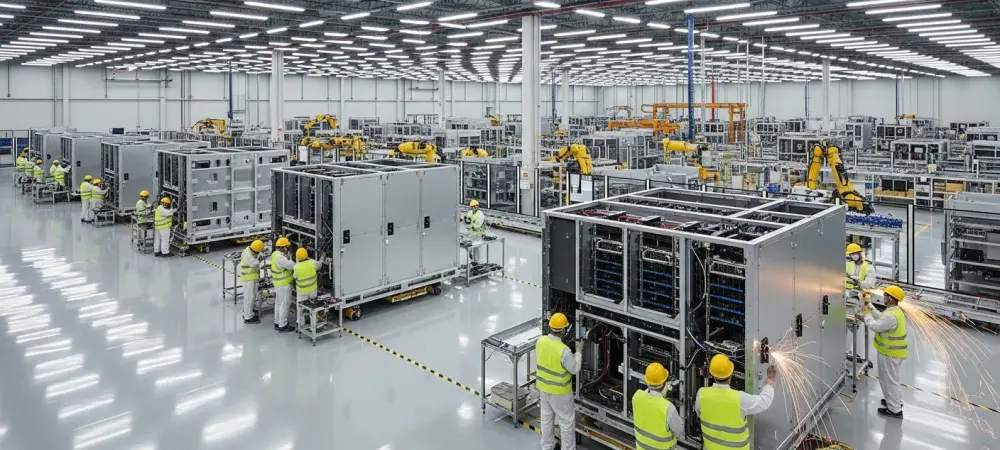
High-speed cloud deployment is no longer a luxury but a survival requirement as the relentless appetite for generative AI compute pushes existing physical infrastructure to its absolute point of failure. Project Houdini marks the transition toward a standardized, factory-built future that bypasses the slow, manual processes of the past. By prioritizing pre-fabrication, Amazon Web Services addresses the fundamental bottleneck of modern cloud scaling: the physical construction of the data hall itself.
Evolution and Core Principles of AWS Modular Design
Project Houdini represents a radical departure from the traditional “stick-built” era where on-site labor dominated timelines. By standardizing components in a factory environment, AWS transforms data center construction into an assembly line process. This shift allows the company to move beyond niche edge deployments into massive hyperscale facilities that can be deployed with minimal local prep work. The core objective remains the reduction of capital expenditure through repeatable, high-precision engineering.
Engineering Architecture: Technical Components
Pre-Fabricated Skid Infrastructure: The Modular Core
Central to this strategy is the 45-foot pre-assembled skid, a self-contained module housing essential power and fire systems. Unlike traditional methods where technicians work in unfinished shells, these skids are wired and tested in controlled factory settings. This precision ensures that every unit meets performance benchmarks before reaching the field, eliminating on-site installation errors.
Rapid Deployment: Logistics and Heavy-Duty Transportation
Transporting these units requires specialized double-drop trailers to navigate height restrictions while hauling heavy equipment. Once on-site, lead times for data hall readiness drop from fifteen weeks to just two or three. This logistical leap allows AWS to integrate hardware into existing frameworks almost immediately, responding to demand spikes with surgical precision.
Latest Developments: Hyperscale Modularity and Generative AI
Standardized manufacturing is now the backbone of AI expansion, requiring unprecedented power density for GPU clusters. Through partnerships with firms like Cupertino Electric, AWS established manufacturing hubs in Kansas and Texas. This industrialization ensures high-density power is built into the foundation rather than being retrofitted into aging structures.
Real-World Applications: Global Impact
The impact is most visible in regions where skilled labor is scarce or where regional zones must scale overnight. Modularity provides a buffer against the unpredictability of digital service demands, allowing a global footprint to expand without the multi-year delays typical of heavy construction. This agility has altered how regional capacity is planned and executed across the globe.
Implementation Challenges: Technical Hurdles
Moving oversized structures across state lines presents significant regulatory and logistical headaches. Transitioning from bespoke designs to rigid modular templates requires a mindset shift that some permitting offices struggle to accommodate. Furthermore, reliance on factory components creates a concentrated supply chain risk that could lead to bottlenecks if a single tier-one supplier fails.
Future of Factory-Built Infrastructure: Scaling Output
The projection of launching over one hundred centers annually suggests that factory-built infrastructure will soon become the global industry standard. This scale will drive breakthroughs in energy-efficient cooling systems pre-integrated into the design. Project Houdini will redefine construction norms, forcing competitors to choose between industrialization or obsolescence.
Summary: Strategic Assessment
The transition from labor-intensive manual construction to high-speed modular assembly solidified AWS’s position in the AI infrastructure race. Project Houdini proved that physical constraints could be mitigated through engineering and logistical foresight, reducing the cost-per-megawatt for expansion. This modular approach established a new benchmark for how digital power was delivered to an automated world.