

The Great Migration: Why the AI Revolution Is Moving Inland
The rapid proliferation of generative artificial intelligence has fundamentally altered the physical geography of the internet, forcing a massive relocation of infrastructure from coastal hubs to the American heartland. For decades, the logic of data center placement was dictated by proximity to major population centers and subsea cable landings to minimize latency for consumer applications. However, as AI models grow in complexity, the infrastructure required to train and run them demands an unprecedented scale of electricity—quantities that traditional tech hubs are increasingly unable to provide. This shift is decentralizing the cloud and turning the US interior into the new frontier for global computing power.
From Coastal Hubs to the Energy Frontier: A Brief History of Site Selection
Historically, the data center industry was defined by “safe bets” in regions like Northern Virginia, which became the world’s most concentrated hub due to fiber connectivity and tax incentives. Silicon Valley and the New York metropolitan area also served as primary nervous systems for the tech and financial sectors. In these early eras, electricity was viewed as a utility that was readily available upon request. However, as cloud computing gave way to hyperscale operations, the strain on local grids began to show. The current shift is the culmination of years of tightening supply in legacy markets, where power land-banking has become common and regulatory hurdles have slowed the expansion of high-voltage transmission lines.
The Supremacy of Power in the AI Era
Prioritizing Megawatts Over Milliseconds in Site Selection
In the current market, the hierarchy of needs for data center developers has been flipped on its head to favor energy over speed. While network latency was once the top priority, the massive computational load of AI training has made power availability the ultimate deal-breaker. AI workloads, particularly during the training phase, are less sensitive to the slight delays caused by physical distance than consumer-facing applications like video streaming. This flexibility allows hyperscalers to prioritize regions like the Midwest and Texas, where the primary attraction is a robust and scalable power grid rather than a dense population. Consequently, developers are now seeking gigawatt-scale campuses that can support energy-dense racks, often bypassing traditional hubs that can no longer guarantee capacity.
The Rise of Non-Traditional Tech Markets
The search for energy has put a spotlight on cities and states that were previously off the radar for major tech investments. Regional centers like South Bend, Indiana; Abilene, Texas; and Kansas City, Missouri, are seeing a surge in interest from giants like Microsoft, Google, and Meta. These locations offer a winning combination of vast, affordable land and utilities that are more amenable to fast-tracking large-scale industrial projects. States such as Wisconsin and Michigan are leveraging their industrial heritage to reposition themselves as digital powerhouses. This inland surge is a structural realignment; while Texas and the Midwest currently hold a significant portion of US capacity, they are projected to secure the majority of future developments.
Scaling for the Future: Density and Size Requirements
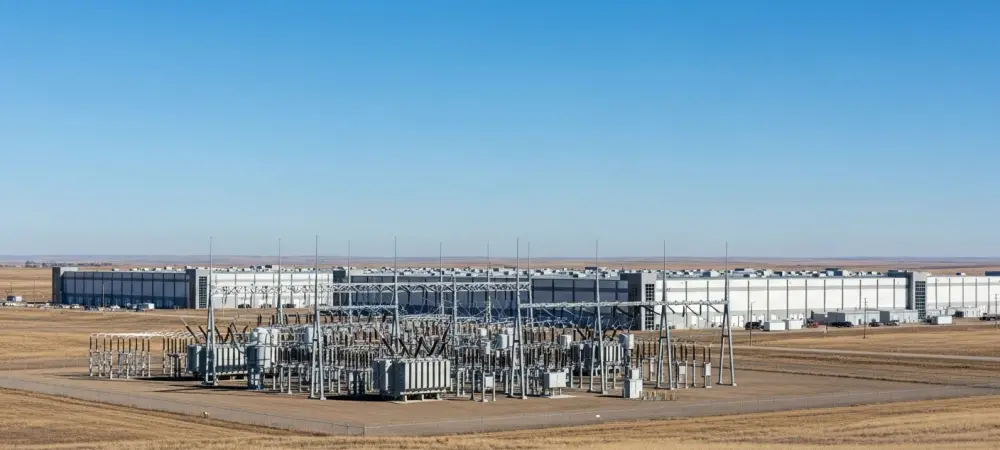
The facilities being built today bear little resemblance to those constructed just half a decade ago. Modern data centers are becoming significantly larger and more power-dense to accommodate the heat and energy demands of specialized AI hardware. Industry data suggests that the average capacity of new facilities coming online will nearly double in the coming years. This increase in scale introduces new complexities, such as the need for advanced liquid cooling systems and dedicated on-site substations. Success in the US interior requires a sophisticated interplay between state-level incentives, environmental considerations, and the long-term stability of the local energy mix.
Technological and Regulatory Shifts Shaping the Horizon
Looking ahead, the movement toward the US interior will likely accelerate as technological and regulatory environments evolve. We are entering an era where data center operators may no longer be just consumers of power, but active participants in the energy market through on-site generation and battery storage. Small Modular Reactors and advanced geothermal energy are being discussed as potential long-term solutions to keep these inland compute plants running sustainably. Furthermore, as coastal states tighten environmental regulations and grid constraints worsen, the economic gap between the interior and the coasts will likely widen. Future-proofing these assets will involve navigating a complex web of regional transmission organizations that are still catching up to the scale of the AI boom.
Strategic Implications for the Digital Economy
The migration of hyperscale capacity to the American heartland offers several key takeaways for businesses and policymakers. First, the dominance of major tech players is being reinforced by their ability to secure power in these new regions, further consolidating the market. For secondary players and enterprises, the strategy must involve a realistic assessment of where capacity will actually be available over the next decade. Best practices now dictate that power procurement and grid analysis must happen years before a single brick is laid. For the regions receiving these investments, the challenge lied in balancing the economic windfall of high-value assets with the long-term impact on local utility rates and water resources.
The Permanent Realignment of Global Infrastructure
The push toward the US interior represented more than just a change in geography; it was a fundamental shift in how the physical foundation of the digital world was constructed. While legacy hubs like Northern Virginia continued to play a role, the engine room of the AI revolution clearly moved inland to tap into deeper energy reserves. This transition highlighted a world where energy security was synonymous with technological leadership. As AI integrated into every facet of the global economy, the stability and scale of the power grid in the American Midwest and South became the new benchmarks for progress. Moving forward, stakeholders had to prioritize the integration of renewable energy sources directly into data center design to ensure that this inland expansion remained ecologically and economically viable.