

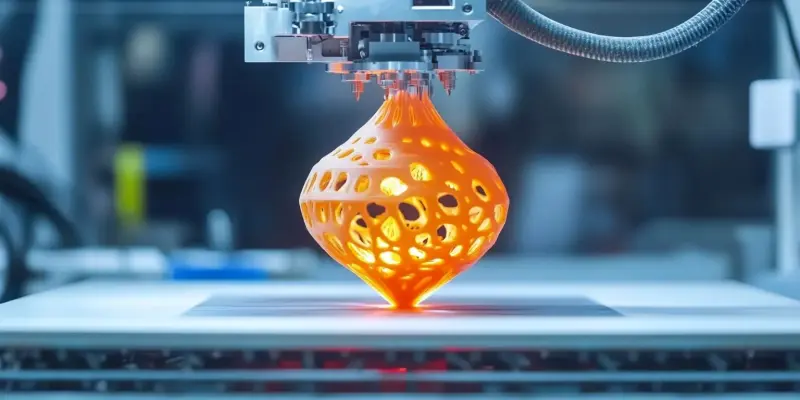
Automation is transforming the landscape of additive manufacturing (AM), making it a necessity rather than a luxury in today’s dynamic manufacturing environment. By integrating automation into various stages of AM processes, businesses can enhance operational efficiency and deliver substantial benefits to customers. This article explores how automation, spanning from initial quoting to post-processing, plays a pivotal role in revolutionizing AM services.
The Necessity of Automation in Additive Manufacturing
A common misconception about additive manufacturing is its inherently rapid process. While 3D printing can indeed reduce time-to-part significantly compared to traditional manufacturing methods, there remain several manual steps that can slow down the process. Automation targets these bottlenecks, aiming to streamline operations and, consequently, accelerate the overall production cycle. Understanding this distinction is crucial for stakeholders looking to invest in AM technologies.
From an additive manufacturing service provider’s perspective, front-end automation—particularly in quoting, file handling, and order management—is transformative. For customers, this translates into faster response times, improved accuracy, and an overall more seamless experience. When manual tasks are automated, not only is efficiency improved, but the consistency and quality of the final products are also better maintained. Thus, accurate and swift front-end operations set the stage for a more efficient production cycle downstream.
Major Themes and Key Points
Automated Quoting Systems
Traditional quoting methods, where customers often waited for sales representatives to provide prices, have become obsolete. Modern automated quoting systems now provide near-instant pricing based on uploaded 3D files, radically improving the speed and efficiency of this process. Companies like 3D People have heavily invested in proprietary online quoting platforms to ensure customers receive pricing information swiftly. They claim their system is the fastest tool available for analyzing parts and determining prices, underlining the competitive edge automation provides.
Automated quoting systems offer several notable advantages. First, faster decision-making processes are assured since customers receive instant quotes that allow them to proceed without unnecessary delays. Additionally, accurate pricing is more easily achieved because automated systems reduce human error, providing consistent and precise pricing across different projects. Transparency is also enhanced as customers can see cost breakdowns, understanding how variables like materials, finishes, and quantities affect prices. The streamlined process enables customers to transition from the ideation phase to production-ready parts much quicker than traditional methods would allow, making it a win-win situation for both service providers and customers.
File Handling and Preparation
File preparation stands as a crucial step in additive manufacturing, involving rigorous checks for errors and optimizing the 3D files for specific technologies and materials. Traditionally, this process was time-consuming and prone to human error. However, automation tools effectively analyze and repair these files, flagging potential issues before they arise. This optimizes the workflow significantly. At 3D People, these tools handle tasks such as thin wall checks and part orientation optimization, ensuring optimal outcomes.
From a customer’s perspective, automation in file handling brings substantial benefits. First and foremost, it drastically reduces the risk of errors. Automated file checks catch issues early, lessening the likelihood of failed prints and ensuring smoother workflows. Additionally, faster turnaround times are achieved as automated handling negates the need for prolonged back-and-forth communication about file fixes. Consistency is another key advantage—every file is prepared to a high standard, leading to uniform quality across various orders. By using automated file analysis tools, 3D People ensures that customers receive optimal outcomes efficiently, meeting project requirements without unnecessary delays.
Production Management and Workflow Automation
Production management becomes increasingly complex when dealing with numerous orders, various machines, multiple materials, and strict deadlines. Without automation, managing this complexity can be a logistical nightmare. Workflow automation tools prove crucial in this context, scheduling print jobs based on machine availability, prioritizing urgent orders, and tracking the progress of each part through production stages. These tools eliminate the inefficiencies tied to manual management, creating a more streamlined process.
The benefits for customers stemming from production management and workflow automation are manifold. Reliable lead times result from smoother production runs and timely deliveries, ensuring customer satisfaction. Automated scheduling ensures that urgent orders are prioritized accordingly, without disrupting the overall workflow. Moreover, real-time updates on order statuses reduce the necessity for manual follow-ups, providing customers with a transparent experience. Scalability also sees improvements; workflow automation enables companies to manage larger orders without compromising on quality or lead times. For example, 3D People groups hundreds of different customer jobs in one print run and sorts them back into respective jobs through software automation, a task that would be immensely time-consuming without automation.
Post-Processing Automation
While front-end automation in AM garners significant attention, post-processing is equally crucial to achieving high-quality results. Techniques such as vapor smoothing, vibro-polishing, and dyeing can be automated to produce consistent results across batches. Contrary to popular belief, high levels of automation in post-processing are rare but essential to maintain the desired level of quality and efficiency. At 3D People, automated post-processing improves the overall quality and reduces the labor-intensive nature of these tasks.
Automated post-processing offers several advantages that directly benefit customers. Consistent quality is a primary benefit; each part in a batch receives uniform finishing, meeting customer expectations reliably. Cost reduction is another positive outcome, as automated processes are generally more efficient, reducing labor costs associated with manual post-processing techniques. This also leads to faster delivery times, as speeding up the post-processing workflow allows for quicker delivery of finished parts, consequently improving overall lead times. Organizations like 3D People continuously integrate new automated post-processing methods to ensure quality optimization, affirming that every delivered part meets stringent standards.
The Enhanced Customer Experience
Ultimately, the integration of automation in additive manufacturing significantly enhances the customer experience. When customers approach a service provider like 3D People with a project, their primary concerns usually revolve around cost, time, and quality—how much will it cost, how long will it take, and will the parts meet expectations? Automation effectively addresses these key concerns by streamlining crucial processes. Consequently, faster responses, expedited file handling, and superior quality assurance become the norms rather than exceptions in AM service delivery.
By automating essential processes, 3D People offers several customer-centric advantages. Faster responses are facilitated through instant quotes and quicker file handling, which reduces waiting times and allows customers to proceed with projects swiftly. Additionally, confidence in results is bolstered through automated checks and consistent processing, assuring customers that their parts will be accurate on the first attempt, thereby minimizing the need for reprints or adjustments. Superior quality is achieved as automation ensures high standards and consistently reliable parts, reinforcing trust and satisfaction among customers.
Future Trends in Automation and Additive Manufacturing
Automation is dramatically changing the field of additive manufacturing (AM), transforming it from a luxury into a necessity in today’s fast-paced manufacturing world. By introducing automation at various stages of the AM process, companies can significantly boost operational efficiency and offer greater value to their customers.
This article dives into the crucial role of automation in reshaping AM services, from the very beginning stages of quoting a project to the final post-processing steps. Through automation, businesses can streamline their workflows, reduce human error, and improve consistency in product quality. Additionally, automated systems can handle repetitive tasks faster and more accurately than human workers, leading to shorter production times and cost savings.
Embracing automation in additive manufacturing also allows for better scalability, enabling businesses to easily ramp up production to meet growing demand. As a result, this technological advancement not only enhances the internal processes of companies but also puts them in a stronger position to meet the evolving needs of the market.