

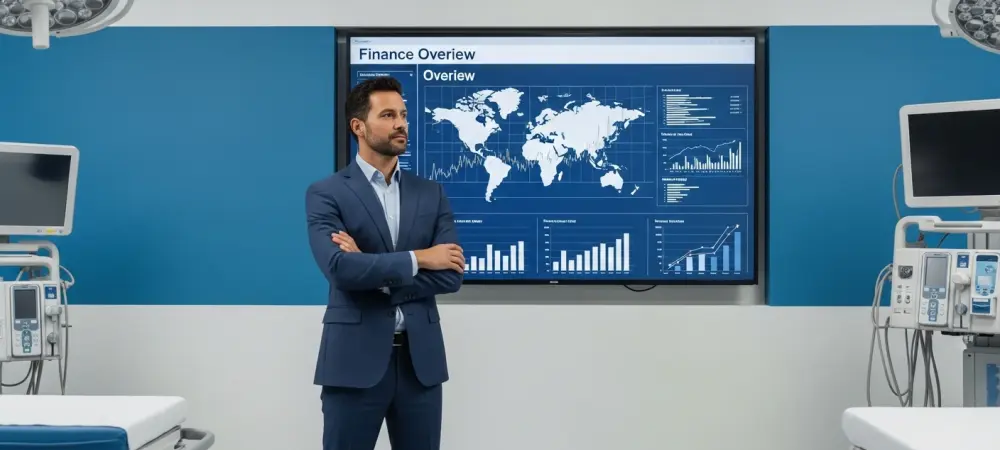
The modern healthcare sector currently navigates one of the most intricate and high-stakes financial environments within the global economy, necessitating a total departure from outdated accounting practices. As medical institutions expand into vast networks of specialized clinics and emergency centers, the sheer volume of financial data—spanning from high-cost surgical equipment leases to recurring pharmaceutical supply chains—has become nearly impossible to manage through traditional administrative means. This complexity is frequently exacerbated by the requirement to synchronize diverse transactions across multiple legal entities and departmental budgets, demanding a level of precision that manual entry cannot consistently provide. Consequently, a growing number of healthcare organizations are prioritizing the transition from fragmented accounts payable processes to integrated digital solutions. By merging the capabilities of Microsoft Dynamics 365 Business Central with advanced automation tools like Rillion, providers are securing their operational efficiency while establishing a foundation for long-term financial transparency.
The Operational Risks of Manual Processing
Legacy accounts payable systems in the healthcare industry are fundamentally defined by paper-heavy workflows and repetitive manual data entry, which present significant risks to institutional stability. Financial experts have noted that these traditional methods are increasingly viewed as a liability because they cannot keep pace with the rapid transaction speeds required in contemporary medical environments. When finance teams are forced to dedicate their labor hours to physical document tracking and manual coding, the potential for human error grows exponentially, often leading to misfiled invoices or duplicate payments. This administrative fatigue does more than just slow down the accounting department; it creates a systemic drag on the entire organization. The lack of a centralized digital repository means that records are often siloed, making it difficult for chief financial officers to gain a holistic view of the organization’s liabilities or to identify areas where spending might be consolidated for better pricing.
Beyond the internal administrative burden, manual systems create substantial operational friction through approval bottlenecks that directly threaten the supply chain. Invoices frequently languish in physical inboxes or get lost in email threads, leading to late payments that strain relationships with critical medical suppliers. For a hospital, a disrupted relationship with a vendor can mean a delay in receiving life-saving equipment or essential medications, which eventually impacts the quality of patient care delivered on the front lines. Furthermore, decentralized manual processes often lead to the phenomenon of “shadow spending,” where individual departments make purchases outside of the official procurement strategy. Without the real-time visibility offered by a modern ERP system, healthcare networks struggle to forecast their cash flow accurately, leaving them vulnerable to market fluctuations or unexpected capital requirements that could have been mitigated through better digital oversight.
Implementing Intelligent Automation Protocols
The integration of specialized automation software with Microsoft Dynamics 365 Business Central represents a significant leap forward by creating a touchless, cloud-based workflow for the entire invoice lifecycle. This technological synergy utilizes intelligent data capture and advanced optical character recognition to automatically pull vendor details and line-item information from incoming digital or physical documents. By analyzing historical transaction patterns and applying pre-defined accounting logic, the system reduces the need for human intervention in the initial stages of processing. This shift allows healthcare providers to move away from a reactive, “check-cutting” mentality and toward a proactive, data-driven operational model. Because the platform is hosted in the cloud, it provides a scalable infrastructure that can easily accommodate the addition of new clinics or departments without requiring a corresponding increase in the size of the central finance team. A vital component of this automated financial engine is the implementation of three-way matching protocols, which verify that every invoice matches the original purchase order and the record of goods received. In a medical setting, where thousands of small items are delivered daily, this automatic cross-referencing ensures that the organization only pays for the specific supplies and services that were authorized and successfully delivered. This process effectively eliminates the risk of fraudulent claims and overpayments, which are common issues in large-scale manual operations. Once the system verifies the data, invoices are electronically routed to the appropriate stakeholders based on the internal hierarchy of the organization. The ability for department heads to approve expenditures via mobile devices further accelerates the turnaround time, ensuring that the general ledger within Dynamics 365 Business Central is updated in real-time to reflect the current state of accounts.
Data-Driven Compliance and Vendor Management
In the highly regulated world of healthcare finance, the digital audit trails generated by automated systems are indispensable for maintaining strict compliance with national and international standards. Every action taken on an invoice—from the moment it is captured to its final posting—is recorded with a timestamp and user ID, providing total transparency for internal and external auditors. This level of detail is particularly crucial for meeting security frameworks like HIPAA, as it ensures that sensitive financial data and vendor information are protected by robust encryption and access controls. Organizations that have adopted these systems find that the stress of manual document retrieval during an audit is completely eliminated, as every necessary record is available within a few clicks. This readiness not only saves time but also reduces the risk of non-compliance penalties that can arise from missing or incomplete financial documentation in a decentralized environment.
The transition to an automated environment also fosters significantly stronger relationships with vendors by ensuring that payments are consistently made on time or even ahead of schedule. By stabilizing the supply chain through reliable financial performance, healthcare providers can negotiate better terms and take full advantage of early-payment discounts that were previously inaccessible due to slow processing speeds. This optimization of working capital allows the organization to reinvest savings back into patient-facing technologies or facility upgrades. Furthermore, centralized finance teams can maintain rigorous oversight across various clinics while still allowing local managers the flexibility to handle their specific operational tasks within the system. This balance of control and autonomy is essential for large healthcare networks that must maintain standard operating procedures without stifling the efficiency of individual specialized medical centers.
Strategic Recommendations for Future Integration
The evolution of the finance professional’s role within the healthcare sector was a direct result of moving away from the mundane tasks of data entry and document chasing. As automation took over the clerical aspects of accounts payable, staff members were empowered to become strategic advisors who focused on budgeting, forensic financial analysis, and long-term capital planning. This shift proved essential for the financial sustainability of organizations operating in an increasingly complex economic landscape where margins were thin and the cost of medical technology continued to rise. By leveraging the real-time data provided by the integration of Rillion and Dynamics 365 Business Central, finance teams identified inefficiencies that were previously hidden, allowing them to provide actionable insights to executive leadership. This transformation from a cost center to a value-added department changed the internal culture of healthcare administration and prioritized analytical thinking.
In light of these developments, healthcare leaders pursued a clear roadmap for total digital synchronization across all financial departments to ensure continued growth. It became evident that the successful adoption of automation required not only the right software but also a commitment to continuous staff training and process refinement. Future considerations involved the deeper integration of artificial intelligence to predict spending trends and automate even more complex procurement decisions based on patient volume data. Organizations that acted decisively to eliminate manual bottlenecks positioned themselves as leaders in operational excellence, redirected resources toward enhancing patient outcomes, and secured their place in a competitive market. The journey toward a fully automated accounts payable system was recognized as a fundamental pillar of modern healthcare management, providing the resilience needed to face future economic challenges with confidence and precision.