
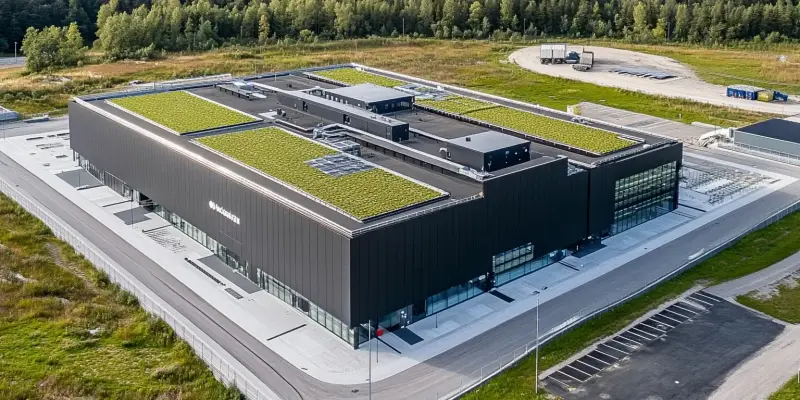
atNorth To Build New Sustainable Mega Data Center in Sweden

atNorth has secured a 30-hectare plot in Hamre Industripark, Långsele, Sweden, for a new “mega site” data center. This location, a five-and-a-half-hour drive from Stockholm, has been meticulously selected for its strategic infrastructure, substantial energy capacity, cool climate, renewable energy resources, and access to a skilled workforce. Johan Andersson, chair of the municipal executive committee, highlighted the project as a significant opportunity to bolster the region’s innovative development. He noted that the new site would not only create jobs but also attract further technological investments to the region. atNorth’s CEO, Eyjólfur Magnús Kristinsson, has emphasized the site’s crucial role in meeting the growing demand for sustainable infrastructure.

The new data center will serve as a complement to atNorth’s existing facility in Stockholm, which is already known for supporting high-density workloads and employing advanced liquid cooling technology for effective heat recovery. The upcoming facility in Långsele is poised to mimic this high-efficiency approach, leveraging advanced technology and the region’s renewable resources to provide clean, sustainable data services. This expansion follows atNorth’s recent upgrades to its facilities in Iceland, where they increased capacity at ICE02 and ICE03, reinforcing their commitment to environmentally responsible growth. The new project aligns with atNorth’s broader strategy of scaling operations responsibly while maximizing the use of renewable energy and state-of-the-art technologies for efficient data center solutions.

For atNorth, this expansion into Sweden is a monumental step toward establishing a significant foothold in the European data center market. The choice of Långsele reflects a broader industry trend of situating data centers in areas with favorable climates and access to renewable energy, which can significantly reduce operational costs and carbon footprints. This strategic move not only supports atNorth’s vision for a sustainable future but also underscores their dedication to innovating and integrating green technologies to meet today’s complex data demands. By staying committed to such principles, atNorth aims to continue setting new standards in the data center industry.

Explore more

AI and Generative AI Transform Global Corporate Banking

The high-stakes world of global corporate finance has finally severed its ties to the sluggish, paper-heavy traditions of the past, replacing the clatter of manual data entry with the silent, lightning-fast processing of neural networks. While the industry once viewed artificial intelligence as a speculative luxury confined to the periphery of experimental “innovation labs,” it has now matured into the

Is Auditability the New Standard for Agentic AI in Finance?

The days when a financial analyst could be mesmerized by a chatbot simply generating a coherent market summary have vanished, replaced by a rigorous demand for structural transparency. As financial institutions pivot from experimental generative models to autonomous agents capable of managing liquidity and executing trades, the “wow factor” has been eclipsed by the cold reality of production-grade requirements. In

How to Bridge the Execution Gap in Customer Experience

The modern enterprise often functions like a sophisticated supercomputer that possesses every piece of relevant information about a customer yet remains fundamentally incapable of addressing a simple inquiry without requiring the individual to repeat their identity multiple times across different departments. This jarring reality highlights a systemic failure known as the execution gap—a void where multi-million dollar investments in marketing

Trend Analysis: AI Driven DevSecOps Orchestration

The velocity of software production has reached a point where human intervention is no longer the primary driver of development, but rather the most significant bottleneck in the security lifecycle. As generative tools produce massive volumes of functional code in seconds, the traditional manual review process has effectively crumbled under the weight of machine-generated output. This shift has created a

Navigating Kubernetes Complexity With FinOps and DevOps Culture

The rapid transition from static virtual machine environments to the fluid, containerized architecture of Kubernetes has effectively rewritten the rules of modern infrastructure management. While this shift has empowered engineering teams to deploy at an unprecedented velocity, it has simultaneously introduced a layer of financial complexity that traditional billing models are ill-equipped to handle. As organizations navigate the current landscape,