

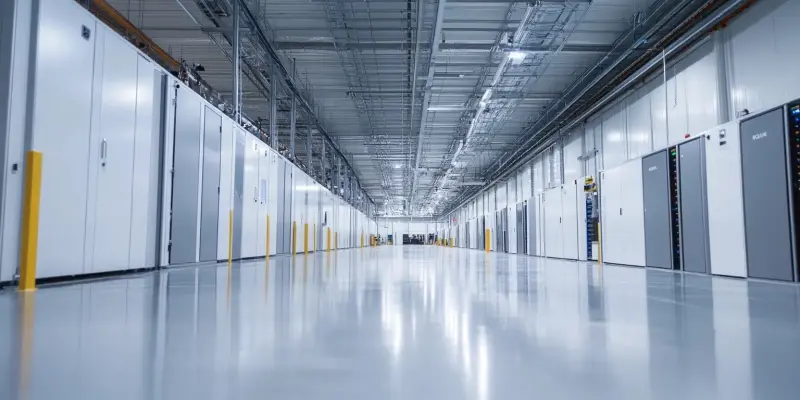
As technology continues to evolve at a rapid pace, the demand for sophisticated data centers is skyrocketing, particularly in the field of artificial intelligence (AI). The recent announcement of the world’s largest AI data center industrial park, named ‘Wonder Valley,’ being developed in Alberta, Canada, has sparked significant interest and speculation. This ambitious project is the result of a collaboration between the Municipal District of Greenview and O’Leary Ventures, aiming to build off-grid natural gas and geothermal power infrastructure. The development of Wonder Valley positions Alberta as a potential hub for AI data centers, bringing substantial economic growth, job creation, and increased global recognition to the region.
Strategic Collaboration and Economic Impact
The partnership between the Greenview Industrial Gateway (GIG) and O’Leary Ventures marks a critical step in realizing the Wonder Valley project. The collaboration was formalized with the signing of a Letter of Intent, outlining a comprehensive plan to develop thousands of acres of land. The project is expected to roll out in phases, creating thousands of jobs during and after construction. This is poised to make a substantial impact on the local economy—bolstering employment and fostering a more dynamic business landscape.
The economic benefits of Wonder Valley extend beyond job creation. The project is projected to provide up to 7.5 GW of low-cost power to hyperscalers over the next 5-10 years. The initial phase, which involves generating 1.4 GW of power, is estimated to cost around US$ 2 billion. Over its lifespan, the total investment in Wonder Valley is expected to exceed $70 billion. Such a significant financial commitment underscores the project’s potential to transform Alberta into a focal point for technological advancement and economic prosperity.
Alberta’s Favorable Conditions
Alberta’s Premier Danielle Smith and Minister of Technology and Innovation Nate Glubish have highlighted the project as an affirmation of Alberta’s growing reputation for being an ideal location for data centers. A combination of factors makes Alberta especially favorable for such projects. The province’s cold climate is particularly advantageous for data centers, as cooler temperatures help reduce the need for energy-intensive cooling systems, thereby lowering operational costs. Additionally, Alberta boasts a skilled labor force well-versed in the nuances of high-tech installations, which is crucial for constructing and maintaining state-of-the-art facilities like Wonder Valley.
Furthermore, Alberta’s pro-business policies, attractive tax regime, and robust infrastructure offer a friendly environment for significant investments. The established pipeline infrastructure and proximity to stranded natural gas sources provide critical resources needed for the project’s success. The region’s existing permits and the presence of a nearby fiber optic network further facilitate a swift project launch. Kevin O’Leary and his team at O’Leary Ventures have emphasized that these conditions enable the project to adhere to modern AI compute reliability standards, incorporating sustainable energy solutions like geothermal power.
Commitment to Sustainability and Community Engagement
Another important aspect of the Wonder Valley project is its blueprint for sustainability, which integrates geothermal power and redundant power solutions to meet modern AI compute reliability standards. This focus on sustainable practices demonstrates a forward-thinking approach to technological development, ensuring that Alberta’s burgeoning AI data center industry does not come at the cost of environmental degradation. The use of off-grid natural gas also presents a cleaner, more eco-friendly alternative to traditional power sources, setting a positive precedent for future developments.
In addition to its technological and environmental commitments, the Wonder Valley project places a strong emphasis on community relationships. The developers aim to engage with First Nations Indigenous communities, ensuring that the venture benefits these groups while respecting their lands and cultural heritage. This approach not only fosters goodwill but also aligns the project with broader social responsibility goals. By integrating community interests and sustainable practices, the Wonder Valley project can serve as a model for other large-scale data infrastructure developments around the world.
Global Recognition and Future Prospects
As technology advances rapidly, the need for advanced data centers—especially in the realm of artificial intelligence (AI)—is surging. Recently, an announcement about the development of ‘Wonder Valley,’ the world’s largest AI data center industrial park in Alberta, Canada, has generated significant buzz. This groundbreaking project is a collaborative effort between the Municipal District of Greenview and O’Leary Ventures, aimed at creating off-grid natural gas and geothermal power infrastructure. Wonder Valley’s establishment positions Alberta as a key player in the AI data center industry, promising considerable economic growth, job opportunities, and enhanced global recognition for the region. The initiative showcases Alberta’s commitment to leveraging sustainable energy sources, reflecting a forward-thinking approach to technological infrastructure. By harnessing natural gas and geothermal power, Wonder Valley sets a precedent for future data centers, highlighting the importance of sustainability in the digital age.