

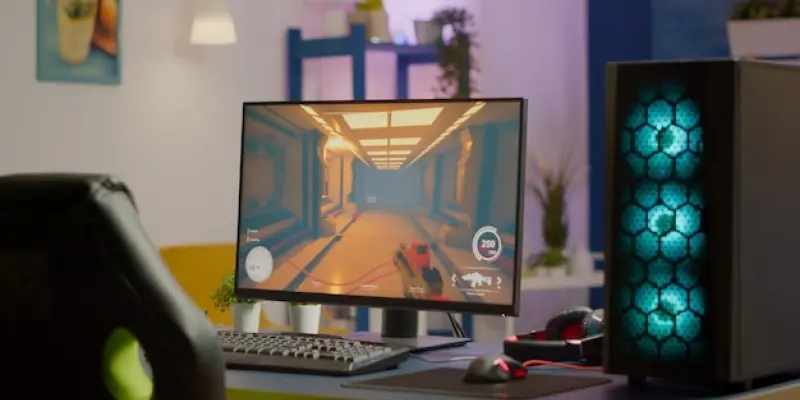
ASUS has made an impressive leap forward in gaming technology by unveiling the ROG STRIX ACE XG248Q5G, the world’s first gaming monitor capable of achieving an extraordinary 610Hz refresh rate. This groundbreaking development is primarily targeted at esports enthusiasts who are perpetually seeking an edge that enables faster and smoother in-game performance. Central to this monitor’s capabilities is its Super TN panel, which delivers an exceptionally swift 0.1ms response time coupled with remarkably low input lag, facilitated by ASUS’s GameFast Technology. Traditionally, TN panels have fallen short in terms of visual quality, yet the ROG STRIX ACE XG248Q5G competes effectively with modern alternatives. Its competitive edge is underscored by a 90% DCI-P3 color gamut and Extreme Low Motion Blur 2 technology, which renders it up to 65% brighter than other models. Coupled with a 24.1-inch screen featuring full HD resolution, users can expect a fluid and immersive gameplay experience that doesn’t compromise on visual fidelity.
Innovations in Gaming Display Technology
ASUS’s introduction of the ROG STRIX OLED XG32UCWG further illustrates their pioneering role in advancing gaming monitor technology. The model boasts a 32-inch 4K display, featuring WOLED technology and a TrueBlack Glossy coating that enhances depth and color richness. Versatile dual-mode operation stands out as a key feature; it tackles the age-old challenge in gaming of balancing resolution with frame rate. Gamers can experience either 4K resolution at 165Hz or Full HD at a remarkable 330Hz, thus offering adaptability based on individual gaming preferences and requirements. Enhanced by features such as ASUS’s Frame Rate Boost and OLED Care Pro, the XG32UCWG ensures the integrity of image quality while offering mechanisms for long-term screen care. This focus on image fidelity coupled with adaptable refresh capabilities demonstrates ASUS’s dedication to providing gamers with a comprehensive solution that meets both performance and aesthetic needs. The current trend toward monitors with higher refresh rates and flexible functionality is vividly reflected in ASUS’s innovation.
Impact and Future Trends
ASUS has set a new standard in gaming technology with the launch of the ROG STRIX ACE XG248Q5G, the first monitor in the world achieving an astounding 610Hz refresh rate. Tailored for esports enthusiasts who seek a competitive edge, this innovation promises unprecedented smoothness and speed in games. The monitor’s standout feature is its Super TN panel, boasting an incredibly fast 0.1ms response time and minimal input lag, optimized by ASUS’s GameFast Technology. Traditionally, TN panels are known for subpar visual quality, but the ROG STRIX ACE XG248Q5G stands out with its 90% DCI-P3 color gamut, challenging modern alternatives. Integrated with Extreme Low Motion Blur 2 technology, it surpasses brightness levels by 65% compared to other models. Its 24.1-inch screen, coupled with full HD resolution, ensures fluid, lifelike gaming without sacrificing visual quality. This monitor is crafted for players who value both performance and vibrant, detailed imagery, redefining what’s possible in esports displays.