

Dominic Jainy is a seasoned IT professional with a deep specialization in the intersection of high-performance computing and consumer electronics. With years of experience monitoring the evolution of hardware architecture and emerging technologies, he has become a respected voice for those looking to understand the nuances of the gaming industry. In this discussion, we dive into the technical breakthroughs and strategic decisions behind the latest flagship handheld from the Republic of Gamers. We explore how the new OLED display, revolutionary sensor technology, and a unique high-end accessory bundle aim to redefine the premium gaming experience in an increasingly crowded market.
How does the shift to a 7.4-inch OLED panel change the visual experience for a handheld gamer compared to the previous LCD models?
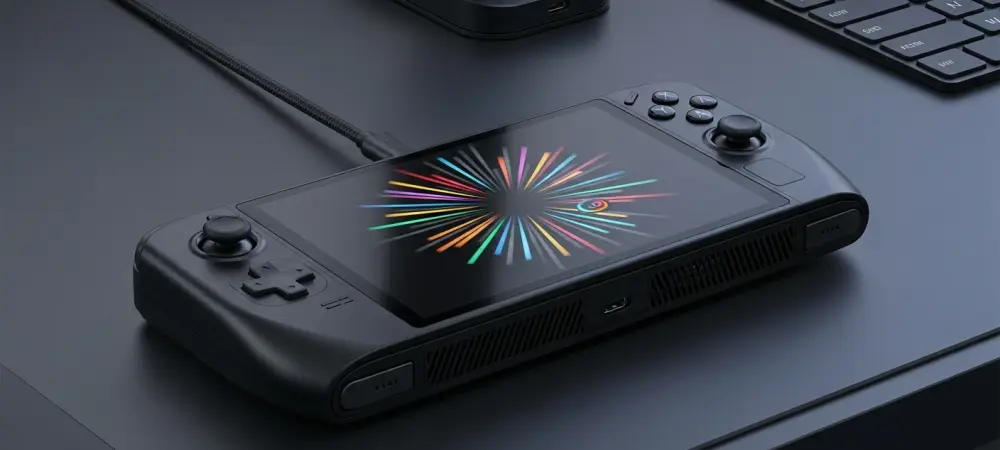
The transition to a 7.4-inch OLED panel is a complete revelation for portable gaming, especially when you consider the massive leap in peak brightness to 1,400 nits from the previous 500 nits. This isn’t just a minor bump; it makes the screen usable in bright environments and allows for stunning HDR highlights through VESA DisplayHDR TrueBlack 1000 certification. Seeing those deep, ink-black shadows paired with Dolby Vision support creates a visual depth that the previous 7-inch LCD simply could not replicate. Furthermore, the variable refresh rate now dipping as low as 30Hz while reaching up to 120Hz ensures that even demanding titles feel fluid while helping to manage power consumption more effectively.
What is the significance of moving away from traditional sensors to the new TMR joysticks in terms of long-term hardware reliability?
Introducing TMR sensors into the joysticks is a strategic move to solve the persistent industry-wide headache of stick drift. By moving beyond Hall effect sensors, this new technology prioritizes long-term reliability and surgical precision, which is vital when you are investing in a premium handheld. The tactile experience has been further refined with ABXY buttons that sit flush with the case when pressed, giving a much smoother feel under the thumbs during intense gameplay. I also find the inclusion of a rotating D-Pad that toggles between 4-way and 8-way modes to be a brilliant touch for fighting game enthusiasts who demand specific input fidelity.
With the inclusion of the R1 glasses in this anniversary bundle, how does the virtual display technology complement or compete with the device’s own screen?
The decision to bundle the X20 with the ROG Xreal R1 Edition 20 glasses is a fascinating maneuver that offers a staggering 171-inch virtual display at a 240Hz refresh rate. These glasses utilize micro-OLED displays with a lightning-fast 0.01ms response time, providing a cinematic experience that effectively dwarfs the device’s own physical screen. It creates an interesting paradox where you have a gorgeous new 7.4-inch OLED on the handheld, yet the bundle encourages you to use the electrochromic lenses to block out the world and ignore that screen entirely. Given that the glasses alone retail for $850, this bundle is clearly targeted at collectors and power users who want the absolute pinnacle of the ecosystem regardless of the final cost.
How do the physical changes in weight and dimensions affect the ergonomics and portability of the device for long-distance travel?
While the internal battery capacity remains at a robust 80Whr, the physical footprint has grown to 300 x 121 mm to accommodate the larger screen and updated cooling requirements. The weight has climbed to 756 grams, making it roughly 41 grams heavier than the original X, which might lead to more noticeable hand fatigue during marathons. Despite being chunkier at a maximum thickness of 51.3mm, the device still supports 68W fast charging over USB-C to keep you in the game without long tethered waits. It feels like a very dense, premium machine that intentionally trades a bit of lightness for a much more immersive and high-quality hardware suite.
Given that the core processing power remains consistent with previous versions, what should users expect regarding performance and connectivity?
Under the hood, the device retains the AMD Z2 Extreme APU with its 8 cores and 16 threads, meaning the raw processing performance remains consistent with what we have seen before. You are still working with 24GB of LPDDR5X RAM and a 1TB NVMe SSD, so while frame rates won’t necessarily skyrocket, the overall system responsiveness remains top-tier. The inclusion of a USB-C 4.0 port with Thunderbolt 4 and DisplayPort 2.1 support is a massive win for those who want to connect high-speed peripherals or external GPUs. Even though the silicon hasn’t changed, the addition of tri-band Wi-Fi 6E and Bluetooth 5.4 ensures that the wireless connectivity remains at the bleeding edge for low-latency online gaming.
What is your forecast for the future of high-end gaming handheld bundles?
I expect we will see a significant shift where manufacturers stop treating the handheld as a standalone unit and start viewing it as the “brain” of a larger portable ecosystem. As we see with the $850 glasses in this bundle, the industry is moving toward “spatial gaming,” where the physical screen size of the device matters less than its ability to drive augmented reality peripherals. In the coming years, I forecast that premium bundles will increasingly include high-refresh-rate AR glasses as standard accessories, eventually making the handheld’s built-in display a secondary secondary interface used primarily for system settings and navigation.