

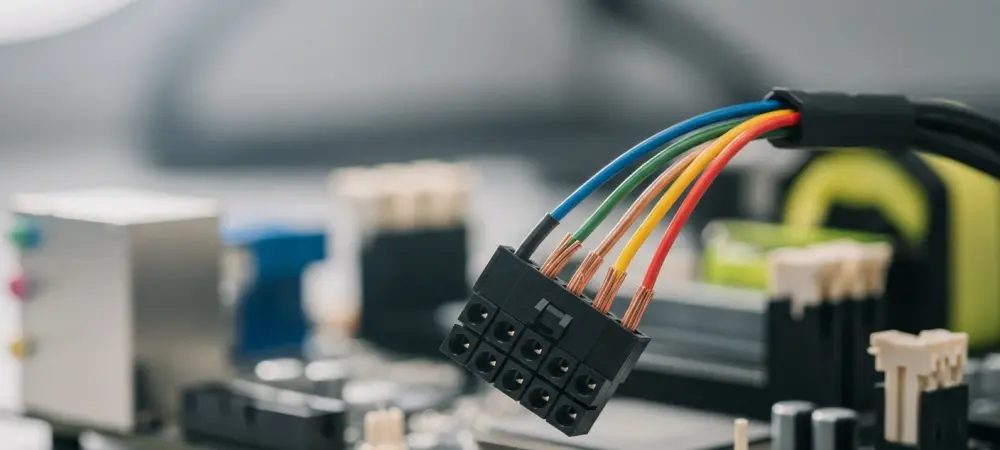
The catastrophic failure of a high-end graphics card due to a melting power connector is a nightmare that has haunted the PC enthusiast community for years. Despite various iterations of the 12VHPWR standard, the fundamental physics of cramming massive current through tiny pins remained a persistent vulnerability for top-tier hardware. The ASUS ROG Equalizer arrives as a direct engineering response to this instability, moving beyond basic connectivity to provide an active hardware solution that prioritizes thermal integrity over simple power delivery.
The Evolution of 12V-2×6 Power Connectivity
The ROG Equalizer functions as a sophisticated 12V-2×6 power bridge designed specifically to neutralize the mechanical and electrical risks inherent in the 16-pin connector architecture. Unlike standard cables that merely act as passive conduits, this solution is built to counteract the “thermal runaway” scenarios that plagued earlier high-wattage implementations. By refining the physical contact points and internal wiring, ASUS addresses the narrow tolerances that previously led to oxidation and eventual melting when cables were slightly bent or improperly seated.
This innovation is particularly vital in the current landscape where the NVIDIA RTX 40 and 50 series push power envelopes to their absolute limits. As GPUs demand more consistent current, the margins for error have vanished. The Equalizer represents a shift in the industry where board partners take direct responsibility for safety, effectively creating a secondary layer of protection that the original connector standards failed to provide with sufficient reliability.
Engineering Excellence and Thermal Safety
Parallel Impedance Equalization Routing
At the core of this cable lies a routing system that manages electrical resistance with surgical precision. Traditional cables often suffer from “uneven draw,” where one pin carries significantly more current than its neighbor due to minor variations in wire length or contact pressure. The ROG Equalizer utilizes parallel impedance equalization to ensure that the electrical load is perfectly balanced across the entire pin array. This ensures that no single point becomes a heat bottleneck during intensive gaming or rendering sessions.
The performance implications are striking when compared to generic alternatives. Under test conditions where specific pins are intentionally compromised to simulate wear, the Equalizer maintains a stable thermal profile. While a standard cable might spike toward temperatures that could liquify plastic, this system keeps the interface within safe operational parameters. This mechanical redundancy ensures that even a less-than-perfect installation does not result in a terminal hardware failure.
Enhanced Current Capacity and Build Quality
Beyond its internal logic, the cable is a powerhouse of raw electrical capability, boasting a 17A capacity that significantly exceeds the 9.2A seen in many standard-issue bundles. This headroom is not just for show; it allows the cable to remain cool even under the transient power spikes common in modern PCIe 5.1 architectures. The inclusion of a dual-color safety indicator provides a visual “handshake” for the user, ensuring that the connector is fully locked into place before current begins to flow.
Emerging Trends in Power Component Innovation
The industry is currently witnessing a transition where power components are becoming “active” participants in system health. The ROG Equalizer exemplifies a trend where manufacturers no longer trust standardized interfaces to handle extreme loads without assistance. This move toward proprietary safety enhancements suggests that the era of the universal, “dumb” power cable is ending for the high-end market, replaced by components that feature integrated thermal management and load balancing.
Furthermore, this shift highlights a growing focus on externalized safety. Rather than relying solely on the power supply’s internal protections, the cable itself now acts as a primary buffer. This trend toward decentralized safety mechanisms helps isolate the most expensive components in a build—the GPU and the motherboard—from the risks associated with high-amperage delivery, effectively creating a failsafe at the point of contact.
Real-World Applications in High-End Computing
Integration with the ROG Thor III and ROG Strix Platinum power supply units makes this cable a centerpiece for enthusiast-grade builds. In these scenarios, the Equalizer does more than just supply power; it provides the psychological and physical security necessary for pushing hardware to its limits. For professional workstations running 24/7 compute cycles, the reduction in thermal stress at the connector interface directly translates to increased system uptime and a lower risk of expensive hardware replacement.
Overclockers also find significant value in this implementation, as stable voltage delivery is the bedrock of a successful performance push. By minimizing resistance fluctuations, the cable helps maintain a cleaner signal to the GPU’s voltage regulation modules. This precision is essential for those utilizing high-TDP cards in compact or thermally constrained environments where every degree of heat management counts toward the final performance output.
Challenges and Implementation Barriers
Despite its technical superiority, the ROG Equalizer faces a significant hurdle in the form of ecosystem lock-in. Currently, the technology is primarily accessible to those purchasing premium ASUS power supplies, leaving a vast portion of the market reliant on standard, potentially more vulnerable cables. The reliance on specific PSU pinouts means that the benefits of impedance equalization are not yet a universal standard that can be easily adopted by users with existing hardware from other brands.
Moreover, there is the challenge of cost versus perceived value. While the thermal safety benefits are quantifiable, convincing the average consumer to invest in premium power delivery remains difficult until a failure occurs. The industry must find a way to make this level of thermal safety a baseline requirement rather than an enthusiast-only luxury, especially as mid-range hardware begins to adopt the same high-density power connectors used by flagship models.
The Future of GPU Power Standards
The lessons learned from the development of impedance equalization are likely to influence the drafting of the PCIe 6.0 power specifications. We are moving toward a future where cables might include “smart” logic chips capable of communicating real-time temperature and load data back to the system BIOS. This would allow the PC to automatically throttle power if a high-resistance event is detected, preventing damage before it even begins.
Long-term, the focus on balancing loads at the cable level will force a redesign of how power is distributed on the GPU PCB itself. As cables become more sophisticated, the internal circuitry of graphics cards will need to evolve to match this precision. This synergy between the power source and the consumer device will eventually lead to a more robust electrical ecosystem where connector melting becomes a historical footnote rather than a modern concern.
Final Assessment: Redefining Hardware Security
The development of the ROG Equalizer successfully shifted the focus from simple wattage delivery to the critical science of thermal management. By addressing the root cause of connector failure through impedance balancing, the technology provided a tangible safety net for the most expensive components in a modern PC. It became clear that the cable was no longer a secondary accessory, but a vital piece of insurance for any high-performance build.
Moving forward, the industry began to prioritize these specialized routing techniques in more affordable segments, acknowledging that safety should not be gated behind premium branding. The legacy of this innovation remained in its ability to force a broader conversation about the limits of current connector standards. It ultimately paved the way for more resilient, communication-capable power interfaces that ensured the longevity of gaming hardware in an increasingly power-hungry technological era.