

The quiet hum of a modern data center no longer signals just the storage of static information, but rather the frantic, autonomous decision-making of millions of digital entities operating without a single human keystroke. This shift toward agentic intelligence marks a fundamental change in how silicon must behave, moving away from simple command execution toward complex, self-directed orchestration. As the industry grapples with the limitations of general-purpose hardware, a new class of processor is emerging to bridge the gap between traditional logic and the massive, unpredictable demands of autonomous AI agents. The silicon landscape is effectively being rewritten to accommodate a world where software no longer waits for instructions but instead anticipates and executes them in real-time.
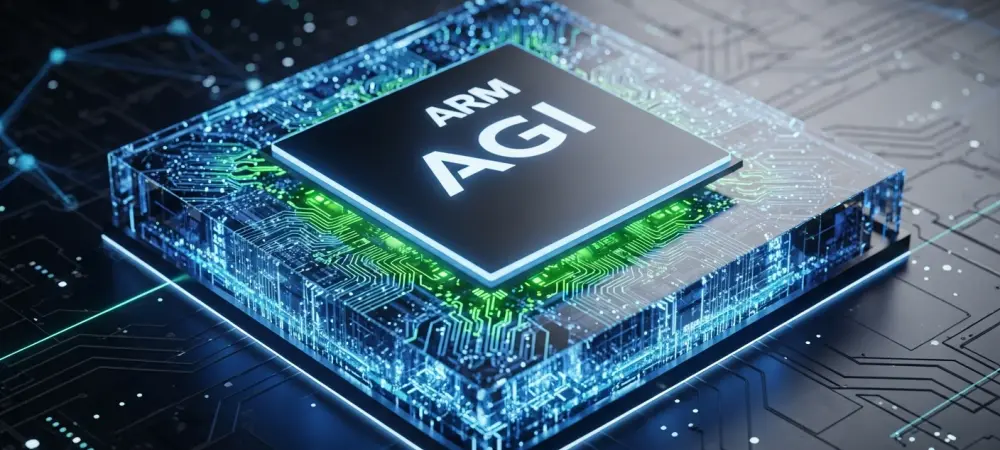
Arm’s recent announcement of its AGI CPU serves as a watershed moment for the global technology ecosystem, signaling a departure from its historical role as a secondary architect to a primary manufacturer. For decades, the company focused on providing the blueprints that powered the mobile revolution, yet the demands of the current era require a more direct approach to production. By offering production-ready silicon, the company is bypassing the slow cycle of third-party implementation, ensuring that the most advanced optimizations for agentic AI are available to data center operators immediately. This evolution reflects a growing realization that to solve the most pressing bottlenecks in artificial intelligence, the hardware must be as specialized and integrated as the software it supports.
Will the “Human Bottleneck” Finally Disappear as Silicon Learns to Orchestrate Itself?
The transition from intellectual property licensing to production-ready silicon represents the most significant shift in corporate strategy since the company’s inception over thirty-five years ago. Historically, Arm provided the essential blueprints, allowing others to build the foundations of the digital world. However, the sheer complexity of modern AI workloads has necessitated a shift where the designer must also become the builder. By delivering a physical product rather than just a design, the company ensures that the high-performance requirements of agentic AI are met without the dilution that often occurs during third-party customization. This move provides a direct path for enterprises to deploy infrastructure that is optimized for the specific needs of autonomous systems right out of the box.
Moving beyond the legacy of IP licensing allows for a more cohesive integration between hardware and software, effectively challenging the long-standing dominance of x86 architectures in the server room. While general-purpose processors were sufficient for a world of reactive software, they often struggle with the non-linear, high-throughput demands of autonomous agents. The AGI CPU is positioned as a specialized alternative, offering a design philosophy that prioritizes the orchestration of data over simple arithmetic speed. This strategic pivot ensures that the “human bottleneck”—the delay caused by software waiting for human input or inefficient hardware scheduling—is minimized, allowing silicon to manage its own internal workflows with unprecedented autonomy.
The dawn of the AGI CPU architecture signals a move toward a more fragmented yet more efficient hardware market where custom silicon and off-the-shelf specialized parts coexist. For many years, the industry relied on the versatility of x86 to handle everything from web hosting to complex simulations. However, as AI agents become the primary occupants of the data center, that versatility has become a liability, leading to wasted energy and thermal inefficiency. The introduction of a dedicated AGI CPU provides a specialized foundation that balances the flexibility of a traditional processor with the extreme performance of a dedicated accelerator, creating a middle ground that is essential for the next phase of cloud computing expansion.
Understanding the Shift from Reactive Software to Autonomous Agentic Infrastructure
Traditional CPU roles are increasingly viewed as inadequate in an era where software agents operate with near-total autonomy. In previous computing paradigms, a processor spent a significant amount of its time waiting for human-triggered tasks, such as a mouse click or a database query. In contrast, agentic AI involves 24/7 autonomous coordination where agents communicate with one another, browse the web, execute code, and manage resources without human intervention. This shift creates a persistent, high-intensity workload that traditional, reactive architectures were never designed to handle efficiently, leading to performance plateaus and increased operational costs for hyperscale providers.
Defining agentic AI requires a shift in perspective from viewing AI as a tool to viewing it as a permanent infrastructure element. These autonomous agents do not just process data; they orchestrate it across vast networks of accelerators, memory pools, and storage tiers. The CPU, in this context, functions as the “pacing element” of the entire system. It is responsible for the critical task of managing the volatile workloads generated when agents spin up thousands of sub-tasks in a “fan-out” pattern. If the CPU cannot keep up with this orchestration, the most powerful GPUs and AI accelerators in the world will sit idle, waiting for the central processor to tell them what to do next.
Managing the “fan-out” challenge is perhaps the most difficult technical hurdle in the modern data center. When a single user request triggers an agent to collaborate with dozens of other specialized models, the resulting traffic within the server rack can become overwhelming. The AGI CPU is engineered to manage these thousands of simultaneous interactions, ensuring that data moves fluidly between different parts of the system. This orchestration capability is what separates a modern AI-native server from a legacy system, as it allows for a level of density and coordination that was previously impossible, transforming the data center into a living, self-managing entity.
Technical Breakdown of the Arm AGI CPU Architecture
At the heart of the new architecture lies the Neoverse V3 core, a design that prioritizes single-threaded performance over the multi-threading complexities found in legacy architectures. In the realm of AI agents, the ability to execute a single chain of logic as fast as possible is often more valuable than splitting that logic across multiple slow threads. By refining the core to focus on high-velocity execution, the AGI CPU achieves a level of efficiency that allows it to outperform traditional x86 systems by a factor of two in specific AI orchestration tasks. This architectural choice reflects a deep understanding of how autonomous software actually functions, prioritizing the speed of decision-making over raw, unfocused throughput.
Engineering for rack-scale efficiency has led to impressive gains in performance density, which is critical for operators facing power and space constraints. In a standard air-cooled environment, the AGI CPU configuration allows for up to 8,160 cores per rack, a figure that already challenges the limits of traditional data center designs. However, when paired with advanced liquid-cooling systems, that density can scale to an astonishing 45,000 cores within a single rack environment. This massive increase in core count is not just for show; it provides the necessary headroom to manage the explosive growth of agentic traffic without requiring a corresponding increase in physical data center footprint.
Beyond raw core counts, the architecture places a heavy emphasis on memory bandwidth to eliminate the performance degradation often seen during sustained inference loads. As AI agents move massive amounts of context data between memory and the processor, the bandwidth often becomes the primary bottleneck. The AGI CPU is designed with wider data paths and optimized memory controllers that ensure the processor is never “starved” for data. This focus on the movement of information, rather than just its calculation, ensures that the system maintains its peak performance even when under the extreme stress of thousands of agents operating in parallel.
Strategic Alliances and the Industry-Wide Push for Adoption
The success of the AGI CPU is being bolstered by a formidable network of partners, with Meta serving as the lead collaborator in the transition to agentic infrastructure. Meta has integrated these CPUs with its own MTIA chips to create gigawatt-scale infrastructure capable of supporting billions of users and autonomous interactions. This partnership demonstrates that even companies with the resources to build their own custom silicon see the value in a standardized, high-performance CPU that can handle the heavy lifting of orchestration. By aligning with Arm, Meta is able to focus its internal engineering on specialized accelerators while relying on a proven, high-density foundation for general compute and management.
The orchestration layer of the modern internet is also seeing a shift toward this new architecture, with industry leaders like OpenAI and SAP prioritizing the platform for their most demanding deployments. OpenAI utilizes the AGI CPU to manage the massive traffic spikes associated with ChatGPT, where the orchestration of millions of concurrent API requests requires a level of efficiency that legacy chips cannot provide. Similarly, SAP has recognized the potential for these processors to enhance its HANA deployments, offering enterprise customers a faster and more energy-efficient way to manage their business logic. These adoptions signify a broader trend where the software giants of the world are actively seeking out hardware that matches the speed of their algorithmic innovation.
Furthermore, the AGI CPU is empowering a new ecosystem of specialized accelerator companies that need a reliable partner in the server rack. Collaboration with firms such as Cerebras, Positron, and Rebellions has shown that a high-performance CPU is the “secret sauce” that allows their proprietary AI chips to reach their full potential. Additionally, infrastructure validation from global entities like Cloudflare and F5 ensures that the CPU is ready for high-throughput data planes, where every microsecond of latency can have global repercussions. This widespread industry backing creates a virtuous cycle of optimization and support, making the AGI CPU a central pillar of the future compute landscape.
Implementing the AI-Native Data Center: Frameworks and Standardization
To accelerate the global transition to AI-native infrastructure, Arm has contributed a significant reference design to the Open Compute Project (OCP). This 1OU Dual Node Reference Server design provides a standardized blueprint that any manufacturer can use to build high-density, AGI-ready hardware. By sharing these designs openly, the company is lowering the barrier to entry for smaller enterprises and regional cloud providers who might not have the engineering resources to design their own specialized servers from scratch. This commitment to open standards is essential for creating a healthy, competitive market where innovation is not restricted to a handful of hyperscale giants.
Standardizing the software and firmware stack is equally important for ensuring that these new systems are easy to deploy and maintain. Arm is open-sourcing critical components such as firmware, debug frameworks, and diagnostic tools to ensure that IT teams have the visibility they need to manage complex agentic workloads. This transparency reduces the risk of vendor lock-in and allows for a more collaborative approach to troubleshooting and optimization. When the underlying tools are standardized, it becomes much easier for developers to build software that runs efficiently across different hardware providers, fostering a more robust and flexible ecosystem for everyone involved.
The dual-track strategy adopted by the company allows customers to choose the path that best fits their specific business needs and technical capabilities. On one hand, off-the-shelf AGI CPUs provide a fast and reliable way to modernize a data center with minimal custom engineering. On the other hand, the Compute Subsystems (CSS) allow larger organizations to integrate Arm’s specialized tech into their own proprietary chips. This flexibility ensures that the AGI CPU remains relevant across a wide spectrum of the market, from boutique AI startups to the world’s largest technology conglomerates, all while maintaining a consistent architectural standard that simplifies the deployment of agentic AI.
The integration of the AGI CPU into the global infrastructure successfully addressed the looming energy crisis and the performance plateaus that once threatened the progress of autonomous intelligence. Organizations that adopted the new architecture found that they were able to reduce their operational overhead while simultaneously increasing the complexity of the tasks their AI agents could perform. The open-source contributions provided a stable framework that encouraged a diverse range of hardware manufacturers to enter the space, ensuring that the technology remained accessible and competitively priced. By prioritizing orchestration and density, the industry effectively moved toward a more sustainable and capable version of the modern data center. In the end, the transition proved that when silicon was designed to mirror the autonomous nature of the software it served, the potential for digital innovation became virtually limitless.