

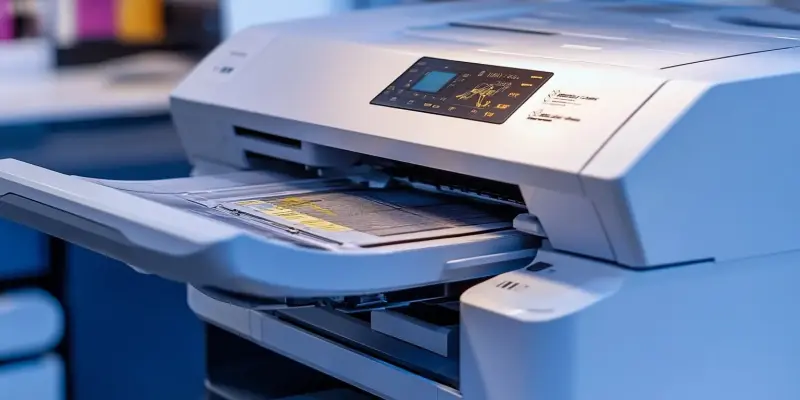
As our reliance on technological devices increases, so does the threat landscape, which continues to evolve drastically and swiftly. Recent security vulnerabilities disclosed in Xerox VersaLink C7025 multifunction printers (MFPs) and popular healthcare software are opening pathways for cyberattacks that could expose sensitive information and disrupt operations critically.
Xerox VersaLink C7025 Printer Vulnerabilities
Exploiting Printer Configurations
Recent discoveries have shown that vulnerabilities in the Xerox VersaLink C7025 MFPs’ firmware can be exploited by attackers. These new security flaws, identified in firmware versions 57.69.91 and earlier, have left organizations susceptible to malicious activities targeting Windows Active Directory credentials. This exploitation is primarily feasible due to the mishandling of Lightweight Directory Access Protocol (LDAP) and SMB/FTP services within the printer configurations. The identified security flaws include CVE-2024-12510, which holds a CVSS score of 6.7 and focuses on LDAP attacks, and CVE-2024-12511, a more severe vulnerability with a CVSS score of 7.6, involving the user’s address book.
Deral Heiland, a Rapid7 security researcher, disclosed that attackers could reconfigure the printer to relay authentication information to a server under their control. By manipulating the printer’s configuration settings, attackers could capture Windows Active Directory credentials through pass-back attacks. Once these credentials are obtained, unauthorized access to sensitive Windows servers and files is highly probable, leading to lateral movement across the organization’s environment. Such access could result in extensive data breaches and operational disruptions, highlighting the importance of addressing these vulnerabilities promptly.
Mitigation and Recommendations
Xerox tackled these vulnerabilities following a responsible disclosure by releasing Service Pack 57.75.53 for VersaLink C7020, 7025, and 7030 series printers in late September 2024. Although the update is a crucial step to shield organizations from potential attacks, some users may face delays in applying the patch. To mitigate risks in the interim, several recommendations have been outlined. Setting a complex admin password significantly reduces the risk of unauthorized access. Additionally, avoiding the use of Windows authentication accounts with elevated privileges further safeguards against potential attacks. Disabling remote-control console access for users who are not authenticated is another key preventive measure. By implementing these precautions, organizations can protect themselves while ensuring the patch is applied promptly to bolster security.
Healthcare Software Vulnerabilities
SQL Injection Threat in HealthStream MSOW
Apart from printing devices, healthcare software has also become a target for cyber adversaries. Recently, Peyton Smith, the founder and CEO of Specular, identified a critical security flaw in HealthStream’s MSOW software. CVE-2024-56735 is an unauthenticated SQL injection vulnerability that allows attackers to manipulate the software’s database. Alarmingly, this flaw could lead to a full database compromise, exposing confidential information belonging to 23 healthcare organizations.
Smith pointed out that 50 internet-exposed MSOW instances were identified, with almost half being susceptible to exploitation. This vulnerability is particularly concerning because it permits attackers to execute harmful SQL queries that can extract the entire database content in plaintext. A well-crafted SQL injection HTTP payload makes this scenario possible, placing vast amounts of sensitive data at risk. Data infiltration of this magnitude poses significant repercussions for the affected healthcare organizations, their clients, and patients, emphasizing the urgency of immediate remediation.
Protecting Sensitive Data
As we increasingly depend on technological devices, the threat landscape grows more complex and changes rapidly. Today’s cybersecurity world is fraught with evolving dangers that can compromise sensitive information and cause significant operational disruptions. For instance, recent security vulnerabilities uncovered in Xerox VersaLink C7025 multifunction printers (MFPs) have exposed weaknesses that hackers could exploit. This issue isn’t limited to hardware; even popular healthcare software is showing susceptibilities, creating opportunities for cybercriminals to infiltrate and wreak havoc. These security flaws open doors for cyberattacks that could jeopardize crucial data and paralyze essential services. Since both businesses and individuals heavily rely on these technologies, the potential impact is far-reaching. The unsettling reality is that the more integrated these devices become in our daily lives, the more avenues malicious actors have to exploit them. Consequently, it becomes imperative to remain vigilant, update security protocols frequently, and invest in robust cybersecurity measures to safeguard against these ever-evolving threats.