

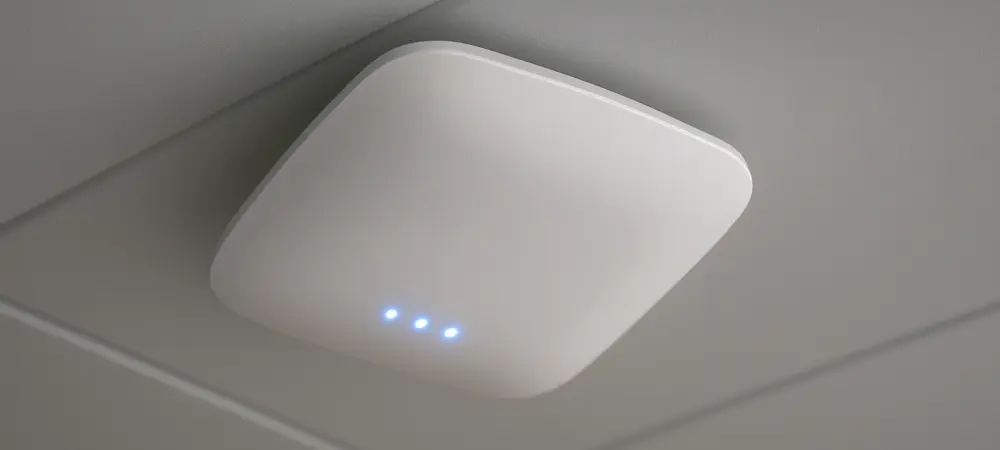
Robust network segmentation remains a critical defense strategy to prevent a compromised access point from communicating with sensitive internal servers. As wireless infrastructure becomes the primary entry point for modern corporate environments, the security of these hardware components dictates the integrity of the entire perimeter. Recent disclosures concerning WatchGuard Access Point firmware have highlighted how easily architectural oversights can lead to catastrophic results if left unaddressed by administrators. These vulnerabilities allow attackers to bypass standard authentication barriers, essentially granting them the keys to the kingdom without requiring a single valid password. In an era where remote work and hybrid connectivity dominate business operations, the exposure of edge devices like access points represents a tier-one threat. Security teams must now reckon with the reality that their hardware may be harboring flaws that permit unauthenticated command execution from any network location, demanding a swift and technical response to maintain trust.
Technical Analysis: Understanding the Vulnerabilities
Critical Risks of Unauthenticated Command Injection
CVE-2026-86102 represents a significant failure in the internal management API of affected WatchGuard devices, specifically within firmware versions ranging from 1.0 to 3.4.7. This specific flaw involves an OS command injection vulnerability that allows a threat actor to execute arbitrary shell commands without providing any credentials or engaging in user interaction. When an internal management API lacks proper input sanitization, it creates a direct pathway for malicious code to interact with the underlying operating system of the access point. For an attacker, this is the ultimate prize, as it provides a persistent foothold inside the local network. By sending a specially crafted request to the vulnerable API service, a remote user could potentially install malware, intercept data packets flowing through the device, or pivot into other areas of the internal infrastructure. The severity of this issue is reflected in its high CVSS score, underscoring the urgent need for comprehensive updates across all hardware.
Vulnerabilities in API Access Control
Parallel to the command injection issues, CVE-2026-101891 highlights a failure in improper access control within the same management API. This flaw effectively permits unauthorized users to interact with sensitive functions that should be restricted to authenticated administrators. In many cases, these API endpoints are used for diagnostic or configuration tasks, meaning an attacker could modify system settings or disable security features silently. When combined with CVE-2026-87969, which targets authenticated sessions, the risk landscape becomes even more complex. While the latter requires an existing administrative account, it still allows for malicious command execution if an attacker manages to compromise a low-level account or if an insider chooses to act maliciously. The convergence of these flaws suggests that the management layer of these devices was not built with sufficient zero-trust principles in mind, as the boundary between administrative functions and general network traffic was far too permeable for safety.
Strategic Remediation and Future Security Protocols
The disclosure of these critical flaws provided a stark reminder that edge devices remained high-priority targets for remote exploitation. Organizations that prioritized the rapid deployment of firmware version 3.4.8 successfully mitigated the most immediate risks associated with unauthenticated command execution. However, the event also served as a catalyst for a broader shift toward more robust internal security policies. Moving forward, the implementation of micro-segmentation and the total isolation of administrative interfaces should become standard practice for every network deployment. Security teams were encouraged to conduct regular penetration testing specifically targeting the management plane of their wireless hardware to catch similar oversights before they were publicized. By integrating automated patch management systems and adopting a zero-trust approach to hardware management, businesses effectively reduced their attack surface. These lessons from the WatchGuard vulnerabilities eventually reshaped how administrators viewed device lifecycle management.