
Are Nvidia’s RTX 5060 GPUs Worth the Hype?

Article Highlights
Off On

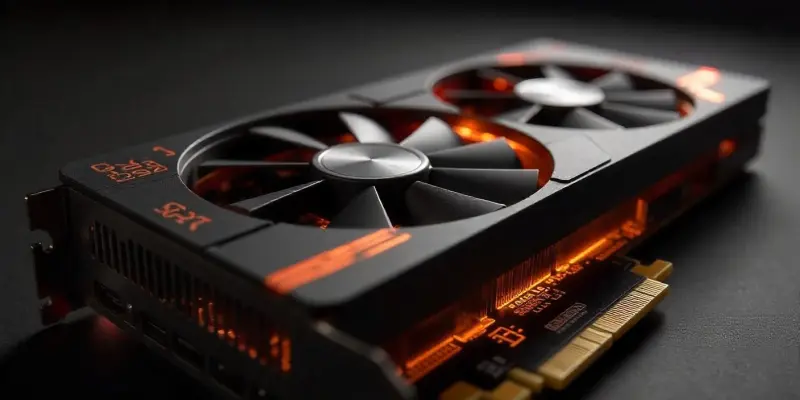
In the ever-evolving world of gaming technology, Nvidia’s launch of the GeForce RTX 50 series GPUs, comprising the RTX 5060 and RTX 5060 Ti models, has generated considerable buzz among tech enthusiasts and gamers alike. Priced at $299, the RTX 5060 aims to deliver high-performance gaming capabilities, boasting an impressive offering that includes DLSS 4 with Multi Frame Generation, enabling users to experience game worlds at more than 100 frames per second. Despite the enthusiasm surrounding their release, a cloud of uncertainty lingers over their market reception due to a lack of pre-launch reviews. This absence of early evaluations can be attributed to the unavailability of necessary drivers, leaving potential buyers without a comprehensive understanding of these GPUs’ real-world performance.

Navigating GPU Options and Market Perspectives

The RTX 5060’s standing is hindered by its 8GB VRAM, seen as less competitive when matched against products like the Intel Arc B580, which offers 12GB VRAM for $250. Those playing resource-intensive games may prefer the Arc B580. However, early reviews, including PC Gamer’s, highlight the RTX 5060’s superior performance in most tests, favoring those who prioritize speed over memory capacity, though debates persist on feature value. Comparatively, the RTX 5060 Ti is available for $429 with 16GB and $379 with 8GB, offering a longer lifespan over future titles due to its higher memory.

In laptops, the RTX 5060 is featured in systems by Acer, Asus, and Lenovo, starting at $1,099. They utilize Max-Q technology, adapting to mobile form factors with 45W-100W TGP, balancing performance and efficiency. The desktop version has a consistent 145W TGP. While specs hint at optimistic prospects for Nvidia’s latest GPUs, buyers should await more reviews.

Nvidia’s GeForce RTX 50 series has potential; yet, buying should be considered cautiously. Future evaluations may offer deeper insight into performance, cost, and longevity, informing decisions in this dynamic gaming hardware landscape.

Explore more

Effective Email Automation Strategies Drive Business Growth

The digital landscape is currently witnessing a silent revolution where the most successful marketing teams have stopped competing for attention through volume and started winning through surgical precision. While many organizations continue to struggle with the exhausting cycle of manual campaign creation, a sophisticated subset of the market has mastered the art of “set it and forget it” revenue generation.

How Can Modern Email Marketing Drive Exceptional ROI?

Every second, millions of digital messages flood into global inboxes, yet only a tiny fraction of these communications actually manage to convert a passive reader into a loyal, high-value customer. While the average marketer often points to a return of thirty-six dollars for every dollar spent as a benchmark of success, this figure represents a mere starting point for organizations

Modern Tactics Drive High-Performance Email Marketing

The sheer volume of digital correspondence flooding the modern consumer’s primary inbox has reached a point where generic messaging is no longer merely ignored but actively penalized by sophisticated filtering algorithms. As the global email ecosystem navigates a staggering daily volume of nearly 400 billion messages, the traditional “spray and pray” methodology has transformed from a sub-optimal tactic into a

How Will AI-Native 6G Networks Change Global Connectivity?

Global telecommunications are currently undergoing a profound metamorphosis that transcends simple speed upgrades, aiming instead to weave an intelligent fabric directly into the world’s physical reality. While the transition from 4G to 5G was defined by raw speed and reduced latency, the move toward 6G represents a fundamental departure from traditional telecommunications. The industry is moving toward a reality where

How Is AI Redefining the Future of 6G and Telecom Security?

The sheer velocity of data surging through modern global telecommunications has already pushed traditional human-centric management systems toward a breaking point that demands a complete architectural overhaul. While the industry previously celebrated the arrival of high-speed mobile broadband, the current shift represents a fundamental departure from hardware-heavy engineering toward a software-defined, intelligent ecosystem. This evolution marks a pivotal moment where